
Are you curious about where you can legally use a radar detector on the road? Knowing the rules can save you from unexpected fines and keep your driving experience stress-free.
You’ll discover exactly which states allow radar detectors and what restrictions might apply. Whether you’re a frequent traveler or just want to stay informed, understanding these laws can protect you and your device. Keep reading to find out where your radar detector is welcome—and where it’s not.
Radar Detector Basics
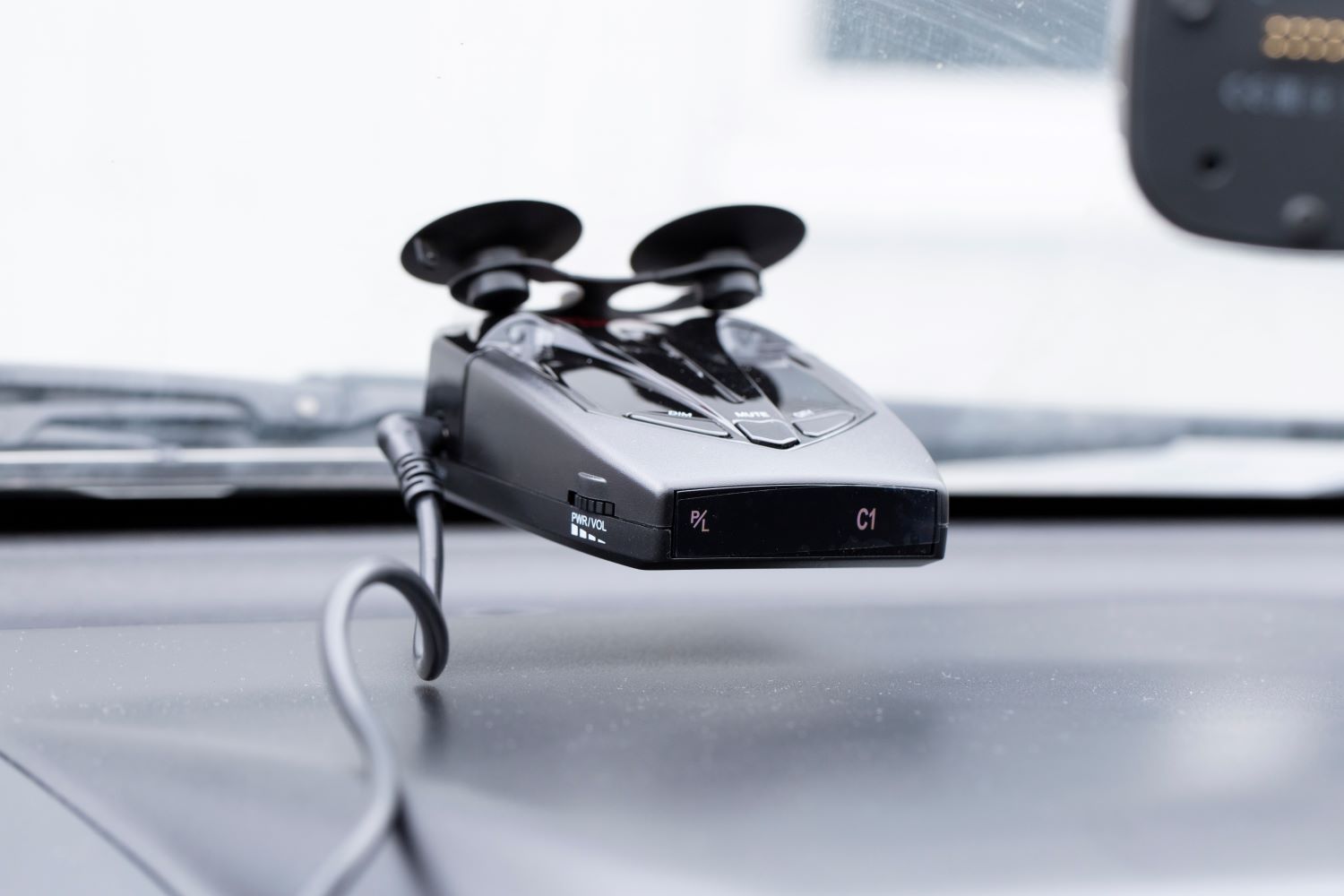
Radar detectors help drivers know if police use radar guns nearby. These devices alert drivers to slow down before getting a ticket. Knowing how radar detectors work is important for safe and legal use.
This guide covers the basics of radar detectors. It explains how they work and the different types you can find.
How Radar Detectors Work
Radar detectors scan the air for radar signals from police radar guns. When they detect a signal, they warn the driver with a sound or light. This gives drivers time to reduce speed.
- Radar guns send out radio waves at specific frequencies.
- Radar detectors pick up these waves from a distance.
- The detector analyzes the signal to confirm it is from a radar gun.
- It alerts the driver if the signal is strong enough.
- Some detectors can also detect laser speed guns.
Types Of Radar Detectors
Radar detectors come in different styles and with various features. Choosing the right type depends on your needs and budget.
| Type | Description | Common Features |
| Basic | Simple radar detection only | Alerts for common radar bands |
| Mid-Range | Detects radar and some laser signals | Signal strength display, adjustable volume |
| High-End | Detects radar, laser, and GPS alerts | GPS lockouts, false alert filtering, smartphone app |
Legal Status By State
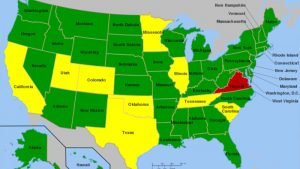
Radar detectors help drivers avoid speed traps by detecting radar signals. Their use is legal in some states and restricted or banned in others.
It is important to know the laws in your state before using a radar detector. This guide covers states allowing, banning, or partially restricting radar detectors.
States Allowing Radar Detectors
Many states allow drivers to use radar detectors without restrictions. These states consider radar detectors legal for all vehicles.
- Alabama
- Alaska
- Arizona
- Arkansas
- Colorado
- Delaware
- Florida
- Georgia
- Idaho
- Illinois
- Indiana
- Iowa
- Kansas
- Kentucky
- Louisiana
- Maine
- Maryland
- Michigan
- Minnesota
- Mississippi
- Missouri
- Montana
- Nebraska
- New Hampshire
- New Jersey
- New Mexico
- North Carolina
- North Dakota
- Ohio
- Oklahoma
- Oregon
- Pennsylvania
- South Carolina
- South Dakota
- Tennessee
- Texas
- Utah
- Vermont
- Virginia
- Washington
- West Virginia
- Wisconsin
- Wyoming
States Banning Radar Detectors
Some states ban radar detectors completely. Drivers cannot use or display these devices in these states.
| State | Remarks |
| California | Banned for passenger vehicles |
| Connecticut | Prohibited for all vehicles |
| Delaware | Use is illegal |
| District of Columbia | Radar detectors banned |
| Florida | Banned in commercial vehicles |
| Illinois | Banned in commercial vehicles |
| Louisiana | Banned in commercial vehicles |
| Maryland | Banned in commercial vehicles |
| Massachusetts | Radar detectors illegal |
| New York | Banned for all vehicles |
| New Jersey | Banned in commercial vehicles |
| Ohio | Banned in commercial vehicles |
| Oklahoma | Banned in commercial vehicles |
| Rhode Island | Illegal to use |
| Tennessee | Banned in commercial vehicles |
| Texas | Banned in commercial vehicles |
| Washington | Banned in commercial vehicles |
States With Partial Restrictions
Some states allow radar detectors only in certain types of vehicles or under specific conditions.
Partial restrictions usually apply to commercial vehicles. Passenger cars can use radar detectors freely, but trucks and buses cannot.
- Virginia: Allowed in passenger cars, banned in commercial vehicles.
- Florida: Allowed except in commercial trucks.
- Illinois: Banned in commercial vehicles but legal otherwise.
- Texas: Restrictions for commercial use only.
Federal Laws And Radar Detectors
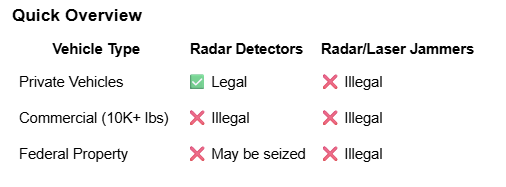
Radar detectors are devices used to detect speed monitoring by law enforcement. Their legality varies across the United States.
Federal laws set the baseline rules for radar detector use. States can add their own rules on top.
Commercial Vehicle Regulations
Federal law prohibits radar detectors in commercial vehicles over 10,000 pounds. This rule applies nationwide.
Commercial truck drivers must avoid using radar detectors to stay compliant with safety rules.
- Applies to trucks, buses, and large vehicles
- Violations can lead to fines and penalties
- Designed to promote safe driving in commercial transport
Military Bases And Radar Use
Radar detector use is often banned on military bases. Security rules are strict in these areas.
Military police use radar to enforce speed limits on base roads. Detectors may interfere with operations.
- Radar detectors are usually not allowed on base
- Violating rules can lead to removal from base
- Military law enforcement controls speed and safety
Credit: www.vortexradar.com
Penalties For Illegal Use
Using a radar detector illegally can lead to serious trouble. States have different rules about radar detectors.
Breaking these laws can cause fines, tickets, or worse. Knowing the risks helps you stay safe and legal.
Fines And Tickets
Many states charge fines if you use a radar detector where it is not allowed. Police may stop you and give a ticket.
Fines vary by state but usually cost from $50 to $500. Some states add points to your driving record.
- First-time fines are often smaller but can increase for repeats
- Tickets may affect your insurance rates
- Some states require a court appearance
Vehicle Impoundment Risks
In some states, police can impound your vehicle if you use a radar detector illegally. This means you lose your car temporarily.
Impoundment adds extra costs like towing and storage fees. Getting your car back can take days or weeks.
- Impoundment often happens if you resist police
- Repeated offenses increase the chance of losing your vehicle
- Impound fees can be expensive and add up quickly
Tips For Safe Radar Detector Use
Using a radar detector can help you stay alert while driving. It is important to use it safely and legally. Follow these tips to avoid trouble on the road.
Learn how to choose the right device and install it properly. This will improve your experience and keep you safe.
Choosing The Right Device
Pick a radar detector that fits your needs and complies with local laws. Check if the device offers good sensitivity and false alert filtering.
- Look for devices with GPS features to mark speed trap locations
- Choose models with voice alerts to keep your eyes on the road
- Check for updates and support from the manufacturer
- Make sure the device is legal in your state or area
Proper Installation And Maintenance
Install your radar detector where it can easily detect signals and stay out of your sight line. Keep it clean and check it often to ensure it works well.
| Maintenance Task | Frequency | Why It Matters |
| Clean lens and sensors | Monthly | Improves signal detection |
| Update software | Every 3 months | Keeps alerts accurate |
| Check mounting position | Weekly | Ensures clear signal path |
Credit: www.carparts.com
Alternatives To Radar Detectors
Radar detectors help drivers avoid speeding tickets. However, they are not legal everywhere. There are other tools that can help you stay aware of speed limits and road conditions.
These alternatives can enhance your driving experience. They keep you informed and safe on the road.
Speed Apps And Gps Alerts
Speed apps use GPS to track your speed. They alert you when you exceed the limit. Many apps also show speed limits for different areas.
GPS alerts warn you about traffic conditions. They provide real-time updates about road hazards and speed traps.
- Speedometer apps show your current speed.
- Navigation apps display speed limits.
- Traffic apps give real-time road alerts.
Driver Awareness And Safety
Being aware of your surroundings is important. It helps you make safe driving choices. Paying attention to road signs can keep you informed about speed limits.
Driver safety tools remind you to stay focused. They can also alert you if you are too close to another vehicle.
- Keep an eye on road signs for speed limits.
- Use mirrors to be aware of surrounding traffic.
- Maintain a safe distance from other vehicles.
Credit: www.roadspy.com
Frequently Asked Questions
Are Radar Detectors Legal In All Us States?
Radar detectors are not legal in all US states. Some states ban their use entirely, especially commercial vehicles. It is important to check state laws before using one. Violating these laws can lead to fines or confiscation of the device.
Which States Allow Radar Detectors For Private Vehicles?
Most states allow radar detectors for private vehicles, except Virginia and Washington D. C. These areas have strict bans. Always verify local laws before using a radar detector. Regulations can change, so stay informed to avoid penalties.
Can I Use Radar Detectors In Commercial Trucks?
Radar detectors are mostly illegal in commercial trucks across all states. The Federal Motor Carrier Safety Administration prohibits them for commercial vehicles. Truck drivers must comply to avoid fines and legal trouble. Always check federal and state rules for commercial use.
Do Radar Detectors Interfere With Police Equipment?
Radar detectors do not interfere with police equipment. They only detect radar signals emitted by speed enforcement devices. However, some states ban their possession or use, regardless of interference. Using detectors responsibly and legally is crucial to avoid penalties.
Conclusion
Radar detectors are legal in many states but not all. Know the laws before you buy or use one. Some states ban them completely, while others allow with restrictions. Using a detector where it is illegal can lead to fines or penalties.
Stay safe and respect traffic rules wherever you drive. Always check local laws to avoid trouble on the road. Understanding these rules helps you make smart choices. Drive carefully and stay informed about radar detector laws.







