
Have you ever wondered what that little device plugged into your car’s dashboard does? An OBD2 scanner might sound technical, but it’s actually a powerful tool that puts important information about your vehicle right at your fingertips.
If you want to save money on repairs, understand your car better, or avoid unexpected breakdowns, knowing how an OBD2 scanner works can make a big difference. Keep reading, and you’ll discover how this simple gadget can become your car’s best friend.

Credit: www.amazon.ca
What Is An Obd2 Scanner
An OBD2 scanner is a tool for checking a vehicle’s health. It reads data from the car’s computer system.
This device helps find problems in the engine and other systems. It shows error codes that explain the issues.
Basics Of Obd2 Technology
OBD2 stands for On-Board Diagnostics, version 2. It is a standard system used in cars since 1996.
OBD2 monitors the engine and emissions systems. It tracks sensors and detects faults.
How Obd2 Scanners Work
The scanner connects to the car’s OBD2 port, usually under the dashboard. It reads data from the car’s computer.
When there is a problem, the car stores a fault code. The scanner shows this code to help diagnose the issue.
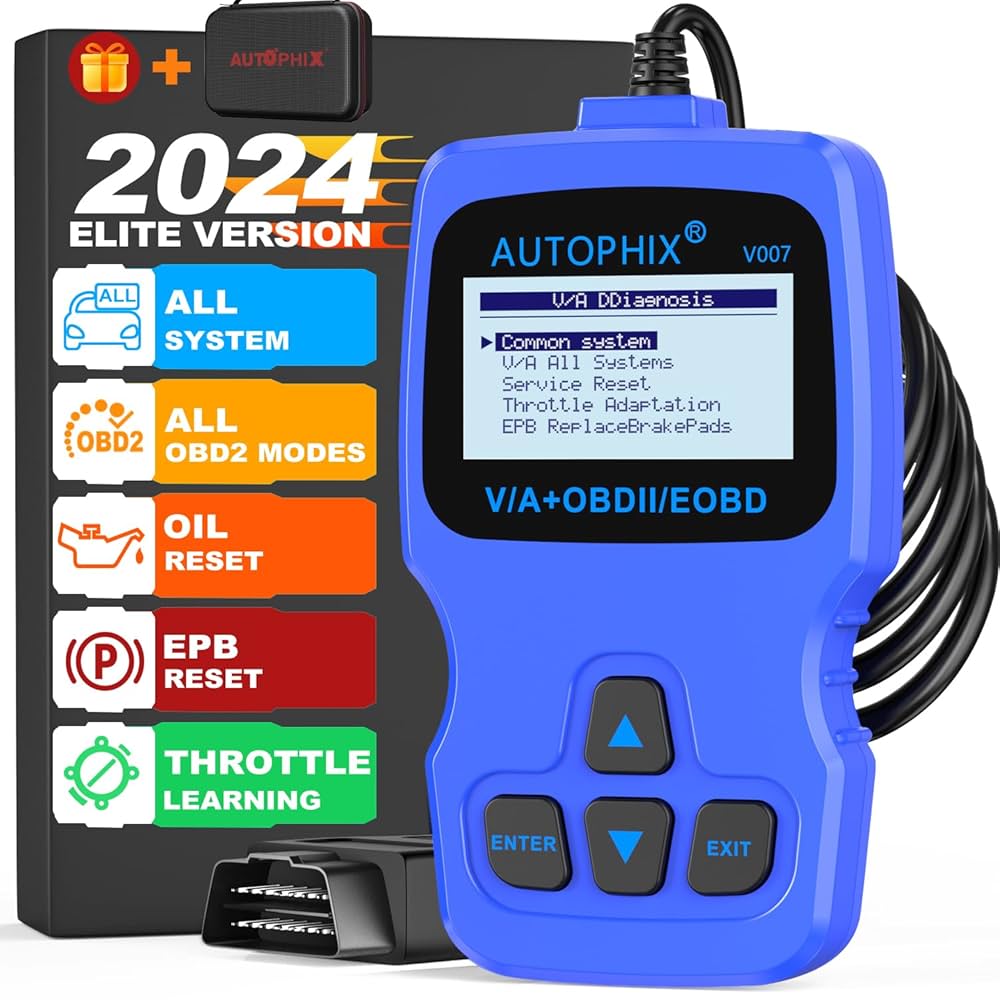
Types Of Obd2 Scanners
There are different OBD2 scanners for many needs. Some are simple code readers, and others offer more features.
- Basic code readers show error codes only
- Advanced scanners provide live data and graphs
- Bluetooth scanners connect to smartphones
- Professional tools include repair suggestions
Credit: www.amazon.ca
Benefits Of Using An Obd2 Scanner
An OBD2 scanner helps you check your car’s health quickly. It reads error codes from your vehicle’s computer. You can find problems early before they get worse.
Using this tool saves you time and money. It also helps your car run better. Let’s look at the main benefits of an OBD2 scanner.
Saving Time And Money
An OBD2 scanner lets you diagnose car issues at home. You do not need to wait for a mechanic to find the problem. This saves time and service costs.
- Quickly identify the cause of warning lights
- Avoid costly visits to the mechanic
- Fix small issues before they become big
- Check if repairs are done correctly
Preventing Major Repairs
With an OBD2 scanner, you can spot problems early. This helps stop small faults from turning into big repairs. You save money by fixing issues on time.
| Issue | Potential Damage | Benefit of Early Detection |
| Engine Misfire | Engine damage | Fix spark plugs quickly |
| Oxygen Sensor Fault | Higher fuel use | Replace sensor to save fuel |
| Transmission Error | Transmission failure | Service transmission early |
Enhancing Vehicle Performance
OBD2 scanners give data about your car’s engine and systems. You can use this data to improve how your vehicle runs. Better performance means better fuel efficiency and smoother rides.
- Adjust fuel mixture for efficiency
- Monitor engine temperature
- Track emissions levels
- Identify faulty sensors
Key Features To Look For
An OBD2 scanner helps you check your car’s health by reading error codes. Choosing the right scanner means looking at important features. These features make it easier to find and fix problems.
Below are key features to consider before buying an OBD2 scanner. These will help you pick one that fits your needs well.
Compatibility With Vehicles
Not all OBD2 scanners work with every car. Check if the scanner supports your vehicle’s make, model, and year. Some scanners only work with certain brands or regions.
- Supports cars made after 1996 (OBD2 standard)
- Works with gas and diesel engines
- Compatible with different vehicle protocols
- Checks both domestic and imported vehicles
User Interface And Display
The interface should be easy to use and read. Some scanners have simple screens, while others show color graphics. Buttons and menus must be clear to navigate.
| Feature | Why It Matters |
| Screen Type | Clear display helps quick reading |
| Backlight | Good for use in dark places |
| Menu Layout | Simple menus save time |
| Button Size | Easy to press, even with gloves |
Additional Diagnostic Capabilities
Some OBD2 scanners offer extra tools beyond basic code reading. These features help diagnose deeper problems or check other car systems.
- Live data stream for real-time engine info
- Freeze frame data to see conditions during errors
- Emissions readiness checks for smog tests
- ABS and airbag system diagnostics
- Ability to clear error codes after repairs
How To Use An Obd2 Scanner
An OBD2 scanner helps you check your car’s health. It reads codes from your vehicle’s computer.
These codes tell you if something is wrong. You can fix small problems or tell a mechanic what to do.
Locating The Obd2 Port
The OBD2 port is where you plug in the scanner. It is usually under the dashboard.
Look near the driver’s seat, below the steering wheel. Sometimes it is near the pedals or center console.
- Check under the dashboard on the driver’s side
- Look near the pedals or center console
- The port is shaped like a trapezoid with 16 pins
Connecting The Scanner
Plug the OBD2 scanner into the port firmly. Make sure your car’s engine is off before plugging it in.
Turn the ignition key to the “on” position or start the engine to power the scanner. Follow the scanner’s instructions.
- Plug the scanner into the OBD2 port
- Turn the car ignition to “on” or start the engine
- Wait for the scanner to power on and connect
- Use the scanner buttons or screen to begin
Reading And Interpreting Codes
The scanner shows codes on its screen. Each code tells about a part or system that has a problem.
Look up the code in the scanner’s manual or online. This helps you know what needs fixing.
| Code | Meaning |
|---|---|
| P0300 | Random or multiple cylinder misfire detected |
| P0420 | Catalyst system efficiency below threshold |
| P0171 | System too lean (bank 1) |
Common Diagnostic Trouble Codes
An OBD2 scanner reads codes from a car’s computer system. These codes help find problems in vehicles.
Diagnostic Trouble Codes (DTCs) are codes stored when the car detects an issue. They guide mechanics to fix the problem.
Engine And Emissions Codes
Engine and emissions codes show problems with the engine or pollution controls. These codes affect how the car runs and its emissions.
Common engine codes relate to misfires, fuel issues, and oxygen sensors.
- P0300: Random/Multiple Cylinder Misfire Detected
- P0171: System Too Lean (Bank 1)
- P0420: Catalyst System Efficiency Below Threshold
- P0442: Evaporative Emission Control System Leak Detected (small leak)
- P0135: O2 Sensor Heater Circuit Malfunction
Transmission And Abs Codes
Transmission codes point to gear shifting or fluid problems. ABS codes show issues with the anti-lock brake system.
These codes help keep the car safe and running smoothly.
- P0700: Transmission Control System Malfunction
- P0740: Torque Converter Clutch Circuit Malfunction
- C0035: Left Front Wheel Speed Sensor Circuit
- C0040: Right Front Wheel Speed Sensor Circuit
- C1234: ABS Hydraulic Pump Motor Circuit
Sensor And Electrical System Codes
Sensor and electrical codes show faults in sensors or wiring. These parts send important data to the car’s computer.
Common codes include problems with throttle position, mass airflow, and battery voltage.
- P0120: Throttle/Pedal Position Sensor/Switch A Circuit
- P0101: Mass Air Flow (MAF) Circuit Range/Performance Problem
- P0562: System Voltage Low
- P0340: Camshaft Position Sensor Circuit Malfunction
- P0455: Evaporative Emission Control System Leak Detected (large leak)
Advanced Features In Modern Scanners
OBD2 scanners are essential tools for car diagnostics. Modern scanners come with advanced features. These features help in understanding and fixing car issues better.
Let’s explore some key features in today’s OBD2 scanners. They make diagnosing car problems easier and more efficient.
Live Data Streaming
Live data streaming shows real-time information from the car. It helps in monitoring the car’s performance while driving.
Drivers can see data like engine speed, temperature, and fuel status. This helps in making quick decisions if something goes wrong.
- Engine RPM
- Vehicle speed
- Fuel trim
Freeze Frame Data
Freeze frame data captures information when a fault occurs. This helps technicians understand what was happening at the time of the issue.
It includes data like engine load, speed, and more. This feature is useful in diagnosing intermittent problems.
- Engine load
- Coolant temperature
- Throttle position
Code Clearing And Reset
Code clearing and reset help remove error codes after fixing issues. This confirms that the problem is solved.
It also resets system monitors to check if repairs are successful. This ensures the vehicle is ready for use.
- Erase error codes
- Reset system monitors
- Verify repair success
Choosing The Right Obd2 Scanner
An OBD2 scanner is a tool used to diagnose issues in a vehicle. It reads codes from the car’s computer system. Choosing the right OBD2 scanner depends on your needs and budget.
Consider whether you need a basic model or a more advanced one. This will affect how much you spend and the features you get.
Budget Considerations
OBD2 scanners come in a range of prices. Basic models are cheaper. Advanced models with more features cost more. Decide how much you are willing to spend before shopping.
- Basic models: less expensive, fewer features
- Advanced models: more expensive, more features
- Consider long-term value over initial cost
Professional Vs. Diy Use
Think about how you will use the OBD2 scanner. Professionals need advanced features for detailed diagnostics. DIY users may only need basic functions.
- Professional use: advanced diagnostics, regular use
- DIY use: basic diagnostics, occasional use
- Match features to your skill level
Popular Brands And Models
There are several popular brands of OBD2 scanners. Each brand offers different models with unique features. Research the brands to find one that suits your needs.
| Brand | Popular Model | Features |
| Autel | MaxiCOM MK808 | Advanced diagnostics, touchscreen |
| BlueDriver | Bluetooth Pro | Wireless, easy to use |
| Innova | CarScan Advisor | Live data, repair solutions |

Credit: www.amazon.ca
Troubleshooting Scanner Issues
An OBD2 scanner helps find problems in your car’s engine and systems. Sometimes, the scanner can have issues connecting or working properly.
Knowing how to fix common problems can save time and money. Below are tips to troubleshoot your OBD2 scanner.
Common Connectivity Problems
Sometimes the scanner does not connect to the car’s OBD2 port. This can happen due to loose connections or power issues.
Other times, the scanner may not pair with your phone or tablet if it uses Bluetooth or Wi-Fi.
- Check if the scanner is firmly plugged into the OBD2 port.
- Make sure the car’s ignition is on or in accessory mode.
- Verify Bluetooth or Wi-Fi is turned on and paired correctly.
- Restart the scanner and your device to refresh the connection.
- Try using the scanner on another vehicle to see if the problem persists.
Updating Scanner Software
Scanner software needs updates to work with new car models and fix bugs. Using old software may cause errors or miss important data.
Check the manufacturer’s website or app regularly for updates. Follow the instructions carefully to install the latest software.
- Connect the scanner to your computer or phone.
- Download updates from the official app or website.
- Install the updates fully before disconnecting the scanner.
- Restart the scanner after updating to apply changes.
When To Seek Professional Help
If the scanner still does not work after trying fixes, it might be time to get expert help. Some car problems need a professional mechanic.
Also, if the scanner shows complex error codes, a mechanic can interpret them better and suggest repairs.
- Scanner will not connect despite troubleshooting.
- Error codes are hard to understand or unclear.
- Car shows serious warning lights or performance issues.
- You feel unsure about fixing the problem yourself.
Frequently Asked Questions
What Is An Obd2 Scanner Used For?
An OBD2 scanner reads vehicle diagnostic codes. It helps identify engine issues quickly. Mechanics and car owners use it to diagnose problems and monitor car health. It connects to the car’s OBD2 port and provides real-time data and error codes.
How Does An Obd2 Scanner Work?
An OBD2 scanner plugs into the car’s OBD2 port. It communicates with the vehicle’s computer system to retrieve error codes. These codes explain engine and emission system problems. The scanner translates codes into readable information for easy diagnostics.
Can I Use An Obd2 Scanner On Any Car?
Most cars made after 1996 support OBD2 scanners. This includes most gasoline and diesel vehicles. However, some older or specialized vehicles may not be compatible. Always check if your car supports OBD2 before purchasing a scanner.
What Benefits Does An Obd2 Scanner Provide?
An OBD2 scanner saves time and money by diagnosing car issues early. It prevents costly repairs by identifying problems early. It also helps monitor vehicle performance and emissions, ensuring compliance with environmental regulations.
Conclusion
An OBD2 scanner helps find car problems quickly and easily. It reads codes from your car’s computer system. This tool saves time and money on repairs. Anyone can use it with simple instructions. Knowing how to use an OBD2 scanner makes car care easier.
It gives peace of mind on the road. Consider getting one to keep your vehicle healthy. Understanding your car’s issues starts here.







