
If you’re fascinated by speed and precision, you’ve probably noticed how race cars often sport sleek spoilers. But have you ever wondered why these spoilers are more than just cool-looking accessories?
They play a crucial role in how race cars perform on the track, affecting everything from speed to control. You’ll discover why spoilers matter, how they work, and what makes them a game-changer for any racing enthusiast. Keep reading to unlock the secrets behind race cars with spoilers and see how these small additions make a big difference in every lap.
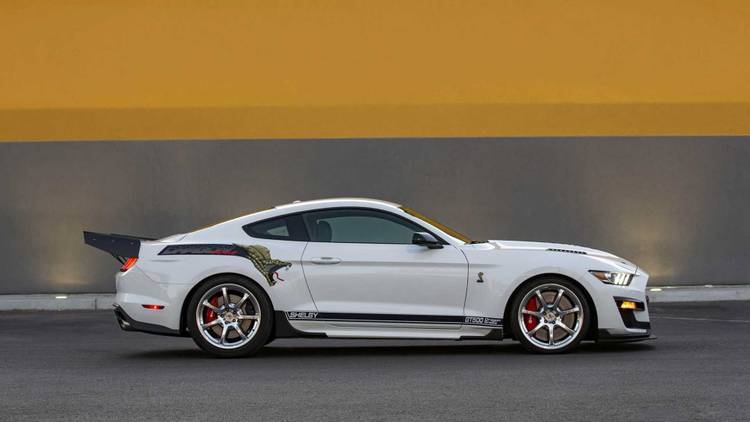
Credit: carbuzz.com
Race Car Spoilers
Race car spoilers are parts that help cars go faster and stay stable. They change the air flow over the car.
Spoilers reduce drag and add downforce. This helps cars keep grip on the road at high speeds.
Types Of Spoilers
There are many types of spoilers for race cars. Each type affects the car’s speed and handling in different ways.
- Rear Spoilers: Mounted on the back to push the car down.
- Front Spoilers (Splitters): Placed under the front bumper to reduce lift.
- Roof Spoilers: Found on the roof to control airflow and reduce drag.
- Side Spoilers: Installed on the sides to improve stability in turns.
Materials Used
Spoilers are made from strong and light materials. These materials help cars stay fast without adding weight.
- Carbon Fiber: Very light and strong, used in high-performance cars.
- Fiberglass: Less expensive, easy to mold into shapes.
- Aluminum: Lightweight metal, often used for durability.
- Plastic: Used in budget or street race cars, less durable.
Design Variations
Spoiler designs vary by shape and size. Each design changes how air moves around the car.
- Single Plane: One flat surface to create downforce.
- Multi-Element: Several layers for more control over air flow.
- Adjustable Spoilers: Can be changed to fit track conditions.
- Integrated Spoilers: Built into the car body for smooth airflow.
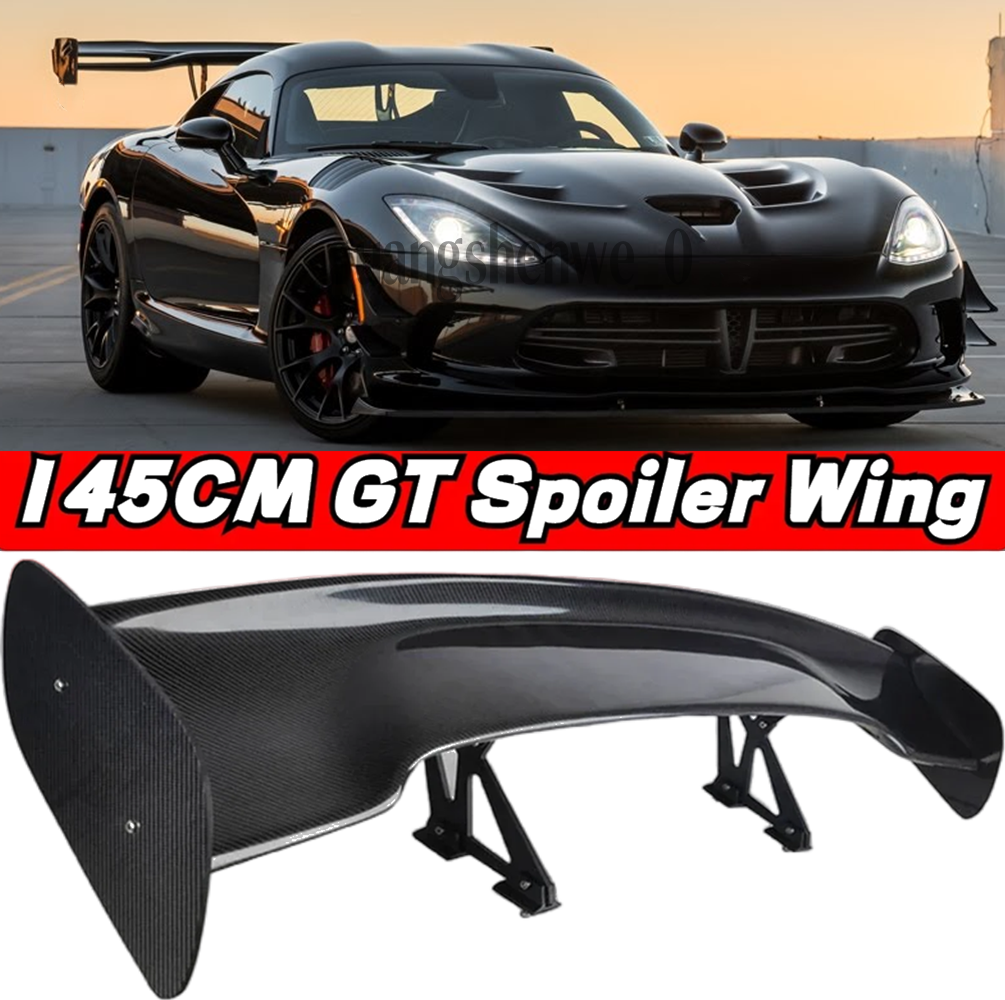
Credit: www.ebay.com
Aerodynamics In Racing
Aerodynamics plays a key role in race car performance. It affects speed, grip, and safety on the track.
Race cars use special designs to control air around them. Spoilers are one of these important parts.
Downforce And Drag
Downforce pushes the car down on the track. This helps the tires grip better during turns. Drag is air resistance that slows the car down. Designers try to balance downforce and drag for the best speed and control.
- Downforce improves cornering speed.
- High drag lowers top speed.
- Spoilers increase downforce by directing airflow.
- Too much downforce can cause extra drag.
Airflow Management
Airflow management means guiding air smoothly around the car. Spoilers redirect air to reduce turbulence. This lowers drag and increases stability. Smooth airflow also cools brakes and engine parts.
| Component | Effect on Airflow |
|---|---|
| Spoiler | Creates downforce by pushing air upward |
| Diffuser | Speeds up air under car to reduce pressure |
| Vents | Allow hot air to escape for cooling |
Impact On Handling
Aerodynamics affects how a car feels on the track. More downforce helps with tight turns. Less drag helps on straight parts. Spoilers help balance these forces for better control and faster lap times.
Spoiler Effects On Speed
Race cars use spoilers to change how air flows around them. Spoilers help control the car’s speed and stability.
These effects are important for quick acceleration, top speed, and safe cornering on the track.
Acceleration Benefits
Spoilers increase downforce on the car. This pushes the tires harder on the road.
More downforce means better grip. Better grip helps the car accelerate faster without slipping.
- Improves tire traction
- Prevents wheel spin
- Helps faster starts
Top Speed Considerations
Spoilers add drag, which slows the car down. This can limit the top speed.
Designing spoilers balances downforce and drag. Too much drag reduces speed but adds control.
- More downforce means more drag
- Less drag means higher top speed
- Engine power also affects top speed
Cornering Stability
Spoilers help keep the car stable in corners. Downforce presses the car on the road during turns.
This stability reduces sliding and helps the driver keep control at high speeds.
- Increases tire grip in turns
- Reduces oversteer and understeer
- Improves driver confidence and safety
Installation And Adjustment
Installing spoilers on race cars improves stability and control. Correct adjustment helps balance downforce and speed.
This guide covers positioning tips, angle settings, and customization options for spoilers.
Positioning Tips
Place the spoiler where it catches airflow without blocking driver view. The rear center is best for most race cars.
- Mount the spoiler at the rear edge of the trunk or hatch.
- Keep it level with the car’s roofline.
- Ensure it is securely fastened to avoid vibrations.
- Check for interference with rear lights or windows.
Angle Settings
Adjusting the spoiler’s angle changes how much downforce it creates. Small changes affect handling greatly.
| Angle | Effect | Use Case |
| 0° (Flat) | Minimal downforce | High speed, low drag tracks |
| 10° | Moderate downforce | Balanced handling and speed |
| 20° | High downforce | Curvy tracks requiring stability |
Customization Options
Customize spoilers to fit your car style and performance needs. Materials and shapes vary widely.
- Carbon Fiber – lightweight and strong
- Aluminum – durable and affordable
- Fiberglass – easy to shape and repair
- Wing – adjustable and aerodynamic
- Lip – subtle and sleek
- Raised – aggressive for maximum downforce
Famous Race Cars With Spoilers
Spoilers play a key role in race car design. They help improve speed and control on the track.
This article looks at famous race cars with spoilers. Learn about iconic models, racing legends, and innovations.
Iconic Models
Many race cars are known for their unique spoiler designs. These spoilers help cars stay stable at high speeds.
- Porsche 911 GT1: Features a large rear wing for downforce.
- Ford GT40: Uses a rear spoiler to reduce lift.
- Lamborghini Huracán GT3: Has an adjustable spoiler for curves.
- McLaren F1 GTR: Sports a rear spoiler for better grip.
Racing Legends
Some race cars became legends due to their spoiler designs. These spoilers gave drivers better control and speed.
| Car Model | Driver | Race Year | Spoiler Type |
| Ayrton Senna’s McLaren MP4/4 | Ayrton Senna | 1988 | High rear wing |
| Richard Petty’s Plymouth Superbird | Richard Petty | 1970 | Tall rear spoiler |
| Michael Schumacher’s Ferrari F2004 | Michael Schumacher | 2004 | Complex rear wing |
Technological Innovations
Technology changed how spoilers help race cars. New materials and shapes improve their effect on speed and handling.
Spoiler innovations include:
- Active spoilers that adjust to driving conditions
- Lightweight carbon fiber materials
- Wind tunnel tested designs for best downforce
- Integration with car aerodynamics for less drag
Future Trends In Spoiler Tech
Spoilers play a big role in race car performance. They improve aerodynamics and speed. New tech is changing how spoilers work.
Let’s explore future trends in spoiler technology. We will look at active spoilers, lightweight materials, and integration with electronics.
Active Spoilers
Active spoilers adjust their position based on car speed. This helps in balancing the car during races. They reduce drag and increase downforce.
- Adjusts automatically during high speeds
- Improves car stability on tracks
- Reduces air resistance for better fuel efficiency
Lightweight Materials
Light materials make cars faster and more efficient. New materials like carbon fiber are being used. They are strong yet very light.
| Material | Benefit |
| Carbon Fiber | Lightweight and strong |
| Aluminum | Reduces overall car weight |
| Kevlar | Offers durability |
Integration With Electronics
Technology helps in monitoring and adjusting spoilers. Sensors and computers work together. They provide real-time data and control.
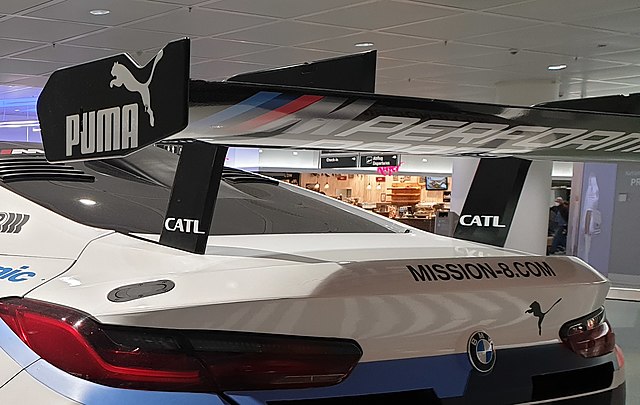
Credit: www.wikiwand.com
Frequently Asked Questions
What Is The Purpose Of Spoilers On Race Cars?
Spoilers improve a race car’s aerodynamics by reducing lift. They increase downforce, which helps tires grip the track better. This enhances stability and cornering speed during high-speed racing. Spoilers also help in controlling airflow to reduce drag, improving overall performance.
How Do Spoilers Affect Race Car Speed?
Spoilers increase downforce, allowing cars to maintain higher speeds through turns. While they may add slight drag, the improved grip boosts acceleration and handling. This balance helps drivers achieve faster lap times and better control on different track conditions.
Are All Race Cars Equipped With Spoilers?
Most professional race cars use spoilers for better aerodynamics and handling. However, the size and design vary by racing series and car type. Some vintage or specialized race cars might not have spoilers, relying on other aerodynamic features instead.
Can Spoilers Be Adjusted During A Race?
Yes, some race cars have adjustable spoilers that teams can tweak during a race. This helps optimize downforce and drag balance based on track conditions and race strategy. Adjustable spoilers provide a competitive edge by enhancing car performance dynamically.
Conclusion
Race cars with spoilers show how design meets speed. Spoilers help cars stick to the track and go faster. They control air flow and reduce drag. Drivers can handle turns better and stay safe. Every racer knows the value of a good spoiler.
These parts are small but very important. Understanding spoilers gives a new view of racing. Speed is not just power; it’s also smart design. Watching race cars with spoilers is more exciting now.







