
Have you ever looked inside your car and wondered what all those parts are called? Knowing the names of the interior parts of your car can make a big difference.
It helps you understand your vehicle better and communicate clearly when something needs fixing. Whether you’re a new driver or just curious, this guide will walk you through the key components inside your car. By the end, you’ll feel more confident every time you sit behind the wheel.
Ready to discover what’s inside your car? Let’s dive in!
Main Dashboard Components
The dashboard is the control center of a car. It holds many important parts drivers use every day.
These parts help drivers understand the car’s status and control comfort features.
Instrument Cluster
The instrument cluster shows key driving information. It is usually behind the steering wheel.
It has gauges and meters that help drivers watch speed, fuel, and engine health.
- Speedometer: shows how fast the car is going
- Tachometer: shows engine speed in RPM
- Fuel Gauge: shows how much fuel is left
- Temperature Gauge: shows engine temperature
Infotainment System
The infotainment system controls music, navigation, and phone connections. It is in the center of the dashboard.
Touchscreens or buttons let drivers choose radio stations or set GPS routes.
- Radio and media playback
- Bluetooth phone connection
- Navigation and maps
- Settings for car features
Climate Controls
Climate controls let drivers adjust the car’s temperature and airflow. They keep the cabin comfortable.
Controls include buttons or dials for heating, cooling, and fan speed.
- Temperature adjustment
- Fan speed control
- Airflow direction settings
- Air conditioning on/off
Warning Lights
Warning lights alert drivers to car problems. They appear on the instrument cluster.
Each light has a symbol that shows the issue type.
- Check Engine: engine or emission issues
- Oil Pressure: low engine oil pressure
- Battery: charging system problem
- Brake: brake system alert
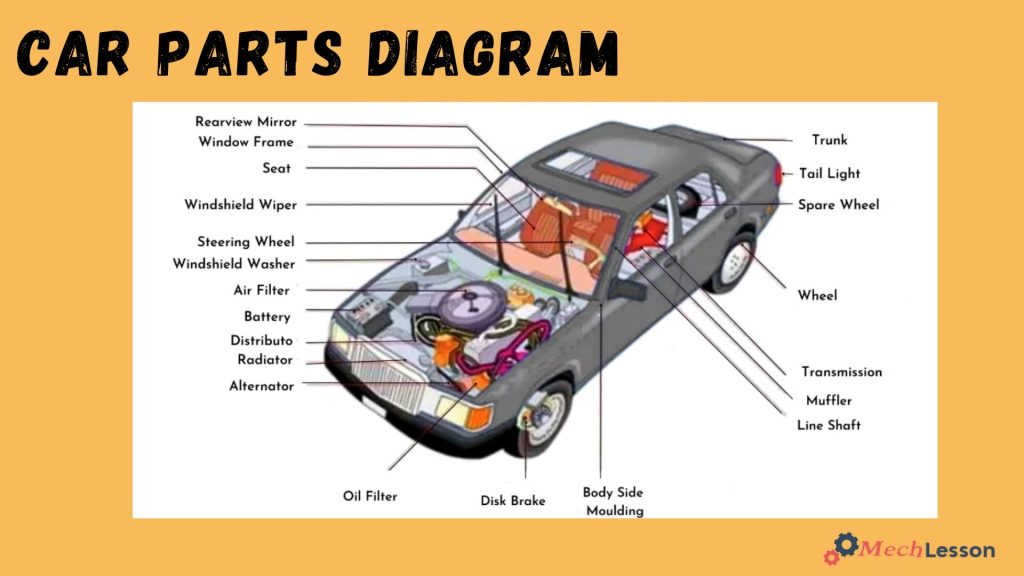
Credit: mechlesson.com
Steering And Control Elements
The interior of a car has many parts that help you drive safely. Steering and control elements let you guide the car and manage its functions.
These parts include the steering wheel, turn signal lever, wiper controls, and gear shifter. Each has a specific role in controlling the vehicle.
Steering Wheel
The steering wheel is the main control for changing the car’s direction. It connects to the car’s wheels and allows you to turn left or right.
Many steering wheels also have buttons for the horn, audio controls, and cruise control settings.
Turn Signal Lever
The turn signal lever is usually found on the left side of the steering column. It signals your intention to turn or change lanes.
- Push up to signal a right turn
- Push down to signal a left turn
- Some cars have a button on the lever for lane change signals
Wiper Controls
Wiper controls operate the windshield wipers and washers. These controls help keep your view clear in rain or snow.
| Control | Function |
| Off | Wipers are off |
| Intermittent | Wipers wipe at timed intervals |
| Low Speed | Continuous slow wiping |
| High Speed | Continuous fast wiping |
| Washer | Squirts cleaning fluid on windshield |
Gear Shifter
The gear shifter changes the car’s transmission gear. It controls whether the car moves forward, backward, or stays in park.
Common gear positions include:
- Park (P) – locks the transmission
- Reverse (R) – moves the car backward
- Neutral (N) – disengages the transmission
- Drive (D) – moves the car forward
- Low (L) – used for more power at low speeds
Seating And Comfort Features
The inside of a car has many parts that make riding comfortable. The seats are very important for comfort.
This section explains the main parts of car seating and comfort features.
Front Seats
Front seats are where the driver and front passenger sit. They are built for support and comfort.
These seats often have extra padding and special materials to make long drives easier.
Rear Seats
Rear seats are for passengers sitting behind the front seats. They are usually wider to hold more people.
Many rear seats can fold down to create more space for cargo.
Seat Adjusters
Seat adjusters help change the seat position. This allows drivers and passengers to find their best fit.
- Manual levers to slide seats forward or backward
- Electric controls for height and tilt
- Recline function to lean the seat back
Headrests
Headrests are cushions attached to the top of seats. They support the head and neck during travel.
Adjustable headrests improve safety and comfort by fitting different heights.
Storage And Utility Areas
Cars have many storage and utility areas inside. These spaces help keep items organized and easy to reach. Drivers and passengers use them for small objects and essentials.
Understanding these areas can improve your driving experience. It also helps you keep the car tidy and clutter-free.
Glove Compartment
The glove compartment is a small storage space on the passenger side. It usually holds the car manual, registration, and insurance papers. Some people use it for gloves or small tools.
Center Console
The center console is between the driver and front passenger seats. It can store phones, keys, and other items. Many consoles have armrests and charging ports.
Cup Holders
Cup holders keep drinks secure while driving. They are usually near the center console or doors. Some cars have foldable or adjustable cup holders for different cup sizes.
- Hold cups, bottles, and cans
- Prevent spills during driving
- Easy to clean and access
- Sometimes include extra storage space
Door Pockets
| Feature | Description |
| Location | Inside lower part of car doors |
| Use | Store maps, bottles, small items |
| Capacity | Varies by car model |
| Access | Easy for driver and passengers |
Safety And Assistance Devices
Cars have many parts inside to keep passengers safe. Safety and assistance devices help prevent accidents.
These devices work together to protect people and make driving easier. Knowing their names helps you understand your car better.
Seat Belts
Seat belts keep passengers in place during sudden stops or crashes. They reduce the risk of injury by holding you tight.
Most cars have three-point seat belts for front and rear seats. Always wear your seat belt for safety.
Airbags
Airbags inflate quickly in a crash to cushion passengers. They work with seat belts to protect your head and chest.
Common airbags include front, side, and curtain airbags. They reduce the chance of serious injuries in accidents.
Parking Sensors
Parking sensors help drivers park safely by detecting nearby objects. They use sounds or lights to warn about obstacles.
- Front sensors detect objects in front of the car
- Rear sensors alert you to obstacles behind
- Some systems include side sensors for tight spaces
Rearview Mirrors
Rearview mirrors let drivers see behind the car. They help with changing lanes and reversing safely.
Cars usually have a center rearview mirror and side mirrors. Some mirrors have automatic dimming to reduce glare.

Credit: m.youtube.com
Pedals And Floor Controls
The interior of a car has several important parts. Pedals and floor controls help you drive safely. They are essential for car operation.
Learning about these controls helps you understand your car better. It also ensures a smoother driving experience.
Accelerator Pedal
The accelerator pedal makes the car go faster. It is found on the far right side. Press it gently to increase speed.
Be careful not to press too hard. Sudden acceleration can be dangerous.
Brake Pedal
The brake pedal slows down the car. It is in the middle of the pedal set. Press it to reduce speed or stop.
Use smooth and steady pressure. This helps avoid sudden stops.
Clutch Pedal
The clutch pedal is only in manual cars. It is on the far left. It helps you change gears smoothly.
Press it fully before shifting gears. Release it slowly to engage the gears.
Footrest
The footrest is for your left foot in automatic cars. It provides comfort during long drives. It also helps stabilize your posture.
Use it when you do not need the clutch or other pedals. It reduces fatigue and keeps your foot relaxed.
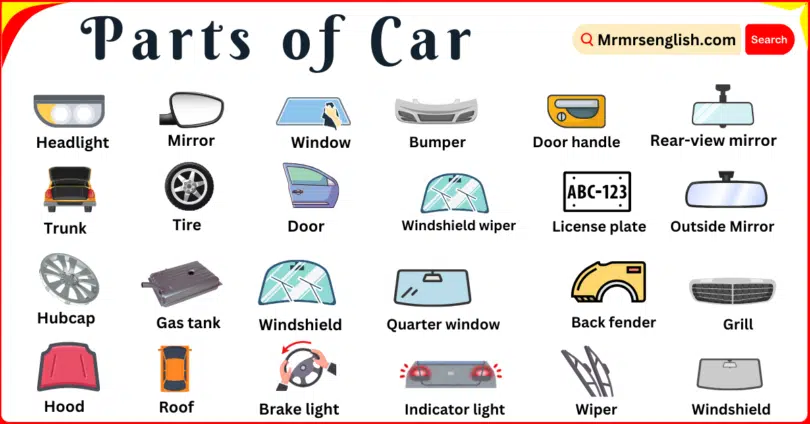
Credit: mrmrsenglish.com
Frequently Asked Questions
What Are The Main Interior Parts Of A Car?
The main interior parts include seats, dashboard, steering wheel, gear shift, pedals, and center console. These components ensure comfort and control for drivers and passengers.
How Does The Dashboard Function Inside A Car?
The dashboard displays vital information like speed, fuel, and engine status. It also houses controls for air conditioning and entertainment systems, enhancing the driving experience.
What Role Does The Steering Wheel Play In A Car?
The steering wheel controls the car’s direction. It connects to the steering system, allowing drivers to maneuver safely and maintain control on the road.
Why Is The Center Console Important In Car Interiors?
The center console stores essentials and holds controls for audio and climate. It helps organize the interior and provides easy access to important features.
Conclusion
Knowing the names of a car’s interior parts helps you understand your vehicle better. It makes repairs and communication with mechanics easier. Each part has a clear function inside the car. This knowledge also improves your safety while driving. Remember, cars have many parts you use every day.
Learning these names builds your confidence as a driver. Keep exploring and asking questions about your car. Small steps lead to greater car knowledge and care.







