
Are you sure your tires are safe enough for the road? Knowing how to use a tire depth gauge can be a game-changer for your safety and your wallet.
With just a simple tool, you can quickly check if your tires have enough tread to grip the road properly. This small step could prevent accidents and help you avoid costly repairs. You’ll learn exactly how to measure your tire depth accurately and why it matters more than you might think.
Keep reading to take control of your car’s safety today.
Credit: www.blackcircles.ca
Why Tire Depth Matters
Tire depth is the measure of the tread on your tires. It affects how your vehicle drives and stops. Checking tire depth helps keep you safe on the road.
Using a tire depth gauge is a simple way to check this important measurement. Knowing why tire depth matters can help you keep your tires in good condition.
Impact On Vehicle Safety
Shallow tire tread reduces grip on the road. This makes it harder to stop quickly, especially in rain or snow. It increases the risk of skidding and accidents.
- Deeper tread helps water escape under the tire.
- Better tread improves control on wet roads.
- Good tread reduces the chance of hydroplaning.
- Safe tire depth helps maintain vehicle stability.
Legal Requirements
Many places have laws about minimum tire depth. These rules keep drivers safe and reduce accidents. Driving with worn tires may lead to fines or penalties.
| Country/Region | Minimum Tread Depth |
| United States | 2/32 inch (1.6 mm) |
| United Kingdom | 1.6 mm |
| Germany | 1.6 mm |
| Australia | 1.5 mm |
Effect On Performance
Tire depth also affects how your car handles and uses fuel. Tires with deep tread grip better and provide a smoother ride. Worn tires can make your vehicle less efficient.
- Improves braking distance
- Enhances steering response
- Reduces fuel consumption
- Increases tire life
Types Of Tire Depth Gauges
Tire depth gauges help measure the tread on your tires. This is important for safety. There are different types to choose from.
Each type works in a simple way. They show how much tread your tire has left. Let’s look at the main types.
Stick Gauges
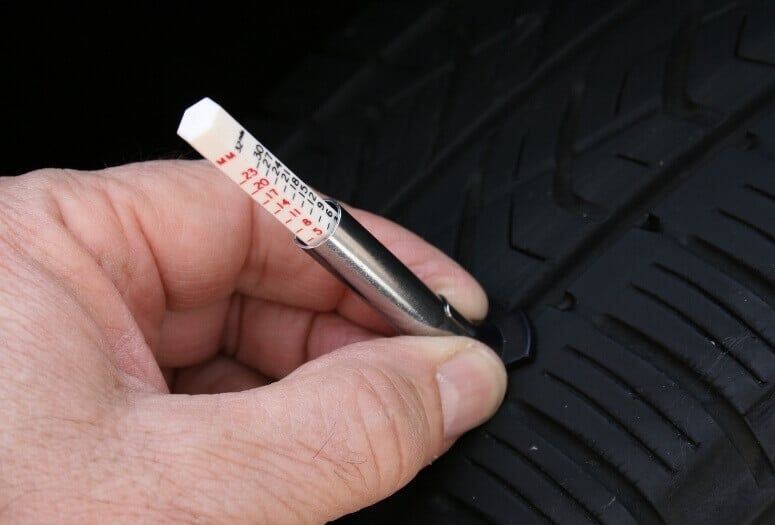
Stick gauges are small tools with a sliding stick. You push the stick into the tire tread. The stick shows the depth on a scale.
They are easy to use and do not need batteries. Stick gauges are lightweight and fit in your pocket. They give a clear reading of tire depth.
Digital Gauges
Digital gauges use an electronic display to show tire depth. You place the probe into the tread, and the screen shows the number.
They are very accurate and simple to read. Digital gauges need batteries but offer quick results. Some have extra features like backlight for dark places.
Penny Test Alternative
The penny test is a quick way to check tread depth without tools. You use a penny and insert it into the tread grooves.
If you see the top of Lincoln’s head, your tread is low. This method is simple but less exact than a gauge. It is a good way to check on the go.
Preparing To Measure Tire Depth
Measuring tire depth helps keep your vehicle safe on the road. You need to prepare before using a tire depth gauge.
Getting ready makes the measuring process easier and more accurate.
Tools Needed
Gather all necessary tools before starting the measurement. This saves time and avoids mistakes.
- Tire depth gauge
- Clean cloth or rag
- Flashlight (if lighting is poor)
- Gloves (optional for safety)
Ideal Conditions
Choose the right environment to measure tire depth. Good conditions improve accuracy.
| Condition | Why It Matters |
| Flat surface | Ensures the tire is stable |
| Good lighting | Makes reading the gauge easier |
| Clean tire surface | Removes dirt that hides wear |
| Cool temperature | Prevents tire expansion |
Tire Inspection Tips
Check your tires carefully before measuring depth. Look for any visible problems.
- Remove stones or debris stuck in the tread.
- Look for cracks or cuts on the tire sidewall.
- Check for uneven wear patterns.
- Note the tire’s age and usage history.
Step-by-step Measurement Process
Checking your tire tread depth is important for safe driving. Using a tire depth gauge helps you measure accurately.
This guide shows you how to use the gauge step-by-step. Follow these easy steps to get the right measurement.
Locating Tread Grooves
Tread grooves are the spaces between the raised parts on your tire. These grooves help water escape and keep your car steady.
Look closely at your tire and find several deep grooves around the tire. Choose different spots to check for even wear.
- Find at least three grooves around the tire
- Check near the center and edges of the tire
- Use grooves that look clean and free of dirt
Using The Gauge Correctly
Hold the gauge with one hand and press the base flat against the tire. Make sure the measuring probe slides into the groove.
Push the probe down until it touches the bottom of the groove. Read the measurement on the scale without moving the gauge.
- Place the gauge’s base flat on the tire surface
- Slide the probe slowly into the groove
- Press gently until you feel resistance
- Keep the gauge steady to get an accurate reading
Recording Measurements
Write down the depth measurements from each groove you checked. This helps track tire wear over time.
Compare the readings to the recommended tread depth for your tires. Replace tires if the depth is too low.
- Note each groove’s measurement separately
- Look for the smallest depth value
- Check if any measurement is below 2/32 inch (1.6 mm)
- Use a notebook or phone app to record data
Interpreting Tire Depth Readings
Using a tire depth gauge helps check how much tread is left on your tires. It measures the depth in millimeters or 32nds of an inch.
Reading the gauge correctly tells you if your tires are safe to use or need replacement soon.
Safe Depth Range
The safe tread depth keeps your tires gripping the road well. Most experts say tires are safe if the tread is above 4/32 inch.
New tires usually start with 10/32 inch or more. Driving with less than 4/32 inch reduces safety, especially on wet roads.
- Above 6/32 inch: Tire is in good condition
- Between 4/32 and 6/32 inch: Monitor tire closely
- Below 4/32 inch: Tire is less safe, consider replacing soon
When To Replace Tires
Replace tires before the tread depth gets too low. Many states require tire tread to be at least 2/32 inch.
Low tread depth increases the risk of skidding and longer stopping distances. Replace tires early to stay safe on the road.
- Tread depth at or below 2/32 inch means immediate replacement
- Replace tires if you notice cracks, bulges, or damage
- Check tread depth every few months for safety
Signs Of Uneven Wear
Uneven tire wear means some parts of the tread are thinner than others. This can cause handling problems and reduce tire life.
Check the gauge at different points across the tire. Large differences in depth mean uneven wear.
- Wear on one edge may mean poor wheel alignment
- Center wear may indicate over-inflation
- Wear on both edges may mean under-inflation
- Patchy wear can signal suspension problems

Credit: spp.coop
Maintaining Tire Health
Taking care of your tires is important for safety. Using a tire depth gauge helps you know when it’s time for new tires.
Good tire health means better fuel efficiency and a smoother ride. Let’s explore how regular checks and care can keep tires in top shape.
Regular Depth Checks
A tire depth gauge measures how much tread is left on your tires. It’s important to check this often.
Worn tires can lead to accidents. Make depth checks a part of your routine.
- Check every month
- Measure in different spots
- Replace tires with low tread
Proper Inflation
Inflating your tires correctly keeps them in good condition. Use a tire gauge to check pressure.
Under-inflated tires wear out faster. Over-inflated tires can be dangerous too.
- Check pressure monthly
- Use the right pressure for your car
- Check pressure before long trips
Rotating Tires
Rotating tires helps them wear evenly. This extends their life and saves you money.
Follow your car’s manual for rotation patterns. Regular rotation is key for tire health.
- Rotate tires every 6,000 miles
- Use a cross pattern for rotation
- Check alignment during rotation
Common Mistakes To Avoid
Using a tire depth gauge is essential for safety. Many people make errors when checking their tire tread. Here are some common mistakes to avoid.
Incorrect Gauge Use
Ensure you use the gauge properly. Incorrect use can give false readings. Always follow the tool’s instructions carefully.
- Place the gauge in the tread grooves
- Read the measurement at eye level
- Check multiple spots around the tire
Ignoring Warning Signs
Do not ignore signs of tire wear. Worn tires reduce grip and increase stopping distance. Regular checks can prevent accidents.
| Warning Sign | Action |
| Uneven tread wear | Check alignment |
| Bald spots | Replace tire |
| Tread depth below 2/32 inch | Immediate replacement |
Delaying Replacement
Do not delay replacing tires. Old or worn-out tires can be dangerous. Timely replacement ensures safety on the road.

Credit: www.reddit.com
Frequently Asked Questions
How Do I Read A Tire Depth Gauge Correctly?
To read a tire depth gauge, insert the probe into the tire tread groove. Press the base flat against the tread. The gauge shows the tread depth in millimeters or 32nds of an inch. Accurate reading helps assess tire safety and performance.
When Should I Use A Tire Depth Gauge?
Use a tire depth gauge regularly, especially before long trips or during seasonal changes. It helps monitor tread wear and ensures your tires meet safety standards. Checking tread depth prevents accidents caused by worn-out tires.
What Is The Minimum Safe Tire Tread Depth?
The minimum safe tread depth is 2/32 inches (1. 6 mm). Below this, tires lose traction and increase accident risk. Use a tire depth gauge to measure and replace tires before they reach this limit.
Can A Tire Depth Gauge Detect Uneven Tire Wear?
Yes, a tire depth gauge can detect uneven wear by measuring tread depth at multiple points. Uneven wear indicates alignment or suspension issues. Early detection helps maintain tire performance and extends tire life.
Conclusion
Using a tire depth gauge helps keep your tires safe and strong. Check your tire depth regularly for better grip and control. Measuring is quick and easy, with clear results. Good tire care improves your driving and saves money. Stay aware of your tire condition to avoid accidents.
A small tool can make a big difference in safety. Keep your ride smooth and secure on every trip. Simple steps lead to safer roads for everyone.







