
Have you ever struggled to inflate a tire or power your tools without the right equipment? A portable air compressor can be your best friend in these situations.
It’s compact, easy to carry, and can save you time and effort. But how do you use it correctly to get the most out of it? This guide will walk you through simple, step-by-step instructions to help you master your portable air compressor quickly and safely.
Keep reading, and you’ll soon feel confident handling your compressor like a pro.
Choosing The Right Compressor
Picking the right portable air compressor makes your work easier. It depends on what you need the compressor to do.
Look at the different types and features before buying. This helps you get the best fit for your tasks.
Types Of Portable Compressors
There are several types of portable compressors. Each has strengths for certain jobs.
- Pancake Compressors:Small, flat tanks that store air. Good for light tasks like inflating tires.
- Hot Dog Compressors:Long tanks shaped like a hot dog. They hold more air for medium jobs.
- Twin Stack Compressors:Two tanks stacked together. They give more power and longer use time.
- Portable Electric Compressors:Use electricity and are quiet. Best for indoor work.
- Gas-Powered Compressors:Use gasoline. Ideal for outdoor sites without power access.
Key Features To Consider
| Feature | Description |
| Tank Size | Determines how much air the compressor can store. |
| CFM Rating | Measures how much air flows per minute. Higher means more power. |
| PSI | Shows the maximum pressure the compressor can deliver. |
| Noise Level | Important if you work indoors or in quiet areas. |
| Weight | Affects how easy it is to carry around. |
Power Sources And Portability
Power source affects where and how you use the compressor. Portability means you can move it easily.
- Electric:Plug into outlets. Great for garages and workshops.
- Battery-Powered:Cordless and easy to carry. Limited by battery life.
- Gasoline:Run anywhere outdoors. Heavier and louder.
- Weight:Lighter models are best for quick jobs and frequent moves.
- Handles and Wheels:Make moving heavy compressors easier.
Setting Up Your Compressor
Setting up a portable air compressor is simple if you follow the right steps. This guide helps you prepare your compressor safely and correctly.
Proper setup ensures your compressor works well and lasts longer. Let’s start with the safety tips.
Safety Precautions
Always place the compressor on a flat, stable surface. Keep it away from water and heat sources.
Wear safety goggles and ear protection. Make sure the area is well ventilated before use.
- Check for damaged cords and plugs before use
- Do not use the compressor in wet conditions
- Keep children and pets away from the compressor
- Read the user manual for specific safety instructions
Assembly Steps
Start by unboxing your compressor and its parts. Lay out everything to make assembly easier.
Attach the handle and wheels if your model has them. Tighten all bolts and screws securely.
- Connect the air filter if it is separate
- Attach the pressure gauge to the tank
- Install the safety valve according to instructions
- Ensure all parts fit tightly to avoid leaks
Connecting Accessories
Use the correct hose for your compressor. Check the hose for cracks or damage before connecting.
Attach the hose to the compressor’s air outlet. Screw it on tightly but do not over-tighten.
- Connect air tools or accessories to the hose end
- Use quick-connect fittings if available for easy changes
- Check all connections for air leaks before starting
- Turn off the compressor when changing accessories
Operating The Compressor
Using a portable air compressor correctly helps you work safely and efficiently. This guide covers the main steps to operate it well.
Understanding how to start, adjust, and use the compressor will make your tasks easier. Follow these simple tips.
Starting And Stopping
Before starting, check the compressor for damage and ensure it has enough oil if needed. Connect the power source and attach the air hose securely.
Turn on the compressor using the power switch. Let it build pressure before use. To stop, turn off the power and release any remaining air pressure safely.
Adjusting Pressure Settings
Set the pressure to match the tool or task you are using. Most compressors have a pressure regulator knob for this purpose.
Turn the knob clockwise to increase pressure and counterclockwise to reduce it. Check the pressure gauge to confirm the correct setting.
- Use lower pressure for small inflating tasks
- Higher pressure suits air tools like nail guns
- Always stay within the tool’s recommended pressure range
Common Uses And Applications
Portable air compressors power many tools and tasks around the home or job site. They are easy to carry and use in different places.
Common uses include inflating tires, powering nail guns, spray painting, and cleaning dust from surfaces. They save time and effort.
- Inflating car, bike, or sports tires
- Operating pneumatic tools like staplers and wrenches
- Spray painting walls or furniture
- Blowing dust from keyboards or machinery

Credit: manuals.plus
Maintenance Tips
Keeping your portable air compressor in good shape helps it last longer. Proper care also keeps it working safely and well.
Regular maintenance checks prevent problems and save money on repairs. Here are some tips to maintain your air compressor.
Regular Cleaning
Cleaning your air compressor removes dust and dirt. This prevents blockages and overheating. Wipe the outside with a dry cloth often.
- Clean air filters every few uses
- Remove debris from vents and cooling fins
- Check and clean the compressor pump
- Use compressed air to clear tight spaces
Checking For Leaks
Leaks reduce the compressor’s efficiency and waste power. Check all hoses and fittings for cracks or loose connections. Listen for hissing sounds.
| Leak Check Area | What to Look For |
| Hoses | Cracks, holes, or stiffness |
| Connections | Loose or missing fittings |
| Valves | Air escaping or not closing fully |
| Tank | Rust spots or holes |
Storage Best Practices
Storing your compressor properly protects it from damage. Keep it in a dry, cool place away from dust and moisture.
Follow these storage tips:
- Drain all air and moisture from the tank before storing
- Disconnect hoses and electrical power
- Cover the unit with a cloth or plastic cover
- Store upright on a flat surface
- Check the compressor monthly during long storage
Troubleshooting Common Issues
Using a portable air compressor is easy, but sometimes problems occur. Knowing common issues helps you fix them fast.
This guide covers three common problems and how to solve them safely and quickly.
Compressor Won’t Start
If your compressor does not start, check the power supply first. Make sure it is plugged in correctly and the outlet works.
Look at the fuse or circuit breaker. Replace a blown fuse or reset the breaker if needed.
- Check the power cord for damage
- Ensure the power switch is on
- Reset the circuit breaker or replace fuses
- Inspect the motor for stuck parts
Low Pressure Problems
Low pressure means the compressor is not pumping air well. Check the air filter for dirt and clean or replace it.
Inspect hoses and fittings for leaks. Tighten or replace any damaged parts to keep air pressure steady.
- Clean or change the air filter regularly
- Check hoses for holes or cracks
- Tighten loose fittings
- Drain moisture from the tank often
Overheating Concerns
If the compressor gets too hot, it may stop working to protect itself. Make sure it has good airflow around it.
A dirty cooling fan or clogged vents can cause overheating. Clean these parts and allow breaks between uses.
- Keep the compressor in a cool, ventilated area
- Clean the cooling fan and vents often
- Do not run the compressor for too long
- Check oil levels if your model uses oil
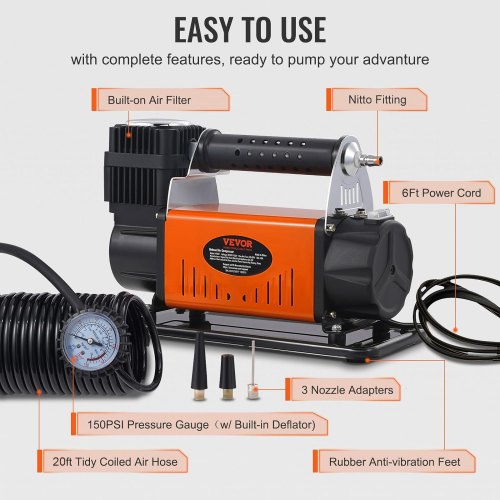
Credit: www.vevor.com
Safety Tips For Beginners
Using a portable air compressor can be helpful. It is important to follow safety tips to prevent accidents. This guide is for beginners who want to use an air compressor safely.
By learning how to use this tool properly, you can ensure your safety and get the job done efficiently. Always pay attention to the instructions and guidelines.
Protective Gear
Always wear the right protective gear. This includes safety goggles and gloves. These will protect your eyes and hands from debris and high pressure.
Wearing sturdy shoes can prevent foot injuries. Ear protection is also useful, as compressors can be loud.
- Safety goggles
- Gloves
- Sturdy shoes
- Ear protection
Handling High Pressure
Air compressors work with high pressure. Always check the pressure gauge before use. This ensures you use the right pressure for your task.
Never point the hose at anyone. Release pressure slowly when you finish. This will prevent sudden bursts of air.
- Check pressure gauge
- Release pressure slowly
- Do not point hose at people
Avoiding Common Mistakes
Read the manual before using your compressor. This helps you understand its features and limits. Do not overload the compressor; follow the manufacturer’s recommendations.
Store the compressor in a dry place. Moisture can damage the tool. Regular maintenance keeps it in good condition.
- Read the manual
- Do not overload
- Store in a dry place
- Regular maintenance

Credit: manuals.plus
Frequently Asked Questions
What Are The Main Uses Of A Portable Air Compressor?
Portable air compressors inflate tires, power air tools, and clean debris. They are handy for home, automotive, and outdoor tasks. Their mobility allows easy use anywhere without needing a fixed power source.
How Do I Safely Operate A Portable Air Compressor?
Check oil levels and connections before use. Wear safety glasses and avoid over-inflating tires. Use the correct pressure setting for your task. Always turn off and unplug after use to prevent accidents.
Can A Portable Air Compressor Inflate All Tire Types?
Yes, portable air compressors can inflate car, bike, and motorcycle tires. Ensure the nozzle fits the valve stem. Adjust pressure based on tire specifications to avoid damage.
How Do I Maintain My Portable Air Compressor?
Regularly check oil levels and clean air filters. Drain moisture from the tank after each use. Store it in a dry, cool place to extend lifespan. Follow manufacturer maintenance guidelines.
Conclusion
Using a portable air compressor is simple and saves time. Always check the pressure gauge before use. Connect the hose tightly to avoid air leaks. Keep the compressor clean and store it safely. Regular maintenance helps the tool last longer.
Small tasks like inflating tires become easy and quick. A portable air compressor is a useful tool for many jobs. Practice a few times to get comfortable. You will find it handy around your home or car.







