
Have you ever faced the frustration of a dead car battery at the worst possible moment? Using a jumper starter can save you from that hassle quickly and easily.
But if you’re not careful, it can also be dangerous. Knowing how to use your jumper starter safely is key to protecting yourself, your vehicle, and your device. In this guide, you’ll discover simple steps to jump-start your car without risk.
Keep reading to make sure you’re ready to handle any battery emergency with confidence and safety.
Choosing The Right Jumper Starter
A jumper starter helps you start a car with a dead battery. Choosing the right one keeps you safe and prepared.
Look at the type, power, and safety features before buying a jumper starter. This guide explains what to check.
Types Of Jumper Starters
There are different types of jumper starters to fit your needs. Some are small and portable, while others are bigger.
Basic models only jump-start cars. Advanced models may have USB ports and lights for emergencies.
- Portable jump starters: Easy to carry and store
- Multi-function jump starters: Include extra features like charging devices
- Heavy-duty jump starters: For trucks and large vehicles
Capacity And Power Ratings
Check the power ratings to match your vehicle’s battery. Higher amps work for bigger engines.
Capacity tells how many times you can jump-start before recharging the starter.
| Vehicle Type | Recommended Peak Amps |
|---|---|
| Small Cars | 300-400 amps |
| Medium Cars | 400-600 amps |
| Trucks and SUVs | 600-1000 amps |
Safety Features To Look For
Safety features protect you and your vehicle during jump-starting. Always pick starters with these features.
- Reverse polarity protection prevents damage if cables connect wrong
- Short circuit protection stops sparks and accidents
- Overcharge protection keeps the starter from overheating
- LED indicators show battery and connection status
Preparing Your Vehicle
Using a jumper starter safely requires careful preparation. Ensure your vehicle is ready before you start the process.
Follow these guidelines to position the vehicles correctly, turn off unnecessary components, and check the battery’s condition.
Positioning The Vehicles
Place the vehicles close enough to connect the jumper cables, but avoid them touching. This prevents accidental short circuits.
- Ensure both vehicles are in park or neutral.
- Turn off the ignition in both vehicles.
- Set the parking brakes for added safety.
Turning Off Electrical Components
Switch off all electrical components to avoid a power surge when connecting the jumper cables. This includes lights, radio, and air conditioning.
Checking Battery Condition
Inspect the battery for any visible damage, such as cracks or leaks. A damaged battery can be dangerous and should not be jumped.
| Condition | Action |
| No visible damage | Proceed with jumping |
| Cracks or leaks | Do not jump, replace battery |
| Corrosion on terminals | Clean terminals before jumping |
Connecting The Jumper Starter
Using a jumper starter can help start your car safely. It is important to connect the cables correctly. This guide shows how to connect the jumper starter with care.
Follow the steps below to avoid damage or injury. Make sure you know the right terminals and the correct order to attach the cables.
Identifying Positive And Negative Terminals
Locate the battery terminals on your car. The positive terminal usually has a “+” sign and is often red. The negative terminal has a “-” sign and is usually black.
- Positive terminal: marked with “+” and red color
- Negative terminal: marked with “-” and black color
- Check the battery label if unsure
Correct Cable Attachment Sequence
Attach the jumper cables in the right order to avoid sparks or damage. Follow these steps carefully to connect the jumper starter safely.
- Connect the red clamp to the positive terminal on the dead battery.
- Attach the other red clamp to the positive terminal on the jumper starter.
- Connect the black clamp to the negative terminal on the jumper starter.
- Attach the other black clamp to a metal ground on the vehicle with the dead battery, away from the battery itself.
Avoiding Common Connection Mistakes
Incorrect connections can cause sparks or damage the battery. Avoid these common mistakes to keep the process safe.
| Mistake | Why It Is Dangerous | How to Avoid |
|---|---|---|
| Reversing positive and negative clamps | Can cause sparks and battery damage | Check terminal signs and colors before attaching |
| Connecting black clamp to battery terminal | May cause sparks near the battery | Attach black clamp to metal ground on the car frame |
| Not securing clamps tightly | Loose connection can interrupt power flow | Ensure clamps are firmly attached to terminals |
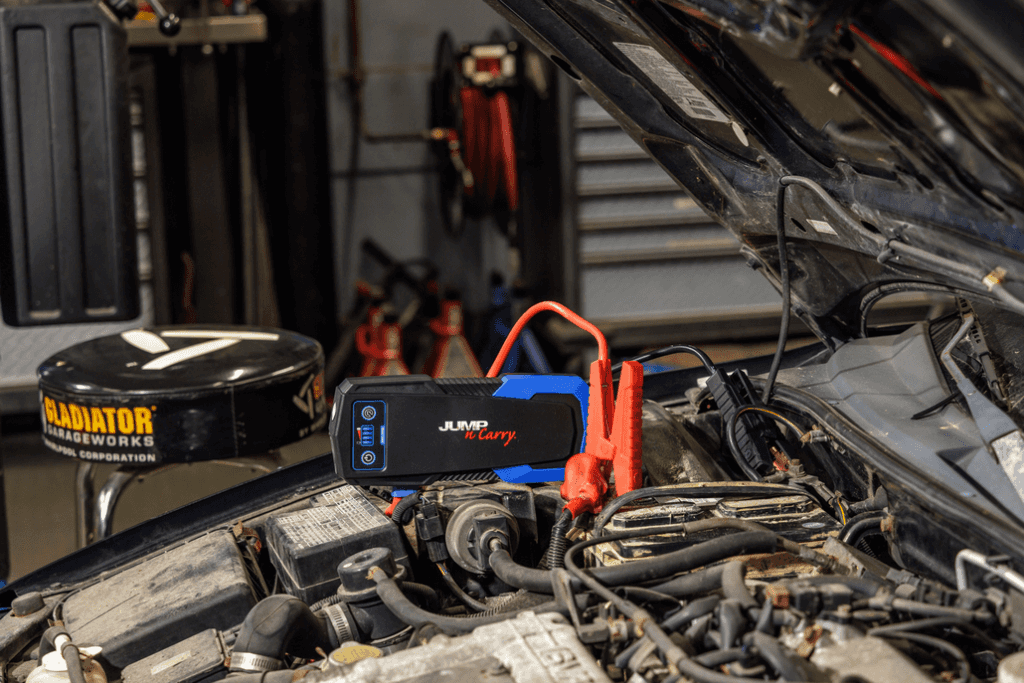
Credit: www.dicksmithinfiniti.com
Starting The Engine Safely
Using a jumper starter can help start your car when the battery is dead. You must follow safety steps to avoid damage or injury.
This guide explains how to power on the jumper starter, crank the engine, and handle failed starts safely.
Powering On The Jumper Starter
Before connecting, make sure the jumper starter is fully charged. Check the device for any damage or leaks.
- Turn off the jumper starter before connecting clamps.
- Attach the red clamp to the positive (+) terminal of the dead battery.
- Attach the black clamp to a metal ground on the engine block.
- Turn on the jumper starter after all connections are secure.
- Do not touch the clamps together while the device is on.
Cranking The Engine
Start the car engine immediately after powering on the jumper starter. Do not crank the engine for too long.
| Action | Recommended Time | Notes |
| Crank the engine | 5 to 10 seconds | Stop if engine does not start |
| Wait between attempts | 1 to 2 minutes | Let the jumper starter cool down |
| Maximum attempts | 3 times | Prevent damage to the starter and battery |
Handling Failed Starts
If the engine does not start after several attempts, check the connections and the battery condition.
- Make sure clamps are tight and on correct terminals.
- Look for corrosion or damage on battery terminals.
- Try to clean the terminals before another attempt.
- If still no start, do not keep cranking to avoid damage.
- Seek professional help if the problem continues.
After Jump-starting
After using the jumper starter, follow safety steps to protect yourself and your vehicle. Proper handling keeps the device ready for next use.
Take your time to disconnect and care for the jumper starter battery. Also, watch your car’s battery health to avoid future issues.
Disconnecting The Jumper Starter
Turn off your vehicle and remove the jumper cables carefully. Disconnect the negative clamp first, then the positive clamp.
- Always wear gloves to avoid sparks.
- Do not let clamps touch each other.
- Keep cables away from moving parts in the engine.
Charging The Jumper Starter Battery
Charge your jumper starter after each use to keep it ready. Use the charger included with the device and follow the instructions carefully.
| Charging Method | Recommended Time | Notes |
| Wall Outlet | 4 to 6 hours | Use original charger only |
| Car Charger | 6 to 8 hours | Connect before starting car |
| USB Charging | 8 to 10 hours | Use high-power USB port |
Monitoring Your Vehicle’s Battery Health
Keep an eye on your car battery after jump-starting. A failing battery can cause trouble, so watch for warning signs.
- Slow engine crank
- Dim headlights
- Warning lights on dashboard
- Electrical accessories not working well
Safety Precautions
Using a jumper starter can help start a vehicle safely. You must follow safety rules to avoid accidents.
Taking precautions protects you and your vehicle from damage or injury.
Avoiding Sparks And Short Circuits
Always connect the jumper starter clamps in the correct order. This reduces the risk of sparks and short circuits.
Do not let the clamps touch each other or any metal part of the vehicle during use.
- Attach the positive clamp (+) to the positive battery terminal first
- Attach the negative clamp (–) to a metal ground away from the battery
- Remove clamps in reverse order after use
- Keep clamps dry and clean
Protective Gear Recommendations
Wear safety glasses to protect your eyes from sparks or battery acid. Gloves help protect your hands.
Use insulated gloves to avoid electric shock when handling clamps and cables.
- Safety glasses or goggles
- Insulated gloves
- Long sleeves to protect your arms
- Closed-toe shoes for foot safety
Storing The Jumper Starter Properly
Store the jumper starter in a cool, dry place. Avoid areas with high heat or moisture.
Keep the device away from metal objects to prevent accidental short circuits.
- Use the original case or pouch
- Keep cables organized and untangled
- Avoid extreme temperatures
- Charge the device regularly to maintain battery life
Troubleshooting Common Issues
Using a jumper starter can be easy, but problems might arise. Knowing how to fix these issues ensures safety and efficiency.
Here, we discuss common problems and their solutions for using a jumper starter safely.
When The Jumper Starter Won’t Turn On
If your jumper starter does not turn on, first check the battery charge. A dead battery needs charging before use.
Inspect the power button and ensure it is functioning correctly. Sometimes, it may be stuck or damaged.
- Check battery charge level
- Inspect power button for damage
- Ensure connections are secure
Dealing With Corroded Terminals
Corroded terminals can prevent the jumper starter from working. Clean them to ensure a good connection.
Use a wire brush or sandpaper to remove corrosion. Always wear gloves for safety.
- Wear protective gloves
- Use a wire brush to clean terminals
- Ensure terminals are dry after cleaning
What To Do If The Car Doesn’t Start
If the car does not start, double-check all connections. Make sure the clamps are attached securely to the battery.
Allow the jumper starter to charge the battery for a few minutes before trying again.
- Verify all connections
- Ensure clamps are secure
- Wait a few minutes before retrying

Credit: www.youtube.com

Credit: www.aol.com
Frequently Asked Questions
How Do I Connect Jumper Starter Cables Safely?
Always connect the positive (red) clamp first to the dead battery. Then, attach the negative (black) clamp to a grounded metal surface away from the battery. This prevents sparks and ensures safety while jump-starting your vehicle.
Can I Use A Jumper Starter On Any Car?
Most jumper starters work on cars, trucks, and motorcycles with 12V batteries. Check your jumper starter’s specifications to confirm compatibility with your vehicle’s battery voltage before use.
What Safety Precautions Should I Take Before Jump-starting?
Ensure both vehicles are off, keys removed, and parking brakes engaged. Avoid touching clamps together and keep sparks or flames away from batteries for safety.
How Long Should I Run The Engine After Jump-starting?
After jump-starting, run the engine for at least 20 minutes. This allows the alternator to recharge the battery and helps prevent another dead battery.
Conclusion
Using a jumper starter safely keeps you and your vehicle protected. Always follow the correct steps and check your device before use. Connect the cables in the right order and never touch the clamps together. Stay calm and work carefully to avoid accidents.
Practice these habits every time you jump-start a car. Safe use means a quick, smooth start without damage. Keep your jumper starter ready and know how to use it well. Simple safety makes a big difference.







