
Changing a tire can be stressful, especially if you’re not sure how to use a jack safely. One wrong move can cause injury or damage to your vehicle.
But don’t worry—this guide will show you exactly how to use a jack the right way. By following simple steps, you’ll feel confident and stay safe while getting the job done. Keep reading to learn the best tips for handling your jack like a pro every time you need to change a tire.
Choosing The Right Jack
Using a jack safely is very important when changing tires. The right jack helps you lift your vehicle steadily and avoid accidents.
This guide explains how to pick the right jack for your needs. It covers types, weight limits, and care tips.
Types Of Jacks
You can choose from different jacks based on your vehicle and work style. Each type lifts the car differently.
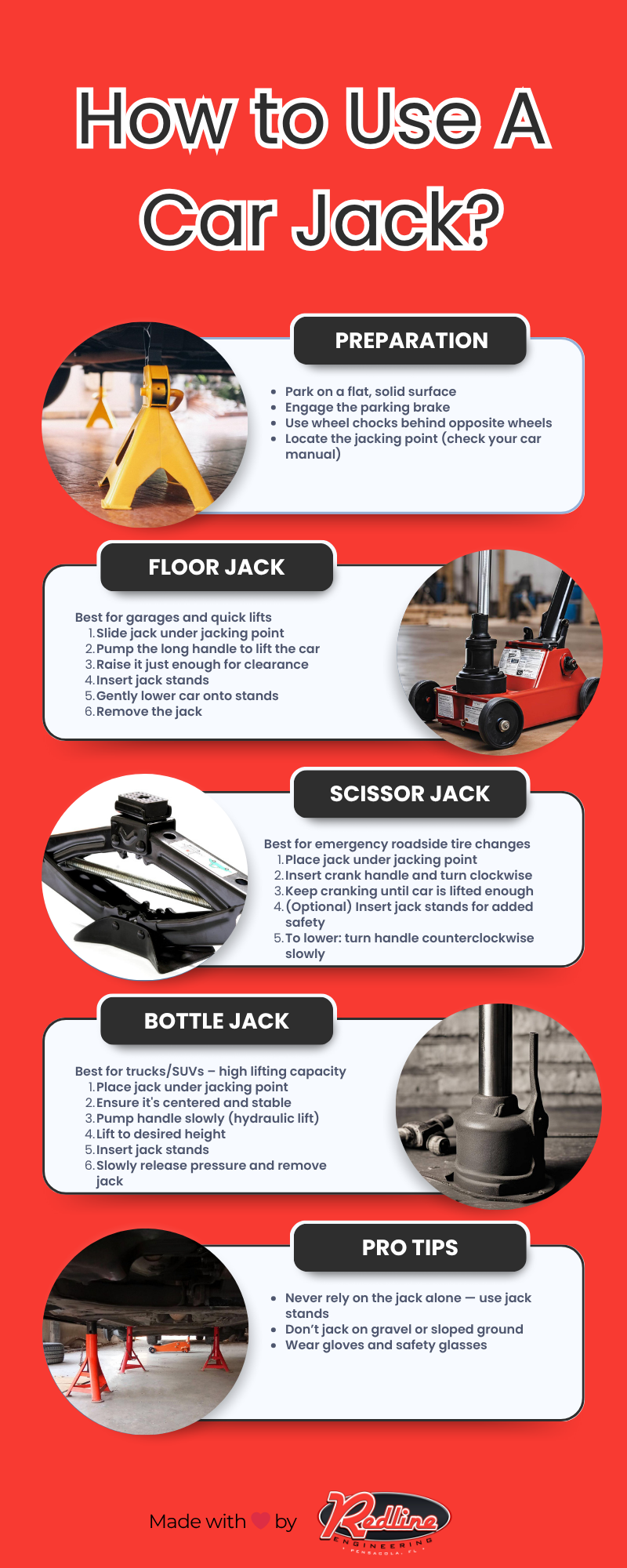
- Scissor Jack:Small and portable. Works well for light cars.
- Hydraulic Floor Jack:Uses fluid power. Easy to lift heavier vehicles.
- Bottle Jack:Compact and strong. Good for trucks and SUVs.
- Hi-Lift Jack:Tall and versatile. Used for off-road vehicles.
Weight Capacity Considerations
Always check the jack’s weight limit before use. The jack must support your vehicle’s weight safely.
Using a jack with a low capacity can cause it to break or slip. This can cause serious injury or damage.
- Find your vehicle’s weight in the owner’s manual.
- Choose a jack with at least 25% more capacity than your vehicle’s weight.
- Never overload a jack beyond its rated capacity.
Quality And Maintenance
Good quality jacks last longer and keep you safe. Check for solid construction and smooth operation.
Regular maintenance keeps your jack working well. Clean and lubricate moving parts often.
- Inspect for cracks, rust, or leaks before each use.
- Keep the jack clean and store it in a dry place.
- Follow the manufacturer’s instructions for care and repairs.
Preparing Your Vehicle
Using a jack safely starts with preparing your vehicle properly. Take simple steps to make sure your car is stable and secure before lifting it.
These preparations help prevent accidents and keep you safe while changing a tire. Follow each step carefully.
Parking On A Level Surface
Always park your vehicle on a flat, level surface. Avoid hills or uneven ground to stop the car from rolling or shifting.
If you cannot find a level spot, look for the flattest area possible. This reduces risks when you use the jack.
Engaging The Parking Brake
Set the parking brake firmly to lock the rear wheels. This holds your vehicle in place and prevents any movement.
- Press the brake pedal fully before engaging the parking brake.
- Pull the parking brake lever up or push the pedal down until it locks.
- Test if the vehicle stays still by gently trying to move it.
Chocking The Wheels
Place wheel chocks to block the wheels opposite the side you will lift. This adds extra safety to stop rolling.
| Wheel Position | Use Chocks Here |
|---|---|
| Front Left | Rear Right |
| Front Right | Rear Left |
| Rear Left | Front Right |
| Rear Right | Front Left |
Positioning The Jack
Using a jack safely is important when changing a tire. You must position the jack correctly to avoid accidents. This guide explains how to place the jack properly under your vehicle.
Focus on locating the right jack points and aligning the jack to keep the car stable. This helps you lift the car safely and work without risks.
Locating Jack Points
Jack points are strong spots on your car frame designed to support the jack. Using these spots prevents damage and keeps the vehicle steady.
- Check your vehicle’s manual to find exact jack point locations.
- Look for reinforced metal areas near each tire.
- Avoid placing the jack on plastic parts or the car’s body panels.
- Use the flat surface of the jack point to ensure good contact.
Aligning The Jack Properly
Align the jack head directly under the jack point. This alignment helps lift the car evenly and prevents the jack from slipping.
| Alignment Tip | Reason |
| Place jack base on firm, level ground | Prevents tilting and slipping |
| Center the jack head under the jack point | Ensures stable lifting |
| Check jack head fits snugly against the frame | Stops movement during lifting |
| Raise the jack slowly and watch for shifts | Maintains safety and control |

Credit: www.youtube.com
Lifting The Vehicle Safely
Using a jack to lift your vehicle is necessary when changing tires. You must follow safety steps to avoid accidents or damage.
Focus on lifting the car slowly, checking stability, and avoiding common mistakes. These tips keep you safe during the process.
Raising The Car Slowly
Lift the car in small, steady movements. Sudden lifts can cause the vehicle to slip off the jack.
- Place the jack under the correct lifting point.
- Turn the handle slowly to raise the car.
- Pause often to check the jack and car position.
Checking Stability
Make sure the car sits firmly on the jack. Check for any wobbling or slipping before you start work.
| Check Point | What to Look For |
|---|---|
| Jack Placement | Under strong frame part, not soft areas |
| Jack Base | Flat, solid ground with no tilting |
| Vehicle Position | No movement or shaking when lifted |
| Safety Supports | Use wheel chocks or stands if possible |
Avoiding Common Mistakes
Many accidents happen because of simple errors. Watch out for these common mistakes to stay safe.
- Do not lift the car on a slope or soft ground.
- Avoid using the jack on parts not designed for lifting.
- Never go under the car without extra safety supports.
- Do not rush raising or lowering the vehicle.
- Check the jack’s condition before use.
Using Jack Stands
Using a jack is not enough when changing tires. Jack stands keep the vehicle stable and safe. They support the weight and prevent accidents.
Learn how to use jack stands correctly. This guide covers their importance, placement, and how to check stability.
Importance Of Jack Stands
Jack stands hold the car after lifting it with a jack. They stop the car from falling if the jack fails. Using stands protects you from injury.
Correct Placement
Place jack stands under strong parts of the car frame. Check your vehicle manual for the right spots. Avoid soft or weak areas to prevent damage.
- Locate the recommended lifting points on the vehicle.
- Position the jack stands evenly on both sides.
- Ensure they touch solid metal parts, not plastic or exhaust.
- Adjust the height carefully to match the lifted vehicle.
Double Checking Stability
After placing jack stands, test if the car is steady. Do not rely on the jack alone. Check all stands for secure contact and no movement.
| Check | Action |
| Stand Placement | Confirm stands are under correct points |
| Height Lock | Make sure stands are locked at the right height |
| Stability Test | Gently push the car to detect any wobble |
| Surface | Use jack stands on flat, solid ground only |
Lowering The Vehicle
Lowering your vehicle safely is crucial after changing a tire. Ensuring you do this correctly prevents accidents and damage.
Follow these steps to lower your car safely and securely after using a jack.
Removing Jack Stands Carefully
Once the tire is changed, you need to remove the jack stands. This is done carefully to avoid any mishaps.
Make sure the vehicle is stable before removing any stands. Keep your body clear of the vehicle’s underside.
- Ensure the car is on a flat surface
- Double-check the car is stable
- Remove stands one at a time
Lowering The Car Smoothly
Lowering the car should be done slowly and smoothly. This prevents sudden drops that can cause damage.
Turn the jack handle gently to lower the vehicle. Make sure the tire touches the ground evenly.
- Turn the jack handle counter-clockwise
- Lower the car slowly
- Check that the tire is stable on the ground
Final Safety Checks
Final safety checks are important to ensure everything is secure. This ensures your vehicle is ready to drive.
Check that the tire is firmly attached and the jack is safely stored. Verify all tools are removed from the ground.
- Ensure lug nuts are tightened
- Store the jack and tools properly
- Confirm the area is clear of tools
Additional Safety Tips
Changing a tire safely requires some important precautions. These extra safety tips help ensure your safety during the task.
Make sure to follow these guidelines to prevent accidents and injuries.
Wearing Protective Gear
Always wear protective gear when changing a tire. This includes sturdy gloves to protect your hands.
Safety glasses can protect your eyes from dust and debris. Wearing closed-toe shoes is also important.
Keeping The Area Clear
A clear workspace is important when changing tires. Remove any clutter or obstacles around your car.
Park your car on a flat surface. This prevents the car from rolling and keeps the jack stable.
- Remove loose items from the ground
- Ensure proper lighting
- Use wheel chocks for extra security
Avoiding Working Alone
Having someone with you adds an extra layer of safety. A helper can assist and call for help if needed.
It’s always safer to have another person nearby. They can hand you tools and ensure the task goes smoothly.

Credit: www.youtube.com
Credit: www.redlinestands.com
Frequently Asked Questions
How Do I Position The Jack Correctly Under My Car?
Position the jack under the manufacturer’s recommended lift points. These are usually marked near the tire. Proper placement ensures stability and prevents damage to your vehicle.
What Safety Precautions Should I Take When Using A Jack?
Always use a jack on a flat, stable surface. Engage the parking brake and place wheel chocks on opposite tires to prevent movement while lifting.
Can I Rely Solely On A Jack To Support My Car?
No, never rely only on a jack. Use jack stands to securely support the car before working underneath. This prevents accidents and ensures safety.
How High Should I Lift The Car When Changing A Tire?
Lift the car just enough to clear the flat tire. Raising it too high can cause instability and increase the risk of the vehicle slipping off the jack.
Conclusion
Using a jack safely is key when changing tires. Always check the ground is firm and flat. Place the jack under the car’s correct spot. Lift slowly and never go under the car while it is raised. Keep your hands clear and use wheel chocks to stop movement.
Taking these steps helps prevent accidents and keeps you safe. Practice these tips before you need to change a tire. Stay calm, follow the rules, and handle the jack with care. Safety first, every time.







