
If you want your projects to last and work safely, using a torque wrench correctly is a must. Whether you’re fixing your car, assembling furniture, or working on machinery, applying the right amount of force can make all the difference.
Too little torque can leave things loose, and too much can cause damage you don’t want. In this guide, you’ll learn simple, clear steps to use your torque wrench like a pro. Keep reading to avoid costly mistakes and get the job done right every time.
Choosing The Right Torque Wrench
Using the right torque wrench helps you tighten bolts safely and accurately. It prevents damage and keeps parts working well.
Choosing the correct torque wrench depends on the task and the tools you need. Learn about types, sizes, and torque specs below.
Types Of Torque Wrenches
There are several types of torque wrenches. Each type works best for certain jobs and skill levels.
- Click Torque Wrench:Clicks when you reach the set torque. It is easy to use and common.
- Beam Torque Wrench:Uses a scale and pointer. It is simple and affordable.
- Dial Torque Wrench:Has a dial gauge for precise readings. It is good for detailed work.
- Digital Torque Wrench:Shows torque on a digital screen. It gives exact numbers and alerts.
Selecting The Correct Size
Size matters for torque wrenches. Pick one that fits the bolts and nuts you work with most often.
| Drive Size | Common Uses | Torque Range (ft-lbs) |
| 1/4 inch | Small bolts, electronics | 10 – 80 |
| 3/8 inch | Automotive and light machinery | 15 – 100 |
| 1/2 inch | Car engines, larger bolts | 30 – 250 |
| 3/4 inch | Heavy equipment, trucks | 100 – 600 |
Understanding Torque Specifications
Torque specs tell you how tight a bolt should be. Use the correct value for safety and performance.
- Check the manual or label for torque values.
- Set your torque wrench to the exact number.
- Do not guess or use too much force.
- Use a torque wrench that covers your needed range.
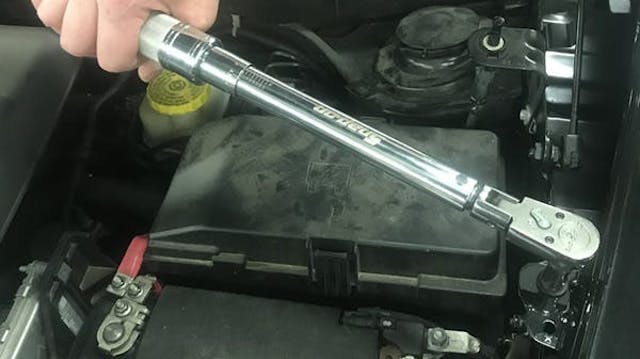
Credit: www.fenderbender.com
Preparing The Wrench For Use
Using a torque wrench correctly starts with proper preparation. This ensures accurate and safe tightening of bolts.
Before you begin, check the wrench carefully. Set it up to match your task for the best results.
Calibrating Your Torque Wrench
Calibrate your torque wrench regularly to keep it accurate. Calibration means adjusting it to measure torque correctly.
Many wrenches need calibration once a year or after heavy use. Use a calibration device or visit a professional service.
- Check calibration date before use
- Adjust or replace if inaccurate
- Store wrench properly to avoid damage
Setting The Desired Torque
Choose the correct torque value for your job. This prevents over-tightening or under-tightening bolts.
Turn the handle or dial to set the torque. Lock the setting if your wrench has a lock feature.
- Find torque specs in the manual
- Set wrench to the exact value
- Double-check setting before use
Inspecting The Tool For Damage
Look over the torque wrench before using it. Check for cracks, rust, or worn parts.
Damaged wrenches can give wrong readings. Replace or repair the tool if you find any problems.
- Examine handle and head for cracks
- Check the scale for clear markings
- Test the ratchet mechanism for smooth action
Proper Techniques For Torque Application
Using a torque wrench correctly ensures bolts are tight enough without damage. It helps keep your work safe and reliable.
Follow proper techniques to apply the right amount of force. This guide explains how to position, grip, and apply torque smoothly.
Positioning And Grip
Hold the torque wrench at the handle’s end for best control. Keep your wrist straight to avoid extra force.
Position the wrench so it is perpendicular to the bolt. This helps apply force evenly and prevents slipping.
- Grip the handle firmly but not too tight
- Keep your wrist in line with the wrench
- Hold the wrench steady and straight
- Align the wrench squarely with the bolt head
Applying Steady Pressure
Turn the wrench slowly and smoothly. Avoid sudden jerks or fast movements that can cause errors.
Apply force evenly until the wrench clicks or shows the set torque. Stop immediately once you reach the correct torque.
- Turn the wrench at a steady pace
- Listen or feel for the torque indicator
- Do not force past the wrench’s click
- Release pressure gently after tightening
Avoiding Common Mistakes
Do not use the wrench to loosen bolts. This can damage the tool and affect accuracy.
Always reset the torque wrench to zero after use. This keeps the spring calibrated for next time.
- Never use a torque wrench as a breaker bar
- Do not apply torque faster than recommended
- Store the wrench with no tension set
- Check calibration regularly for accuracy

Credit: daitool.com
Maintaining Your Torque Wrench
Keeping your torque wrench in good shape helps it work right every time. Proper care extends its life and keeps measurements accurate.
Simple maintenance steps prevent damage and ensure safety when using your wrench.
Cleaning And Storage Tips
Clean your torque wrench after every use to remove dirt and grease. Use a soft cloth and mild cleaner. Avoid harsh chemicals.
Store the wrench in a dry place. Keep it in its case to protect it from dust and damage.
- Wipe the wrench with a clean, dry cloth
- Do not soak or spray with water
- Store in a protective case or pouch
- Keep it away from extreme heat or moisture
Regular Calibration Checks
Torque wrenches need regular calibration to stay accurate. Check calibration every 5,000 uses or once a year.
Calibration ensures your wrench applies the correct torque. A poorly calibrated wrench can cause damage or unsafe conditions.
- Send your wrench to a professional calibration service
- Follow manufacturer guidelines for calibration intervals
- Mark the date of last calibration on the wrench or case
- Do not use the wrench if you suspect it is out of calibration
Handling And Transport Guidelines
Handle your torque wrench with care to avoid dropping or bumping it. Rough handling can affect its accuracy.
Use the original case or a padded container for transport. Secure the wrench so it does not move around during travel.
- Hold the wrench by the handle only
- Do not use the wrench as a hammer or pry bar
- Keep the wrench locked at its lowest torque setting before storage
- Transport in a protective case or padded box
Troubleshooting And Tips
Using a torque wrench correctly is key for safety and accuracy. This guide helps you spot common problems and improve your technique.
Follow these tips to get consistent results and keep your tool working well over time.
Signs Of Inaccurate Torque
If your torque wrench is not working right, it can cause damage or loose parts. Watch for these signs of inaccuracy.
- Fasteners feel too tight or too loose after use
- Click or beep sounds are weak or missing
- Wrench slips or turns without resistance
- Readings vary when you repeat the same torque setting
Check your wrench regularly by testing it on a calibration device. This helps catch errors early.
Adjusting For Different Materials
Different materials need different torque settings. Using the wrong torque can cause damage or failure.
- Soft metals like aluminum need lower torque to avoid stripping
- Hard metals like steel require higher torque for a strong hold
- Plastic parts need gentle torque to prevent cracking
- Always check manufacturer specs for correct values
Use a torque chart if you work with many materials. It helps you adjust settings quickly and safely.
Maximizing Tool Lifespan
Taking care of your torque wrench helps it last longer and stay accurate. Follow these simple steps.
- Store the wrench at its lowest torque setting after use
- Keep it clean and dry to prevent rust and dirt buildup
- Do not use the wrench as a breaker bar or hammer
- Have it professionally calibrated every year or after heavy use
Proper care reduces wear and keeps your tool reliable for every job.

Credit: etork.com
Frequently Asked Questions
What Is The Purpose Of A Torque Wrench?
A torque wrench applies a specific force to fasteners. It prevents over-tightening and ensures proper joint strength. This tool is crucial in automotive and mechanical repairs to maintain safety and equipment longevity.
How Do I Set A Torque Wrench Correctly?
To set a torque wrench, adjust the dial to your desired torque value. Lock the setting to prevent changes. Always refer to the manufacturer’s specifications for the correct torque level before use.
When Should I Calibrate My Torque Wrench?
Calibrate your torque wrench every 5,000 uses or annually. Regular calibration ensures accuracy and reliability. It prevents damage from incorrect torque application and maintains tool performance.
Can I Use A Torque Wrench For All Bolts?
Torque wrenches are best for critical bolts requiring precise tension. Avoid using them for everyday hand tightening or bolts with low torque specs. Always choose the correct wrench type and size for the job.
Conclusion
Using a torque wrench correctly keeps your work safe and precise. Always set the right torque value before starting. Tighten bolts slowly and stop once you hear a click. This tool helps avoid damage from over-tightening or loose parts. Regularly check and calibrate your wrench for best results.
Practice these steps to feel confident using your torque wrench. Simple care makes a big difference in your projects. Keep your tools ready and your work strong.







