
A small puncture in your tire can ruin your day fast. But what if you could fix it right where you are, without the hassle of removing the tire?
Imagine saving time, effort, and money with a simple trick you can do yourself. You’ll discover easy steps to repair a small puncture quickly and get back on the road or trail in no time. Keep reading, because this could be the most useful skill you didn’t know you needed.
Tools Needed
Fixing a small puncture without removing the tire is possible with the right tools. These tools help you patch the hole quickly and safely.
Keep these tools ready for easy and fast tire repairs wherever you are.
Essential Repair Kit
The essential repair kit has all basic tools to fix a small puncture. Each tool plays an important role in the repair process.
- Tire Plug or Patch:Seals the puncture and stops air from leaking.
- Reamer Tool:Cleans and widens the hole for better plug fit.
- Insertion Tool:Pushes the plug into the puncture securely.
- Rubber Cement or Glue:Helps the plug stick firmly inside the hole.
- Knife or Scissors:Trims excess plug material after insertion.
- Air Pump or Compressor:Inflates the tire after repair.
Optional Items For Convenience
Some extra tools can make the repair easier and faster. These items are not necessary but helpful.
- Gloves:Protect your hands from dirt and sticky glue.
- Flashlight:Helps see the puncture in low light or night.
- Marker or Chalk:Marks the puncture spot for quick location.
- Pressure Gauge:Checks tire pressure after repair for safety.
- Small Brush:Cleans dirt around the puncture before repair.
Identifying The Puncture
Finding a small puncture in a tire is key to fixing it without taking the tire off. You need to know exactly where the leak is. This helps you repair the tire quickly and safely.
Small punctures are usually caused by sharp objects on the road. Spotting them early stops air from escaping and keeps your tire in good shape.
Locating The Leak
To find the leak, start by checking the tire surface closely. Look for nails, screws, or glass pieces stuck in the tire. They often cause the puncture.
If you do not see anything, try listening for a hissing sound. The sound shows where air is escaping. You can also feel for air blowing out by moving your hand near the tire.
- Check the tread and sidewalls carefully
- Listen for hissing noises
- Feel for escaping air with your hand
- Use soapy water on the tire surface to spot bubbles
Types Of Small Punctures
Small punctures come in a few common types. Knowing these helps you choose the right repair method. Most small punctures happen in the tread area.
Some punctures are caused by sharp objects that stay inside the tire. Others create small holes that let air escape slowly. Some may be hard to see but can still cause problems.
- Penetrating punctures:Caused by nails or screws stuck in the tire.
- Pinholes:Tiny holes made by sharp debris.
- Sidewall punctures:Small cuts or holes on the tire side, harder to fix.
- Slow leaks:Small air escapes that are hard to detect without close inspection.
Preparing The Tire
Fixing a small puncture without taking the tire off is possible. You must prepare the tire well before repairing it. Proper preparation helps the patch or plug stick better.
Start by focusing on the area around the puncture. Make sure it is clean and ready. Also, reduce the tire pressure slightly to avoid sudden air release.
Cleaning The Area
Clean the tire surface near the puncture carefully. Dirt, dust, and grease can stop the patch from sticking well. Use a clean cloth and some rubbing alcohol or soap and water.
Dry the area completely before applying any repair materials. If the area stays wet or dirty, the repair may fail quickly.
Deflating The Tire Slightly
Release some air from the tire to reduce pressure. This helps you work on the puncture safely. It also prevents air from rushing out when you start the repair.
Do not let all the air out. Keep enough air so the tire holds its shape. This makes it easier to locate and fix the puncture spot.

Credit: www.amazon.com
Applying The Repair Plug
Fixing a small tire puncture can be done without removing the tire. Using a repair plug is a simple way to seal the hole. It helps stop air from leaking out quickly.
This guide explains how to insert the plug and seal the hole properly. Follow the steps carefully for a safe and lasting repair.
Inserting The Plug
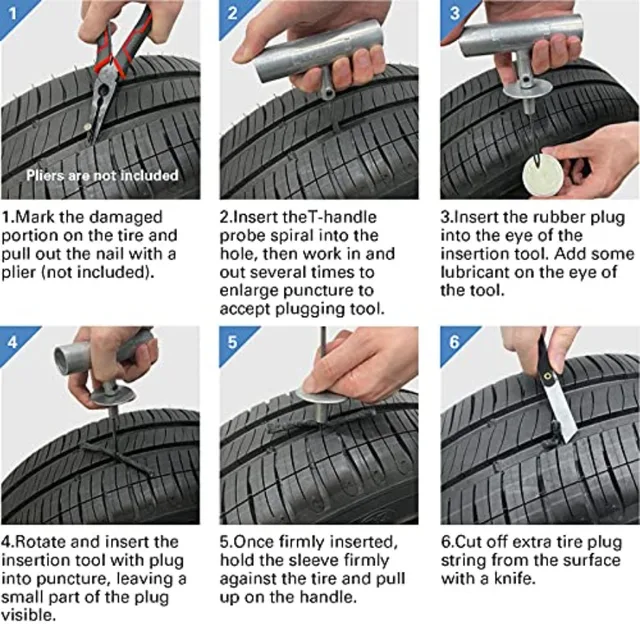
First, clean the puncture area to remove dirt and debris. Use a reaming tool to widen the hole slightly. This makes it easier to insert the plug.
Push the repair plug into the hole using the insertion tool. Make sure the plug goes deep enough to fill the puncture. Pull the tool out carefully, leaving the plug inside.
- Clean the hole area
- Use a reaming tool to prepare the hole
- Insert the plug fully with the tool
- Remove the tool gently
Sealing The Hole
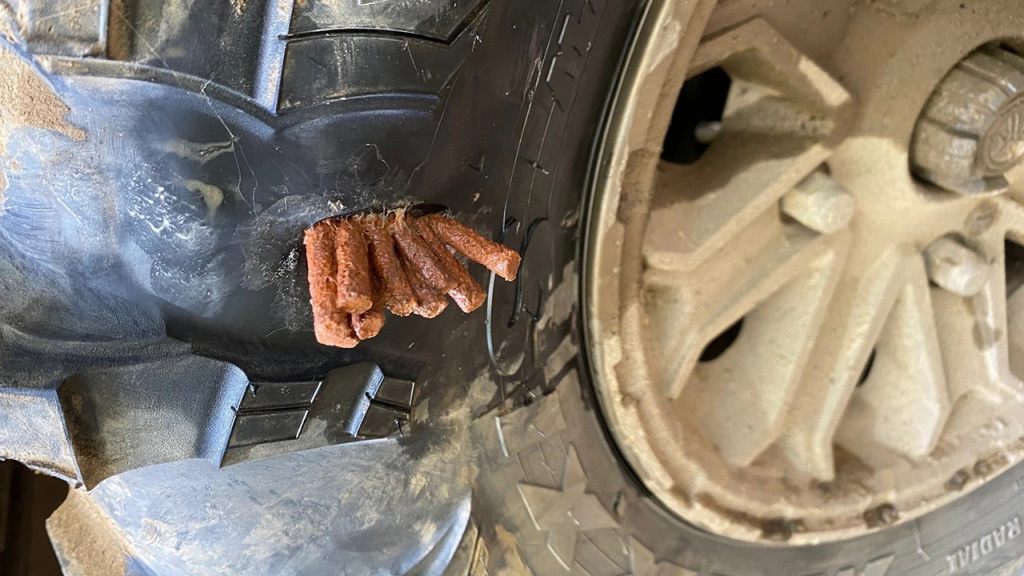
After inserting the plug, trim any excess material sticking out. The plug should sit flush with the tire surface. This prevents it from catching on road debris.
Press the plug firmly to seal the hole completely. Check for air leaks by applying soapy water around the plug. If bubbles appear, push the plug in deeper or repeat the process.
- Trim excess plug material
- Press plug firmly into the hole
- Test for leaks with soapy water
- Adjust plug if needed
Testing The Repair
After fixing a small puncture, it is important to check if the repair holds. Testing ensures your tire is safe to use.
Two main steps help you confirm the repair: inflating the tire and checking for leaks.
Inflating The Tire
Use an air pump to fill the tire with air. Inflate it to the pressure recommended by the tire maker.
Do not overinflate the tire. Too much air can cause damage or make it unsafe.
Checking For Leaks
Look for air escaping from the repaired area. This shows the fix is not holding air well.
One simple way is to apply soapy water on the tire surface. Watch for bubbles that form and grow.
- Mix water with a small amount of soap
- Brush or spray the solution on the tire
- Check for bubbles at the repair site
- No bubbles means the repair is good
Credit: www.aliexpress.com
Tips For Lasting Repairs
Repairing a small puncture without removing the tire can be easy if done right. Follow these tips to ensure your repair lasts longer.
Use the right tools and materials to fix punctures effectively. This saves time and effort in the long run.
Avoiding Common Mistakes
Many people rush the repair process. This can lead to poor results and future problems. Take your time to ensure each step is done properly.
- Clean the area around the puncture.
- Use a patch that fully covers the hole.
- Press the patch firmly for a tight seal.
When To Seek Professional Help
Sometimes, a small puncture might seem minor, but it’s not. Recognize when it’s best to consult a professional.
| Issue | Professional Needed |
| Large puncture | Yes |
| Multiple punctures | Yes |
| Sidewall damage | Yes |
Credit: finntrail.com
Frequently Asked Questions
How Can I Fix A Tire Puncture Without Removing It?
You can use a tire plug kit to repair small punctures quickly. Insert the plug into the hole and seal it. This method is effective and avoids tire removal, saving time and effort.
What Tools Do I Need To Repair A Puncture On The Tire?
You need a tire plug kit, a reamer tool, and pliers. These tools help clean and seal the puncture without removing the tire, making the repair process fast and easy.
How Long Does A Tire Puncture Repair Last Without Removal?
A properly done plug repair can last several months to years. However, it depends on the puncture size and tire condition. Always check tire pressure regularly after repair.
Is Repairing A Tire Puncture Without Removal Safe For Driving?
Yes, if done correctly on small punctures, it is safe. Ensure the plug is securely inserted and the tire holds air. Avoid high-speed driving until fully inspected.
Conclusion
Repairing a small puncture without removing the tire saves time and effort. You can fix the problem quickly using simple tools. This method helps keep your tire safe and extends its life. Always check the patch regularly to avoid future issues.
Practice this easy skill to stay ready on the road. Small repairs can prevent bigger problems later. Keep your bike or vehicle running smoothly with quick fixes. Try these steps next time you face a puncture. Simple and fast—no need to remove the tire.







