
Are you ready to transform your car’s interior and make every drive more exciting? Installing LED lights inside your car is a simple way to add style, improve visibility, and create a cool atmosphere.
Whether you want subtle lighting or vibrant colors, this guide will show you exactly how to do it step-by-step. By the end, you’ll have all the tips and tricks to light up your car like a pro. Keep reading to discover how easy and fun this upgrade can be!
Choosing The Right Led Lights
Installing LED lights inside your car can improve its look and visibility. Choosing the right type of LED lights is important for safety and style.
This guide covers the types of LED lights, color and brightness options, and quality factors to consider before installation.
Types Of Led Lights For Cars
There are several types of LED lights for cars. Each type serves a different purpose and fits in different parts of the vehicle.
- Strip lights: Flexible and easy to install under dashboards or seats.
- Bulb replacements: Fit into existing sockets for headlights or interior lights.
- Spotlights: Focused beams for specific areas like footwells.
- Panel lights: Flat lights used on doors or roof lining.
Color And Brightness Options
LED lights come in many colors and brightness levels. Choose colors that match your car’s interior and comply with local laws.
| Color | Use | Brightness Level |
| White | General lighting | High |
| Blue | Accent lighting | Medium |
| Red | Rear or warning lights | Low to Medium |
| Green | Decorative lighting | Low |
| Yellow | Fog lights or indicators | Medium |
Quality And Durability Factors
Good quality LED lights last longer and resist damage. Look for lights with strong casings and good heat dissipation.
- Check if the LED lights are waterproof or water-resistant.
- Choose lights with aluminum or metal bodies for heat control.
- Look for LED lights with a warranty for peace of mind.
- Pick lights that fit your car’s power system without extra adapters.

Credit: www.youtube.com
Tools And Materials Needed
Installing LED lights inside your car can improve the look and feel of your vehicle. You need the right tools and materials to do the job well.
This guide covers the essential tools, extra supplies, and safety tips for a smooth installation.
Essential Installation Tools
Using the correct tools makes the LED light installation easier and safer. These tools help you connect wires and place lights properly.
- Wire stripper to remove insulation from wires
- Crimping tool for secure wire connections
- Electrical tape to protect and insulate wires
- Screwdriver set for removing panels and screws
- Multimeter to check electrical connections
- Heat gun or lighter to shrink heat shrink tubing
- Panel removal tool to avoid damaging car trim
Additional Supplies
Besides tools, you will need some extra materials to complete the installation. These help secure and power your LED lights.
- LED light strips or modules designed for cars
- Power connectors or quick splice connectors
- Heat shrink tubing to cover wire connections
- Zip ties or clips to keep wires tidy
- Fuse tap or inline fuse for circuit protection
- Wire of appropriate gauge for power supply
- Adhesive backing or mounting brackets
Safety Precautions
Safety is important when working with your car’s electrical system. Follow these precautions to avoid damage or injury.
- Disconnect the car battery before starting work
- Wear gloves to protect your hands
- Work in a well-lit, dry area
- Do not overload circuits with too many lights
- Use proper tools to avoid damaging wires
- Check your work before reconnecting power
- Follow LED light manufacturer instructions
Preparing Your Car Interior
Before installing LED lights inside your car, prepare the interior well. This makes the process easier and safer.
Start by cleaning and organizing the areas where you will work. Next, find good power sources and plan where to put the lights.
Cleaning The Installation Area
Clean the car’s interior thoroughly. Dirt and dust can stop the LED lights from sticking well.
- Use a vacuum to remove loose dirt and crumbs.
- Wipe surfaces with a damp cloth and mild cleaner.
- Dry the area completely before installation.
- Clear away any items that block the installation spots.
Identifying Power Sources
Find a safe and reliable power source for the LED lights. This is usually the car battery or fuse box.
| Power Source | Description | Notes |
| Car Battery | Main power supply | Use a fuse to protect the circuit |
| Fuse Box | Contains fuses for different circuits | Choose a fuse slot with power when ignition is on |
| Cigarette Lighter Socket | Accessory power outlet | Easy to connect but may turn off with ignition |
Planning The Light Placement
Think about where you want the LED lights to glow inside your car. Good placement improves the look and visibility.
- Choose spots that are visible but not in the way.
- Consider areas like footwells, under the dashboard, or door panels.
- Make sure the wiring can reach the power source easily.
- Check that lights do not distract the driver.
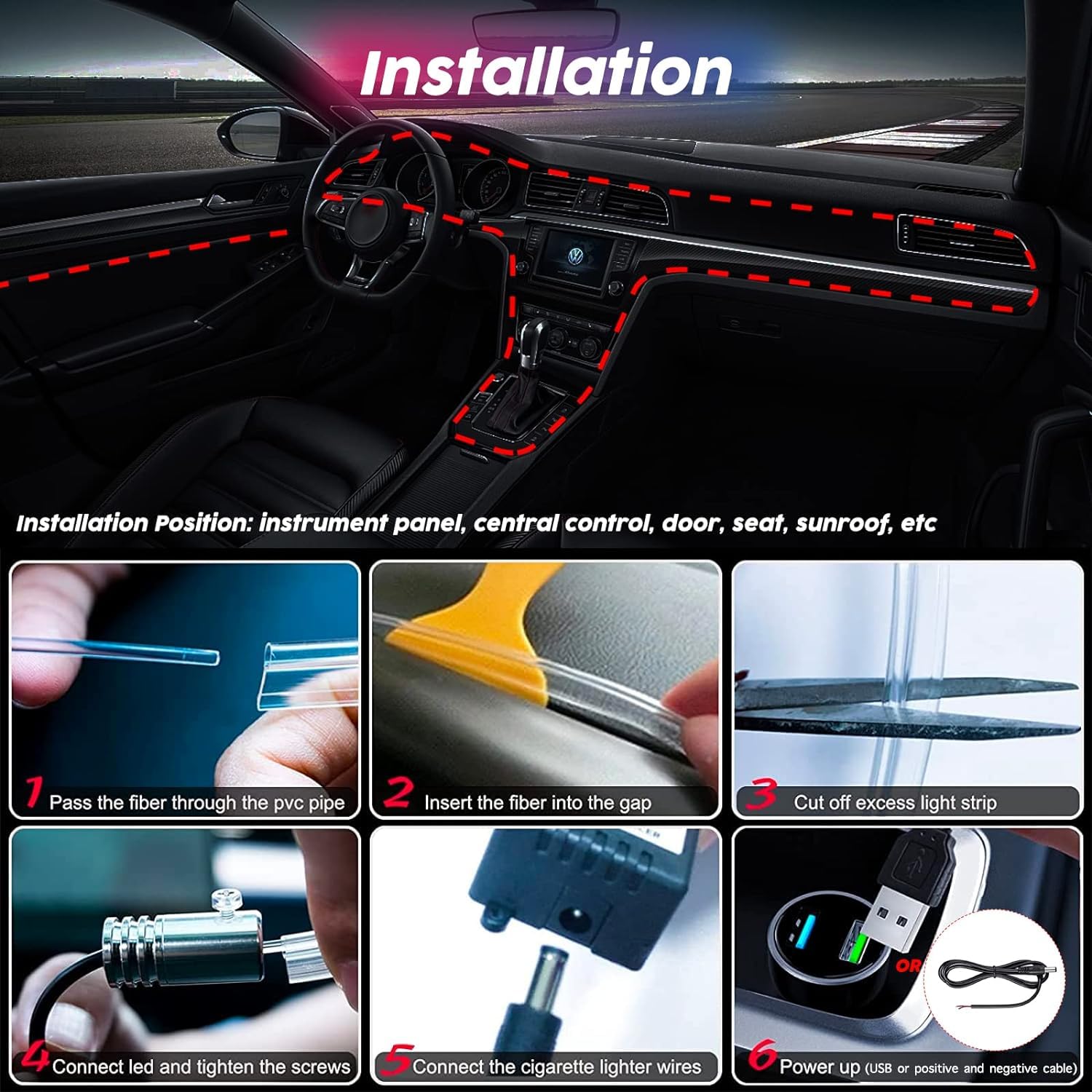
Installing The Led Lights
Installing LED lights inside your car can brighten the interior and add style. This guide will help you set them up safely and correctly.
You will learn about wiring basics, mounting the LED strips, and how to connect them to power.
Wiring Basics
Understanding wiring helps avoid shorts and damage. Use wires with the right gauge and check the polarity before connecting.
- Cut wires to the needed length.
- Strip insulation carefully on wire ends.
- Connect positive wires to the LED positive terminals.
- Connect negative wires to the LED negative terminals.
- Secure connections with wire nuts or solder.
- Use electrical tape to cover exposed wires.
Mounting The Led Strips
Place the LED strips where you want the light to shine. Clean the surface before mounting for better adhesion.
- Choose flat, dry areas inside the car.
- Wipe the surface with rubbing alcohol.
- Peel off the adhesive backing from the LED strip.
- Press the strip firmly to the surface.
- Use clips or extra tape for added security.
Connecting To Power
Connecting LED lights to power needs care. Use the correct fuse and connect to a switched power source to avoid battery drain.
| Connection Point | Description |
|---|---|
| Fuse Box | Safe place to connect with a fuse for protection. |
| 12V Accessory Wire | Power source that turns on with the ignition. |
| Ground Wire | Connect to metal frame to complete the circuit. |
Testing And Adjustments
After installing LED lights inside your car, you need to test them. Testing ensures they work well and are safe.
Adjusting the lights helps you get the right look and brightness. This part is important for a good result.
Powering On The Lights
Turn on your car’s ignition to power the LED lights. Check if the lights switch on as expected.
If your lights have a remote or switch, use it to control them. Make sure each light strip lights up.
Troubleshooting Common Issues
If the lights do not turn on, check the power connections. Loose wires are a common problem.
Look for blown fuses or faulty switches. Replace any damaged parts to fix the issue quickly.
- Check all wiring connections
- Inspect fuses and replace if blown
- Test the remote or switch batteries
- Ensure the LED strips are not damaged
Adjusting Brightness And Colors
Use the remote or control panel to change brightness levels. Find a brightness that is not too bright or dim.
Pick colors that match your mood or style. Many LED lights let you select different colors and effects.
- Increase brightness for better visibility
- Lower brightness for a soft glow
- Choose warm colors for comfort
- Choose cool colors for a modern look
- Try color-changing modes if available
Credit: www.amazon.ca
Maintaining Your Led Setup
Keeping your car’s LED lights in top shape is important. Regular maintenance ensures they last longer and work well.
This guide will help you maintain them. Follow these steps for a brighter, safer drive.
Cleaning Tips
Dust and dirt can dim your LED lights. Cleaning them regularly keeps them bright.
- Use a soft cloth to wipe the lights
- Apply mild soap and water for stubborn dirt
- Dry with a clean, dry towel to avoid streaks
Checking Connections
Loose connections can cause flickering or failure. Check them often to ensure they stay secure.
Inspect the wires and connectors. Tighten any loose parts to maintain a steady light.
Replacing Damaged Components
LED components can break or wear out. It’s important to replace any damaged parts promptly.
Look for cracks or discoloration. Replace broken parts to keep your lights functioning properly.
- Buy compatible replacement parts
- Follow installation instructions carefully
- Test the lights after installation

Credit: www.youtube.com
Frequently Asked Questions
How Do I Choose The Right Led Lights For My Car Interior?
Select LED lights based on color, brightness, and size. Opt for flexible strips for easy installation. Ensure they match your car’s power source and aesthetic preferences for the best results.
Can I Install Led Lights Without Professional Help?
Yes, many LED lights come with plug-and-play kits. Follow the instructions carefully for safe installation. Basic tools like screwdrivers and connectors are usually sufficient.
Where Is The Best Place To Install Led Lights Inside A Car?
Common spots include under the dashboard, seats, and footwells. These areas create ambient lighting without distracting the driver. Placement depends on your style and lighting needs.
Will Led Lights Affect My Car’s Battery Life?
LED lights consume minimal power, so they rarely drain the battery. However, avoid leaving them on for extended periods when the engine is off. Use lights with automatic shut-off features for safety.
Conclusion
Installing LED lights inside your car adds style and improves visibility. The steps are simple and do not need special tools. Always check your car’s power source before starting. Take your time to place the lights carefully for the best effect.
Enjoy the new look and brighter interior of your vehicle. Keep safety in mind and avoid blocking your view. Now, your car feels more modern and comfortable at night. Try experimenting with different colors to match your mood. Small changes can make a big difference inside your car.







