
Your leather car seats add a touch of luxury and comfort to every drive. But when stains appear, they can quickly ruin that sleek look and leave you feeling frustrated.
You might wonder how to clean stained leather car seats without causing damage or spending a fortune on professional help. The good news is, you can restore your seats to their original shine with the right techniques and simple steps.
Keep reading, and you’ll discover easy, effective ways to tackle those stubborn stains and keep your leather looking fresh and new.
Identify Stain Types
Leather car seats can get stained in many ways. Knowing the type of stain helps you clean it well.
Some stains need special care to avoid damage. Let’s look at common stains and how to assess them.
Common Stains On Leather Seats
Leather seats often get stains from food, drinks, and dirt. Each type needs a different cleaning approach.
- Food stains like sauces or grease can leave marks.
- Drink spills such as coffee, soda, or wine cause discoloration.
- Dirt and mud leave dusty or grimy patches.
- Ink stains from pens can be tough to remove.
- Body oils and sweat cause dark spots over time.
Assessing Stain Severity
Check how deep and old the stain is before cleaning. Fresh stains are easier to remove.
Deep stains may need special products or professional help. Light stains often clean with gentle wipes.
- Light stains sit on the surface and wipe off easily.
- Medium stains soak into the leather but are still removable.
- Heavy stains go deep and may change the leather color.
- Old stains may need repeated cleaning or special treatments.

Credit: www.youtube.com
Gather Cleaning Supplies
Cleaning stained leather car seats requires the right tools. Using proper supplies helps protect the leather.
Before starting, collect all materials you need. This makes the cleaning process easier and safer.
Essential Cleaning Materials
Gather these basic items to clean your leather seats effectively and avoid damage.
- Soft microfiber cloths for gentle cleaning
- Bucket with warm water
- Soft-bristle brush for stubborn stains
- Spray bottle to apply cleaners
- Vacuum cleaner with brush attachment
- Leather conditioner for after cleaning
Leather-safe Products To Use
Choose cleaning products made specifically for leather. Avoid harsh chemicals that can dry or crack the seats.
| Product | Purpose | Notes |
| pH-balanced leather cleaner | Removes dirt and stains gently | Safe for most leather types |
| Leather conditioner | Keeps leather soft and prevents cracking | Use after cleaning |
| Distilled water | Mix with cleaner or rinse cloth | Prevents mineral spots |
| Isopropyl alcohol (optional) | Disinfects and removes ink stains | Use sparingly and test first |
Prepare The Leather Surface
Cleaning stained leather car seats starts with proper preparation. Getting the surface ready helps protect the leather. It also makes cleaning more effective.
Take time to prepare the leather before using any cleaning product. This step can keep your seats safe from damage.
Remove Loose Dirt And Debris
First, clear off any loose dirt or dust on the leather seats. Dirt can scratch the leather if you clean without removing it first.
Use a soft brush or a vacuum with a brush attachment. Gently clean all the corners and seams to remove hidden debris.
- Use a soft-bristled brush to loosen dirt
- Vacuum the seats with a brush tool
- Pay attention to seams and crevices
- Do not press too hard to avoid damage
Test Cleaning Products On Hidden Areas
Before cleaning the whole seat, test your cleaning product on a small, hidden area. This test helps you check for any color change or damage.
Apply a small amount of cleaner and wait a few minutes. If there is no harm or discoloration, it is safe to use on the rest of the seat.
- Choose a hidden spot like under the seat
- Use a cotton cloth to apply the cleaner
- Wait 5 to 10 minutes to observe results
- Look for color fading or leather stiffness
- Do not use if any damage appears
Clean Different Stains
Leather car seats can get stained from many things. Cleaning stains quickly helps keep leather nice. Different stains need different care to avoid damage.
This guide shows easy ways to treat common stains on leather seats. Follow each method carefully to protect your car’s interior.
Treating Food And Drink Stains
Food and drink spills can leave marks on leather seats. Act fast and blot the spill with a clean cloth. Avoid rubbing as it spreads the stain.
- Use a damp cloth with mild soap to gently clean the area.
- Dry the spot with a soft towel to remove moisture.
- If the stain stays, apply a leather cleaner designed for food stains.
- Let the leather dry naturally and avoid direct sunlight.
Removing Ink And Dye Marks
Ink and dye can be tough to remove from leather seats. Test any cleaner on a hidden spot first. Use a cotton swab dipped in rubbing alcohol to dab the stain gently.
| Ink/Dye Removal Tips | Details |
|---|---|
| Test Spot | Always check cleaner on a hidden leather area first. |
| Use Alcohol | Dab with rubbing alcohol on a cotton swab carefully. |
| Blot, Don’t Rub | Blot stains to lift ink without spreading. |
| Apply Leather Conditioner | Condition the leather after cleaning to keep it soft. |
Handling Oil And Grease Spots
Oil and grease stains come from hands or food. Sprinkle baking soda or cornstarch on the spot to absorb oil. Leave it for a few hours.
- Brush off the powder gently after it absorbs the oil.
- Use a leather cleaner to remove any leftover residue.
- Wipe with a damp cloth and dry the area well.
- Apply leather conditioner to restore moisture.
Deep Cleaning Techniques
Leather car seats look great but need special care. Deep cleaning helps remove stains and keeps them in good shape.
Follow these steps to clean your leather seats without causing damage. Learn the best techniques to maintain their shine and durability.
Using Leather Cleaner And Conditioner
Choose a cleaner made for leather to avoid damage. Read the label to ensure it’s suitable for your car seats.
- Apply a small amount of cleaner to a soft cloth.
- Gently rub the cloth on the stained area.
- Wipe away excess cleaner with a dry cloth.
- After cleaning, apply a leather conditioner to keep the leather soft.
Avoiding Over-wetting And Damage
Water can damage leather if used too much. It’s important to avoid over-wetting the seats during cleaning.
Ensure the seats dry completely before sitting on them. This helps prevent mold and keeps the leather in good condition.
| Action | Why It’s Important |
| Test Cleaner | Ensures no color change |
| Use Damp Cloth | Avoids water damage |
| Dry Seats Fully | Prevents mold growth |

Credit: www.reddit.com
Drying And Protecting Leather
Cleaning stained leather car seats is only part of the process. Drying and protecting the leather keeps it looking good longer. Proper care prevents cracks and damage.
After cleaning, use the right methods to dry the leather gently. Then, apply a protector to shield the surface from spills and sunlight.
Proper Drying Methods
Drying leather too fast or with heat can cause damage. Follow these tips to dry your seats safely.
- Use a soft towel to blot excess moisture from the leather.
- Let the seats air dry naturally at room temperature.
- Avoid direct sunlight or heaters near the seats.
- Open car doors or windows to improve air flow.
- Wait several hours before sitting on the seats again.
Applying Leather Protector
Leather protectors guard against stains, spills, and sun damage. Use a good quality product and apply it carefully.
| Protector Type | Benefits | Application Tips |
| Conditioning Cream | Keeps leather soft and flexible | Apply with a soft cloth in circular motions |
| Water Repellent Spray | Blocks water and spills | Spray evenly, avoid overuse |
| UV Protection | Prevents fading and cracking | Apply before exposure to sunlight |
Maintenance Tips
Keeping your leather car seats clean extends their life. Regular care prevents stains and maintains their look.
Simple steps can keep your seats looking fresh. Follow these tips to ensure your leather stays in top condition.
Regular Cleaning Schedule
Establishing a routine helps maintain the beauty of leather seats. Consistent cleaning prevents the buildup of dirt and grime.
- Vacuum seats weekly to remove dust and debris.
- Use a damp cloth to wipe down the surface.
- Apply leather cleaner monthly to nourish and protect.
Preventing Future Stains
Prevent stains by taking proactive measures. This ensures your leather seats remain spotless and pristine.
| Action | Benefit |
| Use seat covers | Protect from spills and dirt |
| Avoid eating in the car | Reduces risk of accidental stains |
| Park in shaded areas | Prevents sun damage and fading |
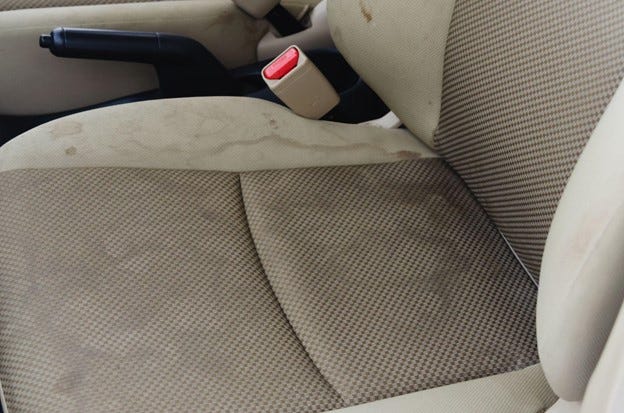
Credit: www.vanisharabia.com
Frequently Asked Questions
How Do I Remove Stains From Leather Car Seats?
Use a mild leather cleaner and a soft cloth. Gently scrub the stain in circular motions. Avoid harsh chemicals to prevent damage. Wipe clean with a damp cloth and let it air dry.
What Household Items Clean Leather Car Seats Safely?
Mix equal parts white vinegar and water for a gentle cleaner. Apply with a soft cloth and wipe stains carefully. Avoid using bleach or ammonia, which can dry out and damage leather.
Can I Use Baby Wipes On Leather Car Seats?
Yes, baby wipes can clean light stains. Choose alcohol-free wipes to avoid drying the leather. Test on a small area first to ensure no discoloration occurs.
How Often Should I Clean My Leather Car Seats?
Clean leather seats every 3 to 6 months to maintain their look. Regular cleaning prevents dirt buildup and keeps leather supple. Use conditioner after cleaning to protect and moisturize.
Conclusion
Cleaning stained leather car seats does not have to be hard. Use gentle cleaners and soft cloths to protect the leather. Act quickly to stop stains from setting. Regular care keeps your seats looking fresh and new. Small efforts make a big difference over time.
Keep your car interior comfortable and clean. Enjoy a neat ride every day. Simple steps bring great results. Your leather seats will thank you.







