
If you’ve upgraded your car with a big brake kit, you know it’s a game-changer for performance and safety. But here’s the catch: choosing the right rims to match those powerful brakes isn’t as simple as picking any stylish wheel.
The wrong rims can cause fitment issues, reduce brake cooling, or even damage your new setup. You want rims that not only look great but also work perfectly with your big brakes. In this guide, you’ll discover exactly how to find the perfect rims that fit, perform, and turn heads—without the guesswork.
Keep reading to make sure your wheels do justice to your upgraded braking system.

Credit: www.racingline.com
Key Factors For Rim Selection
Choosing the right rims for big brake kits is important. The rims must fit well and work with the brakes.
This guide explains the key points to think about when picking rims for big brake kits.
Brake Clearance Requirements
Big brake kits need enough space inside the rim. This space is called brake clearance.
If the rim is too small, it will touch the brake parts. This can cause damage or poor performance.
- Measure the size of your brake calipers and rotors.
- Choose rims with enough space for these parts.
- Check the rim design for clearance around the brakes.
Rim Size And Width Considerations
Rim size affects how your car looks and drives. Width affects tire fit and handling.
Big brake kits often need wider rims to clear the brakes and hold bigger tires.
- Pick rim diameter that fits your tires and car body.
- Choose rim width to fit tire size and brake kit.
- Make sure the rim offsets work with your suspension.
Material Choices For Strength And Weight
Rims come in different materials. Strength and weight affect safety and performance.
Lighter rims improve handling but must be strong enough for big brakes and road use.
- Steel rims are strong but heavy.
- Aluminum rims are lighter and common for performance.
- Forged rims are very strong and light but cost more.
Matching Rim Design With Brake Kits
Choosing the right rims for big brake kits is important. The rim design affects how the brakes look and work.
This guide covers spoke patterns, ventilation, and style to help you pick the best rims.
Spoke Patterns And Visibility
Spoke patterns impact how much of the brake kit you can see. Open spoke designs show the large brake calipers better.
- Simple spoke patterns offer more brake visibility.
- Tight or complex spokes can hide brake details.
- Choose spokes that balance strength and display.
Ventilation And Cooling Benefits
Good ventilation helps brakes cool faster and perform better. Rim design plays a big role in airflow.
| Rim Design | Cooling Effect |
| Open Spokes | High airflow, better cooling |
| Closed or Solid Rims | Low airflow, less cooling |
| Mixed Designs | Moderate airflow and cooling |
Style And Aesthetic Compatibility
Rims should match your car’s style and the brake kit’s size. The right style makes the brakes look natural and balanced.
- Large brake kits suit bold, aggressive rim designs.
- Smaller kits pair well with subtle, clean rims.
- Consider color and finish to match brake calipers.
- Think about the overall look of your car.
Fitment And Compatibility Checks
Choosing the right rims for big brake kits is important. It helps avoid problems with fit and safety.
You need to check several things before buying rims. These checks ensure the rims fit your brakes and wheels well.
Bolt Pattern And Offset Alignment
The bolt pattern is the number and spacing of lug holes. Your rims must match your car’s bolt pattern exactly.
Offset is the distance between the wheel’s mounting surface and its centerline. Correct offset keeps your rims from rubbing brakes.
- Check your car’s bolt pattern in the manual or online.
- Match rim bolt pattern to your vehicle’s bolt pattern.
- Choose an offset that provides enough space for big brakes.
- A wrong offset can cause rubbing or handling problems.
Hub Diameter And Center Bore Fit
The hub diameter is the size of the hole in the center of the rim. It must fit snugly on your car’s hub.
If the center bore is too small, the rim won’t fit. If it is too large, you need hub-centric rings to avoid vibration.
- Measure your car’s hub diameter accurately.
- Check the rim’s center bore size.
- Use hub-centric rings if the rim’s bore is bigger than the hub.
- Proper fit avoids wheel vibration and improves safety.
Tire Compatibility With Larger Rims
Bigger rims need tires that match their size. Tires must also fit your car’s wheel wells and suspension.
Choose tires with the right diameter and width to keep speedometer accuracy and driving safety.
- Check tire size options that fit your new rims.
- Make sure tires clear the big brake kit and suspension parts.
- Maintain overall diameter close to the original tire size.
- Consult a tire professional if unsure about tire fit.
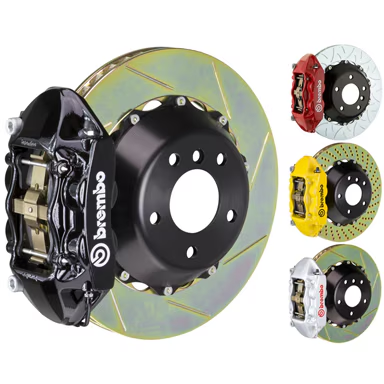
Credit: www.bimmerworld.com
Performance And Safety Aspects
Choosing the right rims for big brake kits is key to vehicle safety and performance. The rims must support the larger brakes properly.
Rims affect how the vehicle handles, how heat moves away from the brakes, and how strong the setup is under stress.
Impact On Vehicle Handling
Rims influence steering, stability, and overall control of the car. Larger brake kits add weight, so rims must handle this well.
- Choose rims with the correct offset to maintain balance.
- Wide rims help with better tire grip and cornering.
- Lightweight rims reduce unsprung weight for smoother handling.
- Ensure rims fit brake calipers without causing rubbing.
Heat Dissipation Efficiency
Big brake kits generate more heat. Rims must allow heat to escape quickly to avoid brake fade.
| Rim Feature | Effect on Heat Dissipation |
| Open spoke design | Improves airflow and cools brakes faster |
| Ventilation holes | Help release trapped heat efficiently |
| Material (aluminum alloy) | Conducts heat away from brakes |
| Thick spokes | Can trap heat, reduce cooling |
Durability Under High Stress
Strong rims withstand the pressure from heavy braking and rough road conditions. Durability is critical for safety.
- Look for rims made from forged or high-quality cast aluminum.
- Check load ratings to ensure rims can handle extra brake weight.
- Avoid rims with thin walls that may crack under stress.
- Regularly inspect rims for cracks or damage after hard use.
Installation Tips And Best Practices
Choosing the right rims for big brake kits is important for safety and performance. Proper installation helps avoid damage and keeps your vehicle stable.
This guide covers key points to consider during installation. Follow these tips to ensure a smooth and safe setup.
Professional Vs Diy Installation
Professional installation ensures the rims and brakes fit perfectly. Experts use the right tools and check everything carefully. This lowers risks of problems later.
DIY installation can save money but needs skill and the right equipment. Mistakes may cause brake or wheel damage. Always follow instructions and safety rules if you install yourself.
- Professionals have experience and proper tools
- DIY requires careful measuring and fitting
- Incorrect installation may cause brake failure
- Professional checkups catch hidden issues
Balancing And Alignment Advice
Balancing rims after installation helps avoid vibrations when driving. Proper alignment keeps tires wearing evenly and improves handling.
Always balance your wheels after fitting big brake kits. Check alignment regularly to protect your rims and brakes.
- Balance wheels to reduce shaking at high speeds
- Get alignment checked after changing rims or brakes
- Misalignment causes uneven tire wear
- Proper balance improves ride comfort and safety
Regular Maintenance For Longevity
Keep your rims and brake kits clean and inspected often. Dirt and rust can damage parts and reduce performance.
Check for cracks, loose bolts, or worn pads to avoid failures. Regular maintenance extends the life of your rims and brakes.
- Clean rims and brakes to remove dust and grime
- Inspect bolts and fasteners for tightness
- Replace brake pads before they wear out fully
- Look for cracks or damage on rims regularly

Credit: www.bimmerworld.com
Frequently Asked Questions
What Size Rims Fit Big Brake Kits Best?
Choose rims with enough diameter and width to clear large brake calipers. Typically, 18 inches or larger works well. Check the rim’s offset and backspacing to ensure proper fitment without rubbing.
How To Check Rim Clearance For Big Brakes?
Measure the brake caliper’s width and height, then compare with rim inner dimensions. Ensure at least 5mm clearance to avoid contact during driving or suspension travel.
Can Aftermarket Rims Improve Big Brake Kit Performance?
Yes, lightweight aftermarket rims reduce unsprung weight and enhance brake cooling. Better airflow helps maintain brake efficiency and prolongs component lifespan.
What Materials Are Ideal For Rims With Big Brake Kits?
Forged aluminum rims are best due to strength, lightness, and heat dissipation. They handle braking forces well and resist warping under high temperatures.
Conclusion
Choosing the right rims for big brake kits ensures better performance and safety. Always check the size and clearance to fit your brakes perfectly. Strong, lightweight materials help improve driving and handling. Don’t forget to match the style with your car’s look.
Taking time to pick rims that fit well avoids costly mistakes later. Your brakes and rims work together for a smoother ride. Remember, simple choices lead to better results on the road.







