
Changing your spark plugs might sound tricky, but it’s something you can easily do yourself. Imagine saving money and boosting your car’s performance with just a few simple steps.
In this guide, you’ll discover exactly how to replace your spark plugs safely and quickly. By the end, you’ll have the confidence to handle this task on your own, keeping your engine running smoothly. Ready to get started and take control of your car’s maintenance?
Let’s dive into the DIY spark plug replacement steps that anyone can follow.
Tools Needed
Replacing spark plugs is a simple task if you have the right tools. Using proper equipment makes the job safer and faster.
This guide covers the essential tools and safety gear you need for spark plug replacement.
Essential Tools
You need specific tools to remove and install spark plugs correctly. These tools help avoid damage and ensure a good fit.
- Spark plug socket with rubber insert
- Ratchet wrench
- Socket extension bar
- Torque wrench to tighten spark plugs properly
- Feeler gauge to check spark plug gap
- Spark plug boot puller (optional but helpful)
- Compressed air or a small brush to clean the area
Safety Gear
Wear safety gear to protect yourself while working on your car. Spark plug replacement can expose you to dirt and sharp parts.
Proper safety gear keeps you safe and comfortable during the job.
- Safety gloves to protect your hands
- Safety glasses to shield your eyes from debris
- Long sleeves or work clothes to avoid scratches
- Work light for better visibility
Preparing Your Vehicle
Before replacing spark plugs, you must prepare your vehicle carefully. This helps you work safely and easily.
Follow these steps to get your car ready for spark plug replacement.
Locate Spark Plugs
Find the spark plugs under the hood of your car. Look for the engine cover or ignition coils. These parts cover the spark plugs.
- Open the hood and secure it.
- Remove the engine cover if needed.
- Spot the ignition coils or spark plug wires.
- Trace the wires to the spark plugs below.
Disconnect Battery
Disconnect the battery to avoid electric shock or damage. This step is important for your safety.
| Tool Needed | Purpose |
| Wrench or Socket | Remove battery terminals |
| Gloves | Protect your hands |
| Safety Glasses | Protect your eyes |
Removing Old Spark Plugs
Replacing spark plugs helps your engine run smoothly. Old spark plugs can wear out and cause problems.
Removing old spark plugs is simple if you follow the right steps. Take your time and be careful.
Removing Spark Plug Wires
Start by locating the spark plug wires. These wires connect the spark plugs to the ignition system.
Gently pull the wire boot from the spark plug. Do not pull on the wire itself to avoid damage.
- Grip the boot firmly near the plug
- Twist slightly to loosen if stuck
- Pull straight out without bending
Using The Spark Plug Socket
Use a spark plug socket with a ratchet to remove the spark plug. The socket fits over the plug for a secure grip.
Turn the ratchet counterclockwise to loosen the spark plug. Remove it carefully once it is free.
- Attach the spark plug socket to the ratchet
- Place the socket over the spark plug
- Turn slowly to avoid damage
- Pull out the spark plug after loosening
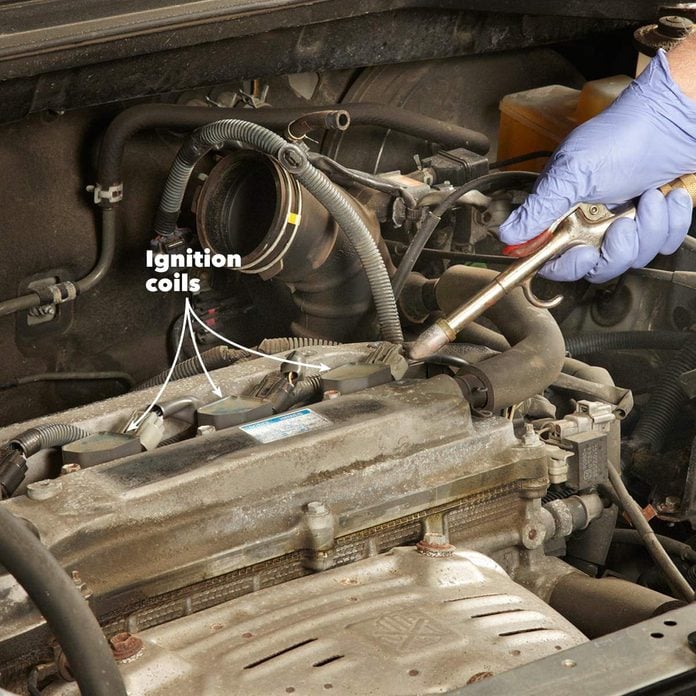
Credit: www.familyhandyman.com
Inspecting Spark Plugs
Checking spark plugs is vital for engine health. They ignite the fuel-air mix that powers your vehicle.
Regular inspection helps prevent engine issues. Follow simple steps to assess your spark plugs.
Check For Wear And Damage
Look at the electrodes of the spark plug. Worn electrodes may cause poor engine performance.
Inspect the ceramic insulator for cracks. A cracked insulator can lead to misfires.
- Electrodes should not be too worn or rounded
- Insulator must be free of cracks
- Check for any deposits on the plug
Signs Of Engine Issues
Bad spark plugs may cause rough idling. This means the engine does not run smoothly at rest.
Hard starting is another sign. Your engine struggles to start if plugs are faulty.
- Engine misfires during acceleration
- Poor fuel economy
- Engine vibrations or sounds
Installing New Spark Plugs
Replacing spark plugs can improve engine performance. It’s a simple task if you follow the right steps.
Learn how to install new spark plugs with these easy guidelines. Ensure your vehicle runs smoothly with proper care.
Gap Measurement
Before installing, check the gap of your spark plugs. A correct gap ensures optimal engine performance.
- Use a gap gauge to measure the gap.
- If needed, adjust the gap to match the manufacturer’s specifications.
- Recheck the gap to confirm accuracy.
Proper Threading Techniques
Threading spark plugs correctly avoids engine damage. Follow these steps to ensure proper installation.
Ensure the spark plug is aligned with the cylinder head before threading.
- Hand-thread the spark plug to start.
- Use a spark plug socket for further tightening.
- Do not over-tighten to prevent thread stripping.
Tightening Spark Plugs
Tightening your spark plugs correctly is crucial. Follow these steps to ensure they are secure.
| Tightening Tool | Torque Specification |
| Torque Wrench | Follow the vehicle’s manual |
| Spark Plug Socket | Hand-tighten first |
Always use a torque wrench for the final tightening. This prevents damage to the plugs and engine.
Credit: www.tsxclub.com
Reconnecting Components
After replacing the spark plugs, you need to reconnect the parts you disconnected. This ensures your engine runs smoothly.
Pay attention to each connection to avoid any problems starting the engine later.
Attach Spark Plug Wires
Reconnect the spark plug wires carefully to the right plugs. Each wire fits only one spark plug, so match them correctly.
- Hold the wire by the boot, not the wire itself.
- Push the boot firmly onto the spark plug until it clicks.
- Check that the wire is secure and does not pull off easily.
- Repeat for all spark plugs in the correct order.
Reconnect Battery
After wiring the spark plugs, reconnect the battery terminals. This restores power to your vehicle’s electrical system.
| Terminal | Action |
| Positive (+) | Attach first to avoid sparks |
| Negative (-) | Attach second to complete the circuit |
Testing And Final Checks
After replacing your spark plugs, it is important to test the engine. This ensures the new parts work well. Final checks help spot any issues before driving.
Follow these steps carefully to confirm your spark plug replacement was successful. Pay attention to how the engine sounds and performs.
Start The Engine
Turn on the ignition and start the engine. Let it run for a few minutes. This allows the new spark plugs to settle in and the engine to warm up.
Listen For Irregular Sounds
Pay close attention to the engine noise. Listen for any knocking or rough running sounds. These noises may mean a spark plug is not working correctly.
- Check for sputtering or misfires
- Listen for any strange knocking sounds
- Note if the engine runs smoothly or roughly
Check For Performance Improvement
Test drive the vehicle to see if performance has improved. Watch for better acceleration and smoother idling. If problems remain, recheck the spark plugs.
| Check | Signs of Improvement |
| Acceleration | Smoother and quicker response |
| Engine Idle | Stable, no stalling or roughness |
| Fuel Efficiency | Improved miles per gallon |
Maintenance Tips
Replacing spark plugs is key to keeping your engine running well. Regular checks help avoid bigger problems.
Follow simple steps to change spark plugs safely and improve your car’s performance.
When To Replace Spark Plugs
Check your spark plugs every 30,000 miles or as your owner’s manual says. Old plugs cause poor engine work.
Replace spark plugs if you see wear or damage. This keeps your engine strong and saves fuel.
- Every 30,000 to 50,000 miles for standard plugs
- Every 60,000 to 100,000 miles for long-life plugs
- Check sooner if you drive in hard conditions
Signs Of Spark Plug Trouble
Bad spark plugs cause your car to run rough or lose power. Watch for these signs to fix plugs early.
- Engine misfires or runs unevenly
- Hard starts or no start at all
- Lower fuel efficiency than normal
- Engine hesitation or stalling
- Check engine light turns on
Spotting these signs early helps you replace spark plugs before bigger engine issues happen.
Credit: www.clubrsx.com
Frequently Asked Questions
How Often Should I Replace Spark Plugs Myself?
Replace spark plugs every 30,000 to 50,000 miles, depending on your vehicle. Check your owner’s manual for exact intervals. Regular replacement ensures optimal engine performance and fuel efficiency.
What Tools Are Needed For Diy Spark Plug Replacement?
You need a spark plug socket, ratchet wrench, extension bar, and a gap gauge. Safety gloves and anti-seize lubricant are also helpful to prevent damage during installation.
How Do I Check Spark Plug Gap Correctly?
Use a spark plug gap gauge to measure the gap. Adjust it by gently bending the electrode. The correct gap ensures proper ignition and engine efficiency.
Can I Replace Spark Plugs Without Removing The Engine Cover?
Yes, if your engine cover is easily removable or has access holes. Otherwise, carefully remove it to avoid damaging clips or connectors before replacing spark plugs.
Conclusion
Replacing spark plugs yourself saves time and money. Follow each step carefully for best results. Use the right tools to avoid damage. Double-check your work before starting the engine. Regular spark plug care keeps your car running well. Feel confident tackling this simple car task.
Keep your engine healthy and efficient with this skill. Try it once, and you will see how easy it is.







