
Are you thinking about upgrading your car’s wheels but not sure where to start? Choosing between OEM wheels and aftermarket wheels can be confusing.
Each option has its own benefits and drawbacks that can affect your car’s look, performance, and budget. Understanding the key differences will help you make the best choice for your ride. Keep reading to discover what sets OEM wheels apart from aftermarket wheels—and which one might be the perfect fit for you.
Oem Wheels Basics
OEM wheels are made by the vehicle’s original manufacturer. They come with the car when you buy it new.
These wheels meet specific rules set by the car maker. They fit perfectly and match the car’s style.
Manufacturer Specifications
OEM wheels follow exact rules from the vehicle maker. These rules cover size, weight, and strength.
They are tested to work well with the car’s parts. This helps keep the car safe and balanced.
- Size matches the car’s design
- Weight supports smooth driving
- Strong enough for road conditions
Design And Fitment
OEM wheels match the car’s look and style exactly. They come in colors and shapes made for each model.
These wheels fit perfectly on the car without extra changes. This helps avoid problems with brakes or suspension.
- Exact bolt pattern for the vehicle
- Proper offset for good handling
- Compatible with car’s brakes and sensors
Warranty And Support
OEM wheels come with a warranty from the car maker. This covers defects and damage from normal use.
Car dealers and manufacturers offer support if problems happen. This can include repairs or replacements.
- Warranty covers defects in materials
- Support available through dealers
- Easy to get authorized repairs
Aftermarket Wheels Essentials
Aftermarket wheels are popular for car owners who want to change their vehicle’s look. They offer more choices than OEM wheels. These wheels allow drivers to personalize their cars.
Knowing the basics about aftermarket wheels helps you pick the right ones. These wheels differ in style, material, and price. Understanding these details makes buying easier.
Customization Options
Aftermarket wheels come in many designs and sizes. You can choose different colors and finishes. This helps match your car’s style perfectly.
- Wide range of colors and finishes
- Various spoke designs and patterns
- Different sizes to fit specific tires
- Custom engraving or logos available
Material And Quality Variations
Aftermarket wheels use different materials like aluminum, steel, and alloys. Each material has strengths and weaknesses. Quality can vary from budget to premium types.
- Aluminum wheels are light and strong
- Steel wheels are heavier but durable
- Alloy wheels offer good balance of strength and weight
- Higher quality wheels resist rust and damage better
Pricing And Availability
Aftermarket wheels vary in price to fit different budgets. Some cost less than OEM wheels, while others are more expensive. Availability depends on style and size.
- Budget wheels offer basic styles and materials
- Mid-range wheels balance price and quality
- High-end wheels focus on performance and design
- Many styles are sold online and in stores
Performance And Durability
Choosing between OEM wheels and aftermarket wheels can affect your vehicle’s performance and durability. Both types have different features that impact how your car drives and lasts over time.
Understanding these differences helps you pick wheels that fit your needs. We will focus on strength, weight, handling, and longevity.
Strength And Weight Differences
OEM wheels are made to meet the car maker’s exact standards. They use strong materials to keep the weight balanced.
Aftermarket wheels often vary in strength and weight. Some are lighter but may not be as strong as OEM wheels.
- OEM wheels have consistent strength and weight
- Aftermarket wheels can be lighter for better speed
- Some aftermarket wheels may be weaker if made cheaply
- Weight affects fuel efficiency and acceleration
Impact On Vehicle Handling
OEM wheels are designed to work well with the car’s suspension and brakes. This helps maintain smooth handling and safety.
Aftermarket wheels can change the feel of the ride. Lighter wheels improve agility but may reduce stability if size changes a lot.
- OEM wheels keep handling predictable and safe
- Aftermarket wheels can improve cornering if matched well
- Wrong size aftermarket wheels may cause poor handling
- Weight changes affect steering response
Longevity Factors
OEM wheels last long because they use tested materials and processes. They resist wear and damage under normal use.
Aftermarket wheels vary in lifespan. High-quality ones can last as long as OEM, but cheaper options may wear out fast.
- OEM wheels have proven durability in many conditions
- Quality aftermarket wheels can match OEM lifespan
- Low-quality aftermarket wheels risk cracking or bending
- Proper care extends wheel life for both types
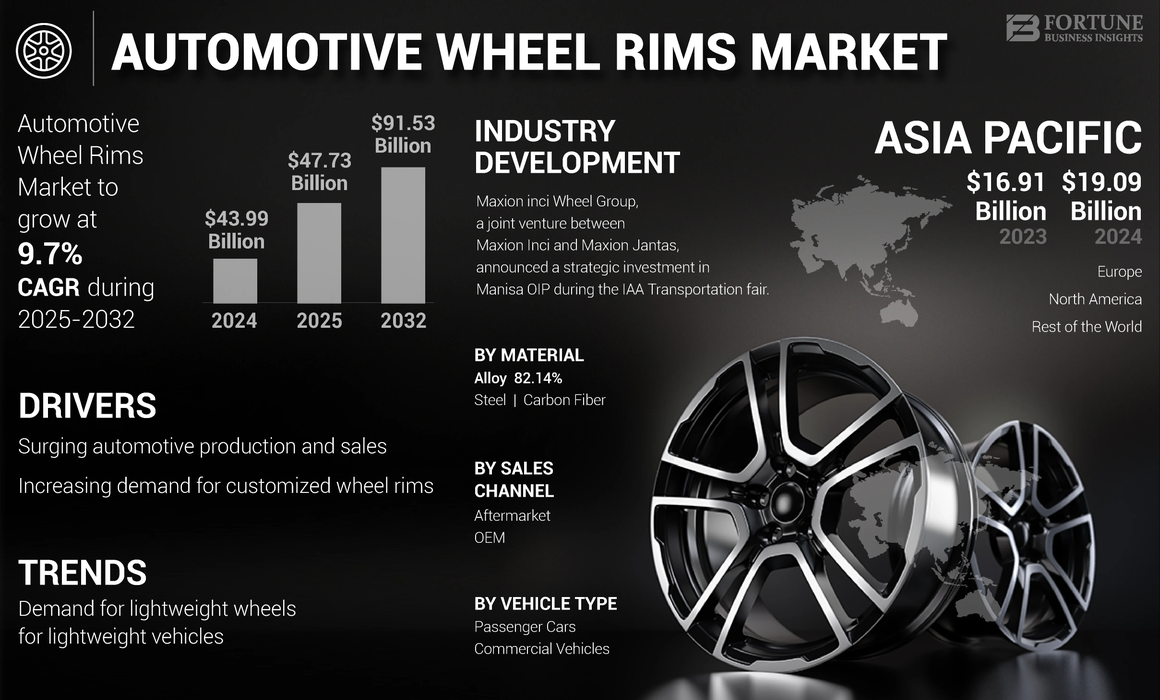
Credit: www.fortunebusinessinsights.com
Aesthetic Considerations
Choosing between OEM wheels and aftermarket wheels affects how your vehicle looks. Each type offers unique styles and finishes.
Understanding their aesthetic differences helps you pick the right wheels to match your car’s personality.
Style And Design Choices
OEM wheels follow the car maker’s original style. They keep the car’s look uniform and classic.
Aftermarket wheels offer more design options. You can find unique shapes and sizes that stand out.
- OEM wheels usually have simple, clean designs
- Aftermarket wheels can be bold and eye-catching
- Custom patterns are common in aftermarket options
- OEM wheels fit the car’s original look perfectly
Finish And Color Options
OEM wheels mostly come in standard finishes like silver or chrome. They keep a consistent look with the car.
Aftermarket wheels come in many colors and finishes. You can choose matte, gloss, or even two-tone options.
- OEM finishes are usually limited but durable
- Aftermarket offers custom paint and powder coating
- Color choices in aftermarket wheels are wide and varied
- Aftermarket finishes may need extra care to last
Installation And Compatibility
Choosing between OEM wheels and aftermarket wheels affects installation and fit. Compatibility with your vehicle is key for safety and performance.
OEM wheels come from the vehicle maker, designed to fit perfectly. Aftermarket wheels offer more style but can cause fitment issues.
Fitment Challenges
OEM wheels match the exact specifications of your car. Aftermarket wheels may not have the right bolt pattern, offset, or center bore size. This can cause problems during installation.
- OEM wheels fit without modifications
- Aftermarket wheels may need adapters or spacers
- Wrong fit can cause vibrations or damage
- Check wheel size and hub compatibility carefully
Tire Compatibility
OEM wheels usually come with tire sizes recommended by the car maker. Aftermarket wheels may require different tires, which can affect driving and safety.
| Wheel Type | Typical Tire Size | Impact on Performance |
|---|---|---|
| OEM Wheels | Factory recommended sizes | Balanced for smooth ride |
| Aftermarket Wheels | Varies; may need custom tires | Can improve grip or cause wear |
Legal And Safety Concerns
Using wheels that do not meet safety standards risks accidents and legal issues. OEM wheels meet strict regulations. Aftermarket wheels must be carefully checked to avoid problems.
- OEM wheels comply with vehicle safety laws
- Aftermarket wheels need certification marks
- Incorrect wheels may void insurance coverage
- Always verify wheel ratings and approvals
Cost Comparison
Many people wonder about the cost difference between OEM wheels and aftermarket wheels. Each option has its own financial implications, which are important to understand before making a purchase.
We will explore the initial purchase price, long-term investment, and resale value impact of both types of wheels.
Initial Purchase Price
OEM wheels are usually more expensive when first bought. They are made by the car’s manufacturer, ensuring a perfect fit and quality.
Aftermarket wheels often cost less. They are made by third-party companies and offer more variety in design and materials.
- OEM wheels: High initial cost
- Aftermarket wheels: Lower initial cost
Long-term Investment
OEM wheels are durable and made to last. They require less frequent replacement, which can save money over time.
Aftermarket wheels may need more care and might not last as long. This could lead to higher costs in the future.
- OEM wheels: Better long-term value
- Aftermarket wheels: Possible higher maintenance costs
Resale Value Impact
OEM wheels often help maintain a car’s resale value. Buyers see them as reliable and a sign of quality.
Aftermarket wheels can sometimes lower resale value. Some buyers might prefer the original wheels for authenticity.
- OEM wheels: Positive impact on resale value
- Aftermarket wheels: Possible negative impact on resale value
Choosing The Right Wheels
Choosing between OEM wheels and aftermarket wheels can be tricky. Your decision will affect your car’s performance and appearance.
Consider factors like your vehicle’s usage, budget, and personal style. Each of these plays a crucial role in making the right choice.
Vehicle Usage And Needs
The way you use your vehicle can influence which wheels are best. Some wheels are better for off-road adventures, while others suit city driving.
- Daily commuting might benefit from durable OEM wheels.
- Off-road vehicles could perform better with specialized aftermarket wheels.
- Performance cars often require lightweight aftermarket options.
Budget Considerations
Your budget is important when selecting wheels. Prices can vary greatly between OEM and aftermarket options.
| Wheel Type | Price Range |
| OEM Wheels | $200 – $400 per wheel |
| Aftermarket Wheels | $100 – $1000 per wheel |
Personal Style Preferences
Wheels can change the look of your vehicle. Your style preferences should guide your choice between OEM and aftermarket wheels.

Credit: www.reddit.com
Credit: www.tundratalk.net
Frequently Asked Questions
What Are Oem Wheels?
OEM wheels are original equipment manufacturer wheels. They come pre-installed on vehicles. They match the car’s design and specifications. OEM wheels ensure quality and compatibility with the vehicle.
How Do Aftermarket Wheels Differ From Oem?
Aftermarket wheels are made by third-party brands. They offer diverse designs and sizes. Aftermarket wheels can improve aesthetics and performance. However, they may vary in quality and fit compared to OEM.
Are Aftermarket Wheels Cheaper Than Oem Wheels?
Aftermarket wheels often cost less than OEM wheels. Prices vary based on brand, material, and design. Cheaper options may sacrifice durability or fit. High-quality aftermarket wheels can be more expensive than OEM.
Can Aftermarket Wheels Affect Vehicle Performance?
Yes, aftermarket wheels can impact handling, ride, and fuel efficiency. Lightweight wheels improve performance and braking. Incorrect sizes may cause alignment or safety issues. Proper selection is key to positive effects.
Conclusion
Choosing between OEM wheels and aftermarket wheels depends on your needs. OEM wheels offer reliable quality and fit your vehicle perfectly. Aftermarket wheels provide more style options and can be less expensive. Both types have pros and cons to consider.
Think about your budget, appearance, and performance needs. This helps you pick the right wheels with confidence. Knowing the difference makes your decision easier. Select wheels that match your driving style and car. The right choice improves your car’s look and safety.







