
Want your car to look brand new, inside and out? Detailing your car can make a huge difference, but it’s easy to feel overwhelmed by all the steps involved.
What if you had a simple, clear guide that walks you through each part of the process? You’ll discover the exact steps to detail your car like a pro. By the end, your vehicle won’t just shine—it will turn heads everywhere you go.
Ready to bring out your car’s best look? Let’s dive in.
Preparing Your Car
Preparing your car before detailing is important. It helps you get the best results. Taking time to prepare makes the job easier and cleaner.
This guide covers the main steps to prepare your car. Focus on supplies, location, and inspecting the vehicle.
Gathering Essential Supplies
Having the right supplies ready saves time. It keeps you organized and makes detailing smooth. Here are the key items you need:
- Car wash soap
- Microfiber towels
- Buckets for water
- Wheel cleaner
- Vacuum cleaner
- Detailing brushes
- Glass cleaner
- Wax or sealant
- Clay bar
Choosing The Right Location
Pick a spot that is shaded and well-ventilated. Avoid direct sunlight to stop soap from drying too fast. A flat surface helps keep water from pooling.
| Location Feature | Why It Matters |
| Shade | Prevents water spots and soap stains |
| Flat ground | Keeps car stable and water drains well |
| Good ventilation | Dries surfaces evenly and fast |
| Easy water access | Makes rinsing and washing simple |
Inspecting The Vehicle
Look over your car before starting. Check for damage or dirt spots that need special care. Note scratches, dents, or stuck grime.
Use this quick checklist before you begin:
- Check paint for scratches or chips
- Look at tires and rims for brake dust
- Inspect windows for water spots
- See if interior needs vacuuming
- Note any sticky areas or stains
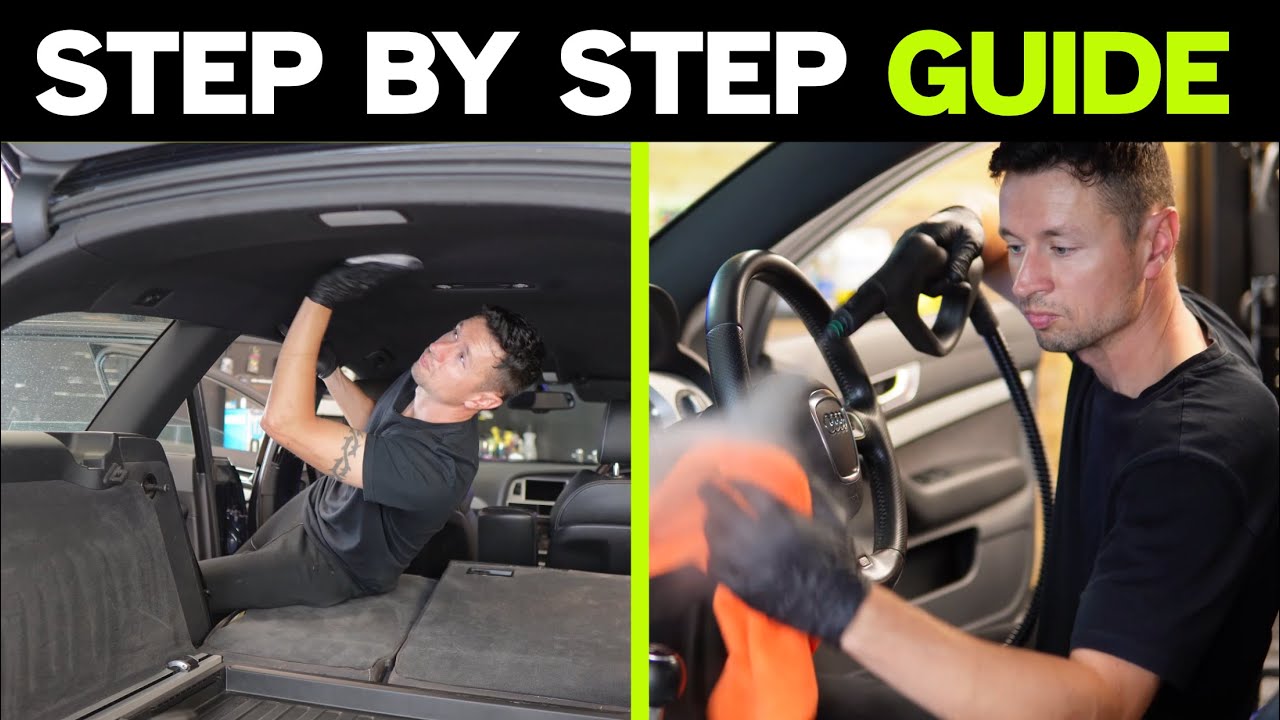
Credit: www.youtube.com
Washing The Exterior
Washing your car’s exterior keeps it clean and shiny. It also protects the paint from damage.
Follow simple steps to wash your car safely and well. Start with rinsing and move to detailed cleaning.
Rinsing Off Loose Dirt
Begin by rinsing the car with water. This removes loose dirt and dust.
Use a hose or a bucket of water. Spray gently to avoid scratching the paint.
Using The Two-bucket Method
Use two buckets for washing. One bucket holds soapy water, and the other holds clean water.
Dip your wash mitt in the soapy water. Wash a section of the car, then rinse the mitt in clean water.
- Prevents dirt from going back on the car
- Reduces the chance of scratches
- Keeps the wash water cleaner for longer
Cleaning Wheels And Tires
Wheels and tires get very dirty. Use a separate brush or sponge for them.
Apply wheel cleaner to break down brake dust and grime. Scrub tires well to remove dirt.
- Start by rinsing wheels and tires
- Spray wheel cleaner and let it sit briefly
- Scrub wheels with a soft brush
- Use a stiff brush for tires
- Rinse everything thoroughly
Claying The Surface
Claying your car is an important step in car detailing. It helps remove dirt and contaminants that washing alone cannot.
This process leaves your car’s paint smooth and ready for polishing or waxing.
Purpose Of Clay Bar
A clay bar removes bonded particles on your car’s paint. These particles include tar, tree sap, and industrial fallout.
Claying helps the surface feel smooth and looks cleaner before applying wax or sealant.
Proper Claying Technique
Use a clay bar with lubricant to prevent scratches. Work in small sections for best results.
- Spray lubricant on the paint surface
- Gently glide the clay bar over the lubricated area
- Check the clay for dirt and fold it to expose a clean side
- Repeat until the surface feels smooth
- Wipe the area with a microfiber cloth
When To Clay Your Car
Clay your car when the paint feels rough after washing. This means contaminants are still on the surface.
Claying is also good before polishing or waxing to ensure a clean base.
Polishing For Perfection
Polishing is a key part of car detailing. It helps remove imperfections and brings out a deep shine. A good polish makes your car look like new.
Choosing the right method and products ensures the best results. Careful polishing protects the paint and improves the car’s appearance.
Selecting The Right Polish
Different polishes suit different paint conditions. Some remove scratches, while others add shine. Pick a polish based on your car’s needs.
- Heavy-cut polishes remove deep scratches and oxidation
- Medium-cut polishes handle minor swirls and scratches
- Light polishes enhance gloss and remove tiny marks
- Glaze polishes add shine but do not cut paint
Hand Vs. Machine Polishing
Hand polishing is gentle and good for small areas. It requires more effort and time. Machine polishing is faster and more consistent.
| Feature | Hand Polishing | Machine Polishing |
| Effort | High | Low |
| Control | High | Moderate |
| Speed | Slow | Fast |
| Best for | Small spots, delicate areas | Large surfaces, heavy correction |
Removing Swirls And Scratches
Swirls and scratches reduce paint shine. Polishing removes these flaws to restore smoothness. Use the right polish and technique for best results.
- Clean the surface thoroughly before polishing
- Apply polish evenly with a soft pad or cloth
- Use slow, circular motions to work the polish
- Buff the area with a clean microfiber towel
- Repeat if needed for deeper scratches
Applying Wax Or Sealant
Applying wax or sealant protects your car’s paint and adds shine. This step keeps dirt and water off the surface. It also helps prevent damage from the sun and road grime.
Choosing the right product and applying it correctly makes a big difference. This guide covers types of wax and sealants, tips for application, and how to buff for a glossy finish.
Types Of Wax And Sealants
There are several types of wax and sealants you can use. Each has different qualities and lasts for varying times. Knowing the differences helps you pick the best one.
- Carnauba Wax:A natural wax that gives a deep, warm shine. It is easy to apply but lasts a few weeks only.
- Synthetic Sealants:Made from polymers, these last longer than natural wax. They provide a glossy, durable layer.
- Hybrid Products:Combine wax and sealant for easy use and good protection. They balance shine and longevity.
Application Tips
| Tip | Details |
| Clean Surface | Wash and dry your car completely before applying wax or sealant. |
| Use Small Sections | Apply product in small, manageable areas to avoid uneven coverage. |
| Thin Layer | Use a thin, even coat to prevent streaks and make buffing easier. |
| Use Applicator Pads | Apply with a foam or microfiber pad for smooth, controlled spreading. |
| Follow Cure Time | Allow the product to set as recommended before buffing or adding another layer. |
Buffing For A Glossy Finish
Buffing removes excess product and brings out the shine. Use a clean microfiber cloth or a soft buffing pad. Work gently in circular motions for best results.
- Wait until the wax or sealant hazes over before buffing.
- Use light pressure to avoid removing the product completely.
- Turn the cloth frequently to a clean side.
- Buff until the surface feels smooth and looks glossy.

Credit: detailingexperts.ca
Detailing The Interior
Detailing the interior of a car makes it look new and feel fresh. This process involves several steps to ensure every part is clean and maintained.
Focus on key areas like carpets, leather, upholstery, dashboard, and vents to achieve a clean interior.
Vacuuming And Cleaning Carpets
Start by removing all loose dirt and debris from the carpets. A thorough vacuuming prepares the carpets for deeper cleaning.
- Remove floor mats and shake out dust.
- Use a vacuum with a brush attachment for best results.
- Pay attention to corners and under seats.
Treating Leather And Upholstery
Leather and upholstery need special care to maintain their texture and color. Use appropriate cleaners and conditioners.
Cleaning Dashboard And Vents
The dashboard and vents collect dust and grime. Clean these areas to improve air quality and aesthetics.
| Tool | Purpose |
| Microfiber cloth | Wipes surfaces clean |
| Soft brush | Reaches into vents |
| Dashboard cleaner | Removes grime |
Final Touches
The final touches in car detailing make your vehicle look perfect. These steps ensure that every part of the car shines and is in top condition.
Attention to detail in these last steps is crucial for a clean, polished finish. Let’s explore how to complete these final steps effectively.
Cleaning Windows And Mirrors
Clean windows and mirrors ensure clear visibility and a neat appearance. Use a glass cleaner for a streak-free finish.
- Spray glass cleaner evenly on the surface.
- Wipe with a microfiber cloth using circular motions.
- Ensure all edges and corners are smudge-free.
Dressing Tires And Trim
Dressing tires and trim enhances their look and protects them from damage. Use a tire dressing product for a glossy finish.
Tips for dressing tires:
- Apply evenly using a foam applicator.
- Remove excess product to avoid sling.
- Use a separate product for plastic trims.
Inspecting For Missed Spots
Inspection helps identify areas that need more attention. Check each section thoroughly to ensure nothing is overlooked.
| Area | Common Issues |
| Door Handles | Smudges |
| Bumpers | Dust Accumulation |
| Mirrors | Water Spots |

Credit: www.ebay.ca
Frequently Asked Questions
What Are The Essential Steps For Detailing A Car?
Start with washing and drying the car thoroughly. Next, clay bar the surface to remove contaminants. Then polish to eliminate scratches. Finally, apply wax or sealant to protect the paint and enhance shine. Clean interior surfaces and vacuum for a complete detail.
How Often Should I Detail My Car For Best Results?
Detail your car every 4 to 6 months for optimal maintenance. Frequent detailing protects paint, removes dirt, and preserves the interior. Regular care keeps your vehicle looking new and helps maintain its value over time.
Can I Detail My Car At Home Or Need Professionals?
You can detail your car at home with proper tools and products. However, professional detailing offers advanced techniques and equipment for a deeper clean. Choose based on your budget, time, and desired quality of results.
What Products Are Necessary For Effective Car Detailing?
Essential products include car shampoo, clay bar, polish, wax or sealant, microfiber towels, and interior cleaners. Using quality products ensures safe and thorough cleaning. Always select items designed specifically for automotive use to avoid damage.
Conclusion
Detailing a car takes time but gives great results. Clean every part carefully for a shiny finish. Use the right tools and products for best care. Regular detailing keeps your car looking fresh and new. Enjoy the pride of a well-kept vehicle every day.
Simple steps can make a big difference in appearance. Keep your car clean, and it will last longer. Try these steps to keep your car in top shape.







