
Are you ready to take your kayaking adventures to the next level? A car roof kayak rack is the key to making your trips easier, safer, and more enjoyable.
Imagine loading your kayak quickly without hassle, hitting the road with confidence, and focusing on the fun ahead. If you want to protect your gear, save space, and travel smoothly, this guide is made for you. Keep reading to discover how the right kayak rack can change the way you travel forever.

Credit: www.amazon.ca
Choosing The Right Kayak Rack
Choosing a kayak rack for your car roof is important for safety and convenience. The right rack keeps your kayak secure while traveling.
There are many types of racks, materials, and weight limits to consider before buying. This guide helps you pick the best one.
Types Of Roof Racks
Roof racks come in different styles. Each type fits certain cars and kayaks better. Knowing the options helps you choose well.
- J-style racks hold one kayak upright and save space.
- Stacker racks carry kayaks flat and stack more than one.
- Cradle racks support kayaks in a shaped frame for stability.
- Soft racks use straps and pads, easy to install and remove.
Material And Durability
Materials affect rack strength and weight. Some last longer outdoors and resist rust or damage.
| Material | Benefits | Drawbacks |
| Aluminum | Lightweight, rustproof | Can dent easily |
| Steel | Very strong | Heavy, may rust without coating |
| Plastic | Light and cheap | Less durable over time |
| Rubber parts | Protect kayak from scratches | May wear out fast |
Weight Capacity Considerations
Check the rack’s weight limit. It must support your kayak and gear safely.
Here are tips to choose the right weight capacity:
- Find your kayak’s weight on the label or manual.
- Add extra weight for gear and accessories.
- Pick a rack with a higher weight limit than your total load.
- Consider your car roof’s maximum load too.

Credit: www.amazon.ca
Installation Basics
Installing a car roof kayak rack needs care and correct steps. A good install keeps your kayak safe on the road.
This guide covers key points to measure, mount, and avoid common errors during installation.
Measuring Your Vehicle
Measure your vehicle’s roof width before choosing a rack. Check the distance between roof rails or edges.
Make sure the rack fits your car’s shape and size to avoid problems during mounting.
Mounting The Rack Securely
Secure mounting is key to safe kayak transport. Attach the rack tightly to the roof rails or door frames.
- Use the right tools like wrenches and screwdrivers.
- Tighten all bolts and clamps firmly.
- Check the rack is stable and does not move.
- Test the mounted rack by shaking it gently.
Common Installation Mistakes
| Mistake | Effect | How to Avoid |
|---|---|---|
| Loose bolts | Rack shifts or falls | Use a torque wrench to tighten |
| Wrong rack size | Poor fit, damage to car | Measure vehicle roof carefully |
| Ignoring weight limits | Rack or roof damage | Check manufacturer’s weight guidelines |
| Poor strap placement | Kayak slips during travel | Place straps on solid points, tighten well |
Loading Your Kayak Safely
Loading your kayak on a car roof rack needs care. Safe loading prevents damage to your kayak and car.
Follow simple steps to secure your kayak properly. This keeps it steady during travel.
Proper Kayak Placement
Place your kayak on the roof rack with the hull facing down. This reduces wind resistance.
Center the kayak evenly on the rack to avoid tilting. Make sure it does not hang too far over the car sides.
- Hull down on the rack
- Center kayak on crossbars
- Avoid overhang beyond car edges
Using Straps And Tie-downs
Use strong straps to hold the kayak tightly. Secure straps around the kayak and the roof rack.
Attach tie-downs at the front and back of the car. This stops the kayak from moving forward or backward.
- Use cam straps or ratchet straps
- Tighten straps but avoid damage to kayak
- Secure bow and stern with tie-downs
- Check all straps before driving
Balancing Weight And Stability
Balance the kayak weight evenly on the rack. Uneven weight can cause shaking or loss of control.
Distribute any extra gear inside the kayak carefully. Keep heavy items low and centered to maintain stability.
- Place kayak centered on roof bars
- Keep weight balanced left to right
- Store gear low inside kayak
- Check for any wobble before driving
Driving Tips With A Kayak On The Roof
Driving with a kayak on your car roof needs extra care. It changes how your vehicle moves and reacts.
These tips help keep you safe and protect your kayak during your trip.
Adjusting For Height And Wind
Your kayak adds height to your car. This can affect clearance under bridges or in garages. It also catches wind differently.
- Always check the height of your vehicle with the kayak on top.
- Watch for low bridges, parking garages, and drive-thru signs.
- Drive slower on windy days to reduce sway caused by wind pressure.
- Use side mirrors often to monitor the kayak’s position.
Speed And Handling
The extra weight and height change your car’s balance. This affects how your car handles turns and stops.
| Driving Factor | Recommended Action |
| Speed | Keep speeds below 60 mph to avoid instability |
| Turns | Take corners slowly and smoothly |
| Braking | Allow more distance to stop safely |
| Acceleration | Accelerate gently to keep control |
Regular Safety Checks
Stopping often to check your kayak and rack can prevent accidents. Make sure everything stays tight and secure.
- Check that straps and tie-downs are tight.
- Look for any signs of wear or damage on the rack.
- Make sure the kayak is still centered and balanced.
- Inspect the roof rack mounts for any looseness.
Maintenance And Care
Proper maintenance of your car roof kayak rack is essential. It ensures safety and extends the lifespan of your equipment.
Regular care helps prevent damage and keeps your rack in top condition. Follow these guidelines for effective maintenance.
Cleaning Your Rack
Cleaning your kayak rack removes dirt and debris. This helps prevent corrosion and damage.
- Use mild soap and water for cleaning.
- Rinse thoroughly to remove soap residue.
- Dry with a soft cloth to prevent rust.
Inspecting For Wear And Tear
Regular inspection is crucial to ensure the safety of your kayak rack. Check all parts for signs of damage.
| Component | Check For |
| Straps | Fraying or cuts |
| Brackets | Loose screws |
| Bars | Rust or dents |
Storage Tips When Not In Use
Proper storage when the rack is not in use extends its life. Store it in a dry and safe location.
Popular Kayak Rack Brands
Choosing the right kayak rack for your car helps keep your kayak safe during travel. Many brands offer racks with different features and prices. Knowing the popular brands can guide your choice.
This guide covers top-rated kayak rack models, how price compares to performance, and highlights from customer reviews.
Top-rated Models
Brands like Thule, Yakima, and Malone lead the market with well-designed racks. Their products fit various cars and kayak sizes. Many models offer easy installation and secure carrying.
- Thule Hullavator Pro:Easy loading and durable design.
- Yakima JayLow:Holds kayaks upright to save space.
- Malone Auto Racks:Affordable and simple to use.
Price Vs. Performance
| Brand | Price Range | Key Features |
|---|---|---|
| Thule | High | Strong build, easy loading |
| Yakima | Mid to High | Space-saving design, secure fit |
| Malone | Low to Mid | Budget-friendly, user-friendly |
| Rhino-Rack | Mid | Durable, versatile mounting |
Customer Reviews Highlights
Customers often praise racks that are easy to install and hold kayaks firmly. Some note that expensive racks feel sturdier but affordable ones work well for casual users.
Common feedback includes:
- Good fit for different car types
- Strong straps and padding to protect kayaks
- Simple loading without extra help
- Occasional issues with wind noise at high speeds
Alternative Transport Options
Transporting your kayak can be challenging. There are several options available to make it easier. Each option has its own benefits and drawbacks.
Choose the right method to transport your kayak safely and efficiently. Consider the type of vehicle and the distance you will travel.
Truck Bed Racks
Truck bed racks are sturdy and reliable. They keep your kayak secure during transport. This option is ideal for people with trucks.
- Easy to install
- Supports heavy kayaks
- Provides extra storage space
Trailer Solutions
Trailers can carry multiple kayaks. They are perfect for group trips. This option is suitable for long-distance travel.
| Trailer Type | Capacity |
| Single Kayak | 1 Kayak |
| Double Trailer | 2 Kayaks |
| Multi-Kayak Trailer | 3+ Kayaks |
Inflatable Kayaks And Portability
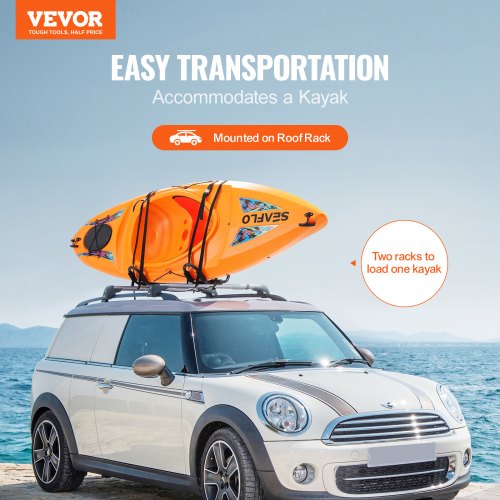
Inflatable kayaks are easy to carry. They fit in the trunk of most cars. This option is great for those who lack storage space.
Credit: www.vevor.ca
Frequently Asked Questions
What Is A Car Roof Kayak Rack?
A car roof kayak rack is a mounting system for transporting kayaks on a car roof. It secures the kayak safely during travel. It prevents damage to the kayak and vehicle. It’s ideal for outdoor enthusiasts who kayak frequently.
How To Install A Car Roof Kayak Rack?
Installation typically involves attaching crossbars to the car roof. Then, secure the kayak rack to the crossbars using clamps or bolts. Follow the manufacturer’s instructions carefully. Proper installation ensures safety and stability while driving.
Can All Cars Use A Roof Kayak Rack?
Most cars with roof rails or crossbars can use a roof kayak rack. Some racks are adjustable to fit different car models. Always check the vehicle’s roof weight limit before installing. It’s essential for safe and secure transportation.
How To Secure A Kayak On The Roof Rack?
Use high-quality straps or cam buckles to tie down the kayak. Position the kayak hull-up or on its side, depending on the rack design. Double-check the straps for tightness before driving. This prevents the kayak from shifting or falling.
Conclusion
A car roof kayak rack makes transporting your kayak easy and safe. It saves space inside your vehicle and keeps your kayak secure. Choosing the right rack depends on your car and kayak size. Installing it properly helps prevent damage and accidents.
Enjoy more trips without worrying about how to carry your kayak. A good rack lets you focus on fun and adventure outdoors. Simple, useful, and practical—this gear fits every kayaking enthusiast’s needs.







