
Have you ever thought about how your tires spin as you drive? It might seem simple, but the direction your tires rotate can make a big difference in how long they last and how safe your ride feels.
Ignoring the correct tire rotation direction can lead to uneven wear, poor handling, and even costly repairs. If you want to keep your car running smoothly and save money in the long run, understanding why checking tire rotation direction matters is key.
Keep reading, because what you learn here could protect your tires—and your wallet.
Tire Rotation Basics
Tire rotation helps your tires wear evenly. It increases their life and improves safety.
Checking the tire rotation direction is important for proper performance. It ensures the tires spin as designed.
What Is Tire Rotation?
Tire rotation means moving tires from one position to another on your vehicle. This balances tire wear over time.
Different tires wear faster in certain spots. Rotating them helps keep all tires lasting longer and driving smoothly.
Common Rotation Patterns
Tires can be rotated in several ways. The pattern depends on tire type and vehicle drive.
- Forward Cross: Front tires move to the rear on the same side. Rear tires move to the front, crossing sides.
- Rearward Cross: Rear tires move to the front on the same side. Front tires move to the rear, crossing sides.
- X-Pattern: All tires switch sides and positions diagonally.
- Side to Side: Only for directional tires, tires swap left to right on the same axle.
| Rotation Pattern | When to Use |
| Forward Cross | Front-wheel drive vehicles |
| Rearward Cross | Rear-wheel drive vehicles |
| X-Pattern | All-wheel drive vehicles |
| Side to Side | Directional tires only |
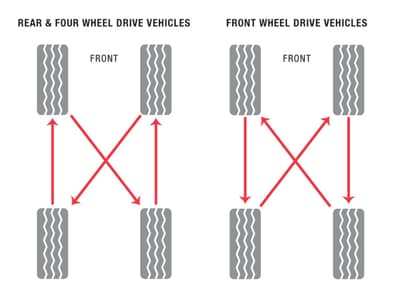
Credit: www.hennessyauto.com
Directional Tires Explained
Directional tires are designed to roll in one direction only. Their tread pattern helps push water away from the tire. This design improves grip on wet roads.
It is important to check the tire rotation direction. Using them backwards can reduce safety and tire life.
Design Features
Directional tires have a distinct tread pattern shaped like a V or arrow. This pattern points in the direction the tire should turn. It helps channel water away from the tire quickly.
- V-shaped tread pattern for water dispersion
- One-way rolling direction marked on the sidewall
- Improved traction on wet and snowy roads
- Special rubber compounds for better grip
Benefits Of Directional Tires
Using directional tires correctly offers many benefits. The right direction improves safety and tire wear. It also enhances driving comfort.
| Benefit | Explanation |
|---|---|
| Better Water Evacuation | Directional tread quickly pushes water away, reducing hydroplaning risk. |
| Improved Traction | Tire grips road surfaces more firmly in wet and snowy conditions. |
| Longer Tire Life | Correct rotation prevents uneven wear and extends tire use. |
| Enhanced Handling | Vehicle responds better to steering and braking inputs. |
Consequences Of Ignoring Rotation Direction
Checking tire rotation direction is important for vehicle safety. Ignoring it can lead to problems that affect performance.
Understanding the consequences helps you maintain your tires properly and avoid costly repairs.
Uneven Tire Wear
Rotating tires without following the direction causes uneven wear. Tires wear faster on one side if rotated wrong.
- Shorter tire life
- Increased risk of blowouts
- Uneven tread depth
Reduced Traction And Safety
Wrong rotation direction lowers traction. Tires lose grip on wet or icy roads, risking accidents.
| Effect | Impact on Safety |
| Loss of traction | Increased stopping distance |
| Hydroplaning risk | Higher in wrong rotation |
| Handling issues | Reduced vehicle control |
Increased Noise And Vibration
Tires rotated against their direction cause noise and vibration. This makes driving uncomfortable and may damage suspension.
- More road noise inside the car
- Shaking steering wheel or seat
- Faster wear on suspension parts
Credit: www.bfgoodrich.ca
How To Check Tire Direction
Checking tire rotation direction helps keep your vehicle safe. Tires designed for one way improve grip and wear.
Knowing how to identify the right direction prevents damage and uneven tire wear.
Identifying Directional Arrows
Look for arrows on the sidewall of the tire. These arrows show the correct rolling direction.
- Find the arrow symbol on the tire’s sidewall.
- Check if the arrow points forward when mounted.
- Match the arrow direction with the vehicle’s forward movement.
- Do not mount tires with arrows pointing backward.
Visual Inspection Tips
Visual checks help confirm tire rotation direction before driving.
| Inspection Point | What to Look For |
| Sidewall Markings | Directional arrows or words like “Rotation” |
| Tread Pattern | V-shaped or angled tread pointing forward |
| Wear Pattern | Uneven wear if mounted wrong |
| Rotation Direction | Matches vehicle’s forward movement |
Best Practices For Rotating Directional Tires
Directional tires have a specific tread pattern designed to roll in one direction. This design helps with traction and water evacuation on wet roads. Checking the tire rotation direction is important to keep the tires working correctly and to avoid damage.
Rotating directional tires requires care to maintain their direction. Following best practices can extend the life of the tires and improve safety on the road.
Recommended Rotation Methods
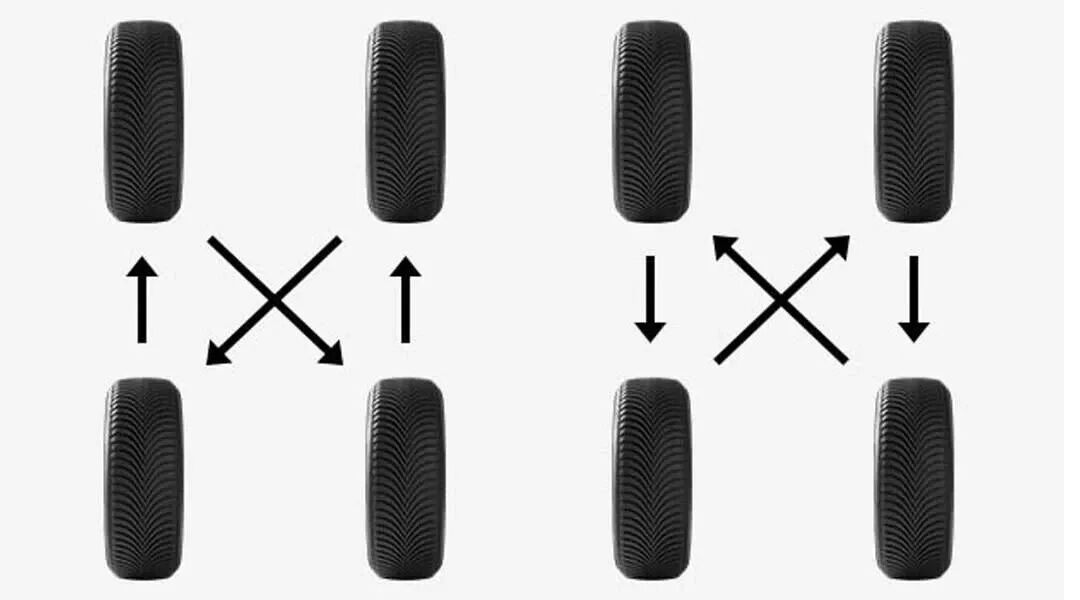
For directional tires, the rotation method must keep the tires rolling in the correct direction. This means tires usually move from front to back on the same side of the vehicle. Swapping tires from one side to the other can cause the tires to spin backward.
- Move front tires straight back to the rear on the same side.
- Move rear tires straight forward to the front on the same side.
- Do not swap tires from left to right or right to left unless the tires are non-directional.
- If tires are on a unidirectional rim, always keep the rotation direction correct.
When To Rotate Tires
Rotating tires regularly helps wear evenly and improves tire life. For directional tires, it is important to follow the vehicle manufacturer’s recommendation for rotation intervals. Typically, this falls between 5,000 and 8,000 miles.
| Condition | Recommended Action | Notes |
| Uneven tire wear | Rotate tires immediately | Check tire direction carefully |
| Every 5,000 – 8,000 miles | Perform regular rotation | Follow vehicle or tire brand guidelines |
| After tire repair | Inspect and rotate if needed | Maintain correct direction |
Maximizing Tire Life And Safety
Checking the tire rotation direction is essential for car safety. It helps in extending tire life and ensures a smoother ride.
Proper tire maintenance can prevent accidents and save money in the long run. Regular checks are vital.
Regular Maintenance Importance
Regular tire maintenance is crucial for vehicle performance. It ensures that tires wear evenly and maintain grip on the road.
- Check tire pressure monthly
- Rotate tires every 5,000 to 8,000 miles
- Inspect tires for cuts, punctures, or cracks
- Ensure tires are balanced and aligned
Signs You Need New Tires
Knowing when to replace tires is key to safety. Worn-out tires can lead to accidents.
| Sign | Description |
| Tread Depth | Tread is less than 2/32 inch |
| Vibration | Car vibrates at high speeds |
| Sidewall Cracks | Visible cuts or cracks |
| Bald Spots | Uneven wear patterns |

Credit: solderstick.au
Frequently Asked Questions
Why Is Tire Rotation Direction Important?
Tire rotation direction ensures even tread wear and optimal performance. Incorrect rotation can cause premature tire damage and reduce safety. Following the recommended direction extends tire life and improves vehicle handling, fuel efficiency, and road grip.
How To Identify Tire Rotation Direction?
Look for directional arrows on the tire sidewall. These arrows indicate the proper rotation direction. Always mount tires to match this direction for best traction and wear. If unsure, consult your vehicle or tire manufacturer’s guide.
What Happens If Tires Rotate Incorrectly?
Incorrect tire rotation causes uneven wear and reduced traction. This leads to poor handling, increased noise, and faster tire replacement. It may also affect vehicle stability and safety, especially in wet or slippery conditions.
How Often Should Tire Rotation Direction Be Checked?
Check tire rotation direction every 5,000 to 8,000 miles or during routine tire maintenance. Regular checks ensure tires wear evenly and perform optimally. Always inspect direction after tire replacement or rotation services.
Conclusion
Checking tire rotation direction keeps your tires safe and lasting longer. Proper rotation helps even out tire wear. This improves your car’s handling and safety on the road. It also saves money by avoiding early tire replacement. Always follow the tire’s rotation pattern.
A small step that makes a big difference. Stay safe, drive smart, and care for your tires. Regular checks keep your ride smooth and reliable. Don’t overlook this simple but important task. Your tires and wallet will thank you.







