
Imagine you’re on the road, and your tire pressure drops unexpectedly. What do you do?
Knowing how to inflate a tire with a portable air compressor can save you time, money, and stress. This simple skill puts you in control and keeps you safe wherever you are. In this guide, you’ll discover step-by-step instructions that anyone can follow.
By the end, you’ll feel confident handling your tire pressure anytime, without relying on help. Ready to take charge of your tire’s air? Let’s dive in.

Credit: www.youtube.com
Choosing The Right Compressor
Inflating a tire with a portable air compressor is simple with the right tool. Choosing the correct compressor saves time and effort.
Consider your needs and the features of different compressors before buying. This helps you pick the best one for your tire inflating tasks.
Types Of Portable Air Compressors
There are mainly three types of portable air compressors. Each type suits different uses and offers unique benefits.
- Pancake Compressors:These have a flat, round tank. They are stable and easy to carry.
- Hot Dog Compressors:These have a long, cylindrical tank. They hold more air and work fast.
- Twin-Stack Compressors:These have two tanks stacked. They provide more power and quick filling.
Key Features To Consider
| Feature | Why It Matters |
|---|---|
| Tank Size | Larger tanks store more air but add weight. |
| Maximum PSI | Higher PSI inflates tires faster. |
| Air Flow (CFM) | Higher CFM means quicker inflation. |
| Noise Level | Quieter compressors are better for home use. |
| Auto Shut-Off | Stops inflation at the set pressure to avoid overfilling. |
Power Sources And Portability
Portable air compressors use different power sources. Your choice affects how and where you use the compressor.
- Battery-Powered:Cordless and easy to carry. Best for quick fixes.
- 12V DC (Car Adapter):Plugs into a vehicle’s cigarette lighter. Good for roadside use.
- AC Powered:Needs a wall outlet. Best for garage or home use.
Preparing For Inflation
Inflating a tire with a portable air compressor is easy if you prepare well. Getting ready helps you avoid mistakes and save time.
Follow simple steps to check your tire, gather tools, and stay safe before you start inflating.
Checking Tire Pressure
Start by checking your tire’s current pressure. Use a reliable tire pressure gauge for this task.
Compare the reading with the recommended tire pressure. This info is on the tire sidewall or in your vehicle’s manual.
- Remove the valve cap from the tire
- Press the gauge onto the valve stem firmly
- Read the pressure shown on the gauge
- Note the pressure for reference
Gathering Necessary Tools
Have all tools ready before you begin inflating your tire. This saves time and makes the process smooth.
- Portable air compressor with correct power source
- Tire pressure gauge if your compressor lacks one
- Valve stem caps to close the tire after inflating
- Gloves to protect your hands
- Flashlight if you work in low light
Safety Precautions
Follow safety rules to avoid accidents while inflating tires. Safety protects you and your vehicle.
- Park your vehicle on a flat, stable surface
- Turn off the engine before inflating
- Keep the compressor away from water and heat
- Do not overinflate the tire
- Wear gloves to protect your hands
- Check the compressor’s power cord for damage
Connecting The Compressor
Connecting the portable air compressor to your tire is simple. Follow clear steps to ensure a safe and tight connection.
Proper connection helps the compressor work efficiently and inflates the tire quickly.
Locating The Valve Stem
The valve stem is the small tube sticking out from the tire. It usually has a cap on it to keep dirt out.
Remove the cap carefully and place it somewhere safe. This lets you attach the air hose easily.
Attaching The Air Hose
The air hose must connect firmly to the valve stem. This stops air from leaking during inflation.
- Hold the air hose nozzle tightly.
- Push the nozzle onto the valve stem until it fits well.
- Lock the nozzle if your compressor has a lever or clip.
- Check for any hissing sounds that show air leaks.
Ensuring A Secure Fit
Double-check the connection before turning on the compressor. A loose fit wastes air and slows inflation.
| Check Point | How to Verify |
| Hose Nozzle | Should be pressed fully onto the valve |
| Lever or Clip | Locked down firmly |
| Air Leak | No hissing sounds around the valve |
| Valve Cap | Keep it nearby to replace after inflation |
Operating The Compressor
Using a portable air compressor to inflate a tire is simple. Knowing how to operate it safely helps you avoid problems.
Below are key tips to turn on the compressor, watch the pressure gauge, and prevent overinflation.
Turning The Compressor On
First, plug the compressor into a power source. Make sure the hose is connected to the tire valve securely. Then, press the power button or switch to start the compressor.
Some compressors have a reset button. Press it if the unit does not start right away. Keep the compressor on a flat surface to avoid tipping.
Monitoring Pressure Gauge
Watch the pressure gauge closely during inflation. The gauge shows the tire’s current pressure in PSI or BAR. Check the recommended tire pressure in your vehicle manual or on the tire sidewall.
- Check the gauge every 10 seconds.
- Stop inflating if the pressure nears the recommended level.
- Allow the pressure to stabilize before final reading.
Avoiding Overinflation
Overinflated tires can be dangerous. Use these tips to avoid adding too much air.
| Tip | Reason |
|---|---|
| Stop compressor at recommended pressure | Prevents tire damage and blowouts |
| Check pressure twice after inflating | Ensures accuracy |
| Release air slowly if overinflated | Brings pressure back to safe level |
Finishing Up
After inflating your tire, you need to finish the process carefully. Proper steps help keep your tire safe and ready to use.
Follow these simple actions to complete the job and store your tools correctly.
Detaching The Air Hose
Turn off the portable air compressor first. Then, gently remove the air hose from the tire valve.
Pull the hose straight off to avoid damaging the valve or hose connector.
Replacing The Valve Cap
Put the valve cap back on the tire valve. This protects the valve from dirt and dust.
Turn the cap clockwise until it is snug but not too tight.
Storing The Compressor
Unplug the compressor if it is electric. Coil the air hose neatly to avoid kinks.
Store the compressor in a dry, cool place. Keep it ready for the next use.
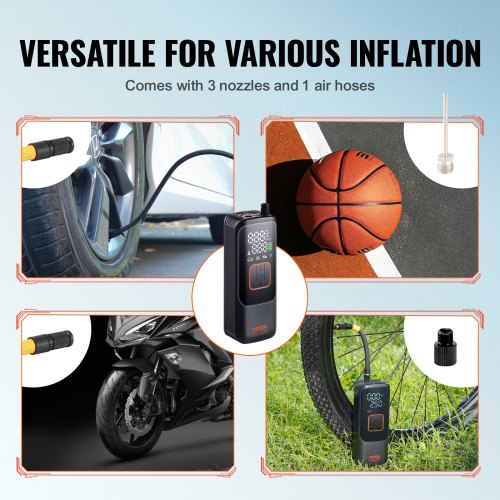
Credit: www.vevor.com
Troubleshooting Tips
Inflating a tire with a portable air compressor is convenient. Sometimes, issues can arise that make this task tricky. Here are some tips to troubleshoot common problems.
Compressor Won’t Start
If your compressor won’t start, it can be frustrating. Check these potential causes to get it running.
- Ensure the power source is connected properly.
- Check the compressor’s fuse or circuit breaker.
- Inspect the power cord for any visible damage.
Slow Inflation Issues
Experiencing slow inflation can be due to various reasons. Consider these factors to improve the speed.
| Cause | Solution |
| Low voltage supply | Use a stable power source |
| Blocked air filter | Clean or replace the filter |
| Worn-out compressor parts | Replace or service parts |
Leaking Air Connections
Leaking air connections can hinder the inflation process. Address these leaks to ensure efficient use of your compressor.

Credit: www.amazon.com
Frequently Asked Questions
How Do I Use A Portable Air Compressor To Inflate Tires?
First, connect the compressor’s hose to the tire valve. Then, plug in the compressor and turn it on. Monitor the pressure gauge and stop once the desired PSI is reached. Finally, disconnect the hose and securely replace the valve cap.
What Psi Should I Inflate My Tire To?
Check your vehicle’s manual or the tire sidewall for recommended PSI. Usually, car tires require 30-35 PSI. Avoid over-inflation or under-inflation as it affects driving safety and tire life. Always use the recommended pressure for best performance.
Can A Portable Air Compressor Damage My Tire?
No, if used correctly, a portable air compressor will not damage your tire. Over-inflation or using the wrong settings can cause damage. Always monitor the pressure gauge and stop inflating at the recommended PSI to ensure safety.
How Long Does It Take To Inflate A Tire With A Portable Compressor?
Inflation time varies by compressor power and tire size. Typically, it takes 3 to 7 minutes to inflate a standard car tire. High-capacity compressors may inflate tires faster, while smaller models take longer.
Conclusion
Using a portable air compressor makes tire inflation quick and simple. Keep the device nearby for emergencies or regular checks. Always watch the pressure gauge to avoid overinflation. Regular tire care helps keep your vehicle safe and running well. Practice these steps to feel confident handling tire inflation yourself.
This small task can save time and hassle on the road.







