
Changing a tire might seem tricky if you’ve never done it before. But what if you had a clear, simple guide to help you use a tire jack safely and easily?
This step-by-step guide is made just for you. Whether you’re stuck on the side of the road or preparing for an emergency, knowing how to use your tire jack can save you time, stress, and money. Keep reading, and by the end, you’ll feel confident handling your tire jack like a pro.

Credit: www.youtube.com
Choosing The Right Tire Jack
A tire jack helps you lift your car safely to change a tire. Picking the right jack is important for safety and ease.
Different jacks work better for different cars and situations. Learn what to look for before buying one.
Types Of Tire Jacks
There are several types of tire jacks. Each type works in a different way and suits different needs.
- Scissor Jack:Compact and lightweight. Uses a screw to lift the car.
- Hydraulic Bottle Jack:Uses fluid pressure. Lifts heavy vehicles easily.
- Floor Jack:Has wheels and a long handle. Lifts quickly and smoothly.
- Hi-Lift Jack:Used for off-road vehicles. Can lift high and pull stuck vehicles.
Weight Capacity And Size
Choose a jack that can hold your car’s weight safely. The jack must be strong enough to lift the vehicle.
Also, pick a size that fits your car and storage space. Small cars need lighter jacks, bigger cars need stronger ones.
- Check your vehicle’s weight in the manual.
- Pick a jack with a higher weight rating than your car.
- Consider the jack’s lifting height for your tire size.
- Look for a jack that fits in your car’s storage space.
Safety Features To Look For
Safety is key when using a tire jack. Choose one with features that protect you and your car.
Good safety features make the lifting process stable and reduce risks of accidents.
- Wide base for better stability on different surfaces.
- Locking mechanisms to prevent sudden lowering.
- Non-slip pads to hold the car securely.
- Durable materials that resist bending or breaking.
Preparing Your Vehicle
Before using a tire jack, it is important to prepare your vehicle properly. This ensures safety and makes the process easier.
Follow these simple steps to get your vehicle ready for lifting with a tire jack.
Park On A Level Surface
Always park your car on a flat, level surface before using the jack. Avoid hills or slopes to prevent the vehicle from rolling.
Engage The Parking Brake
Set the parking brake firmly. This keeps the vehicle still and safe while you work on it.
Loosen The Lug Nuts
Before raising the vehicle, loosen the lug nuts on the wheel you want to change. Do not remove them yet.
- Use a lug wrench to turn the nuts counterclockwise.
- Loosen each nut a little, working in a star pattern.
- Do not remove nuts completely until the car is lifted.
Positioning The Tire Jack
Using a tire jack properly keeps you safe and makes tire changes easier. Correct positioning helps lift the car smoothly.
This guide shows how to find the right jack points, place the jack, and check stability before lifting.
Locate The Jack Points
Look for the strong parts of your car frame designed for jacking. These points prevent damage and keep the car steady.
- Check your vehicle’s manual for jack point locations.
- Find small notches or reinforced areas near each tire.
- Avoid soft metal or plastic parts as jack points.
Place The Jack Correctly
Set the jack directly under the jack point. Align it so the lifting pad fits snugly on the frame.
| Jack Part | Position Description |
| Base | Flat on firm ground for support |
| Lifting Arm | Under the jack point, touching the frame |
| Handle | Accessible for easy turning |
Check Stability Before Lifting
Make sure the jack stays steady before you raise the car. Unstable jacks can slip or fall.
- Place the jack on a flat, solid surface.
- Use a piece of wood under the base if the ground is soft.
- Check that the jack’s lifting pad is fully touching the jack point.
- Do not lift the car if the jack wobbles or feels loose.
Lifting The Vehicle Safely
Lifting your vehicle safely is important before changing a tire or doing repairs. Using a tire jack correctly prevents accidents and damage.
Follow these steps carefully to lift your car with a tire jack and keep yourself safe throughout the process.
Operate The Jack Handle
Start by inserting the jack handle into the jack’s mechanism. Turn the handle slowly in the correct direction to raise the jack.
Keep a steady pace and avoid sudden movements. This helps keep the jack stable and secure under the vehicle.
Lift To The Desired Height
Raise the vehicle until the tire is off the ground. Make sure the height is enough to remove the tire easily and safely.
- Turn the handle to lift the vehicle slowly.
- Stop and check the jack’s position often.
- Lift until there is enough clearance under the tire.
- Do not lift higher than needed.
Use Jack Stands For Support
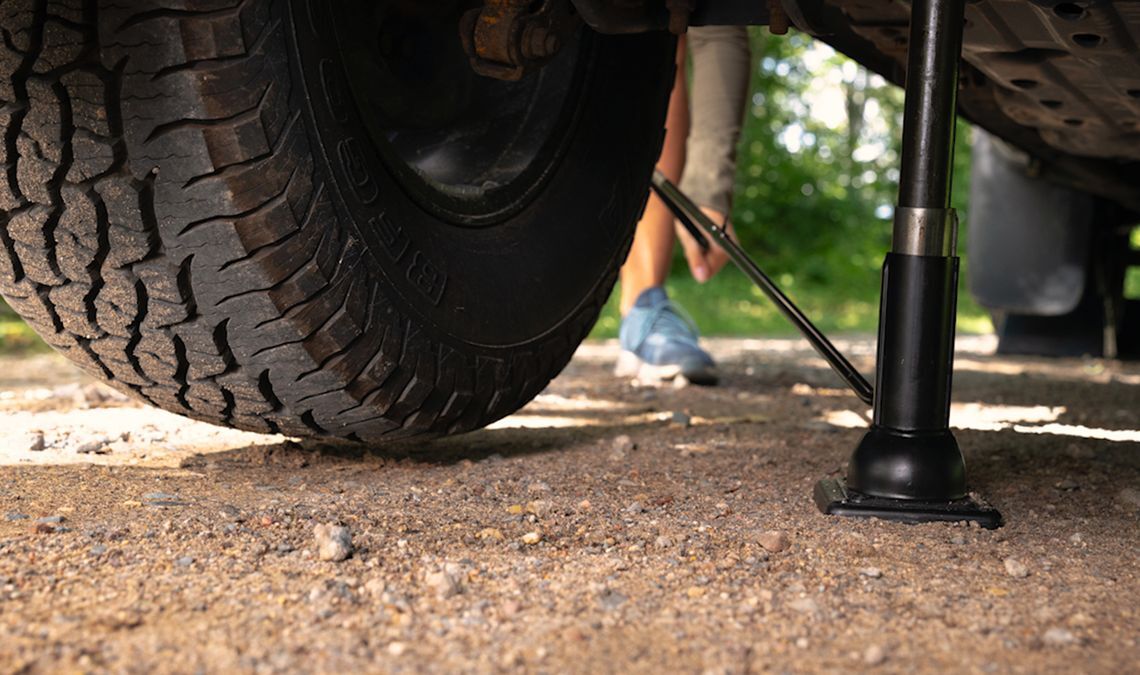
Never rely on the jack alone. Use jack stands to support the vehicle after lifting it.
| Step | Action |
| 1 | Place jack stands under the vehicle frame near the jack. |
| 2 | Slowly lower the jack until the vehicle rests on the stands. |
| 3 | Check that the vehicle is steady on the stands before working. |
| 4 | Never work under a vehicle supported only by a jack. |
Removing And Replacing The Tire
Changing a tire is easy with the right tools and steps. A tire jack helps lift the car safely. This guide shows how to remove and replace a tire correctly.
Follow each part carefully to avoid damage or injury. Always work on a flat surface and use wheel chocks for safety.
Remove Lug Nuts And Tire
Start by loosening the lug nuts before lifting the car. Use a wrench to turn them counterclockwise. Do not remove them completely yet.
Next, place the tire jack under the car’s frame near the tire. Lift the car until the tire is off the ground. Now, fully remove the lug nuts and take off the tire.
Mount The Spare Tire
Align the spare tire with the wheel bolts. Push the tire onto the hub firmly. Make sure the holes match the bolts exactly.
- Hold the spare tire steady
- Place it on the wheel hub
- Check if the tire sits flush against the car
- Prepare to secure the lug nuts
Tighten Lug Nuts Properly
Tighten the lug nuts by hand first. Then use a wrench to secure them in a star pattern. This ensures even pressure on the wheel.
| Step | Action |
|---|---|
| 1 | Hand-tighten all lug nuts |
| 2 | Tighten the first lug nut with a wrench |
| 3 | Move to the lug nut opposite to the first |
| 4 | Continue tightening in a star pattern |
| 5 | Lower the car and fully tighten lug nuts |
Credit: www.bfgoodrichtires.com
Lowering The Vehicle
Lowering your vehicle safely is crucial after changing a tire. This guide helps you do it right.
Follow these steps to ensure your vehicle is stable and ready to drive.
Slowly Lower The Jack
Turn the jack handle slowly to lower the vehicle. Make sure the tire touches the ground evenly.
Check that the vehicle is stable and not tilting to one side. This ensures safety.
Remove The Jack
Once the vehicle is on the ground, remove the jack. Store it securely in your vehicle.
Check the jack area for any tools or parts left behind. This avoids damage when driving.
Final Lug Nut Tightening
With the vehicle on the ground, tighten the lug nuts fully. Use a wrench to ensure they are secure.
Tighten the nuts in a crisscross pattern. This helps the tire sit evenly on the wheel hub.
- Start with one lug nut, skip one, and tighten the next.
- Repeat until all nuts are tight and secure.
- Check each nut again for tightness.
Safety Tips And Precautions
Using a tire jack is a common task for vehicle maintenance. Safety is crucial to prevent accidents or injuries. Follow these tips to ensure a safe experience.
Always pay attention to safety precautions when using a tire jack. Proper steps can prevent mishaps.
Avoid Working Under A Vehicle On A Jack Alone
Never work under a vehicle supported only by a jack. It is not stable enough to hold the car safely.
Always use jack stands to support the vehicle securely. Ask someone to help if possible.
- Use jack stands for added safety
- Have a friend nearby to assist
- Keep emergency contacts ready
Check Jack Condition Regularly
Inspect your tire jack before each use. Look for any signs of wear or damage.
Check for leaks in hydraulic jacks and ensure they lift smoothly. Replace any faulty parts immediately.
- Inspect for cracks or bends
- Ensure hydraulic fluid levels are adequate
- Test lifting function regularly
Wear Protective Gear
Wearing protective gear can prevent injuries. Gloves protect your hands and safety goggles shield your eyes.
Wear closed-toe shoes to protect your feet from falling objects or tools.
- Wear gloves for hand protection
- Use safety goggles to protect eyes
- Closed-toe shoes are essential
Credit: www.redlinestands.com
Frequently Asked Questions
How Do I Safely Position A Tire Jack?
Place the jack on a flat, stable surface near the tire. Align it with the vehicle’s designated lifting point. Ensure the jack is secure before lifting to prevent slipping or accidents.
What Are The Types Of Tire Jacks Available?
Common types include scissor jacks, bottle jacks, and floor jacks. Each type varies in lifting capacity and ease of use. Choose based on your vehicle type and maintenance needs.
How High Should I Lift The Car With A Tire Jack?
Lift the car just enough to clear the tire from the ground. Avoid raising it too high to maintain stability. This ensures safe tire removal and replacement.
Can I Use A Tire Jack On Uneven Ground?
Using a tire jack on uneven ground is unsafe. Always find a flat, solid surface to prevent the jack from tipping. If necessary, use a sturdy board to level the base.
Conclusion
Using a tire jack is simple with the right steps. Always place the jack on a flat, stable surface. Lift your car slowly and carefully. Check that the jack holds the car firmly before you change the tire. Lower the car gently when finished.
Practicing these steps keeps you safe and ready for emergencies. Keep your tire jack in good condition for quick use. This guide helps you handle tire changes with confidence and ease.







