
Imagine you’re driving, and suddenly you hear that dreaded thump-thump-thump. Your tire is flat.
What do you do next? Knowing how to change a flat tire safely can save you time, money, and stress. It’s not just about getting back on the road—it’s about protecting yourself and others while doing it. You’ll learn simple, step-by-step tips that anyone can follow, even if you’ve never changed a tire before.
Stay with me, and you’ll feel confident handling a flat tire the right way.

Credit: www.amazon.com
Prepare Your Vehicle
Changing a flat tire safely starts with preparing your vehicle. Take steps to make sure you and your car are secure before you begin.
These preparations help prevent accidents and make the tire change easier and faster.
Find A Safe Location
Look for a flat, stable surface away from traffic. Avoid soft ground or hills. A parking lot or wide shoulder is best.
- Move away from busy roads
- Choose a firm and level spot
- Make sure your vehicle is visible to others
- Avoid curves and narrow roads
Turn On Hazard Lights
Switch on your hazard lights to alert other drivers. This helps keep you safe while you work on your tire.
Hazard lights flash all four turn signals at once. Use them anytime your vehicle is stopped in a risky spot.
| When to Use Hazard Lights |
|---|
| Flat tire or vehicle stopped on road |
| Emergency or breakdown situations |
| Warning other drivers of danger ahead |
Apply Parking Brake
Set the parking brake to stop your car from rolling. This keeps the vehicle steady while you change the tire.
- Press the brake pedal firmly
- Pull or push the parking brake lever
- Double-check the vehicle does not move
Gather Necessary Tools
Changing a flat tire requires some basic tools. It is important to gather them before starting.
Having the right tools ready makes the job faster and safer. Let’s look at what you need.
Locate The Spare Tire
The spare tire is usually stored under the trunk floor or beneath the vehicle. Check your car manual if you are unsure.
Make sure the spare tire is fully inflated and in good condition before using it.
Find The Jack And Lug Wrench
The jack lifts the car so you can remove the tire. The lug wrench helps loosen and tighten the wheel nuts.
- Look in the trunk or under the rear seat for the jack.
- Find the lug wrench near the jack or in the tool kit.
- Check that both tools are in good condition and fit your vehicle.
Keep Wheel Wedges Ready
Wheel wedges stop your car from rolling when it is lifted. Place them on the opposite side of the flat tire.
| Type of Surface | Where to Place Wedges |
| Flat Road | Behind the wheels opposite the flat tire |
| Uphill | In front of the wheels opposite the flat tire |
| Downhill | Behind the wheels opposite the flat tire |
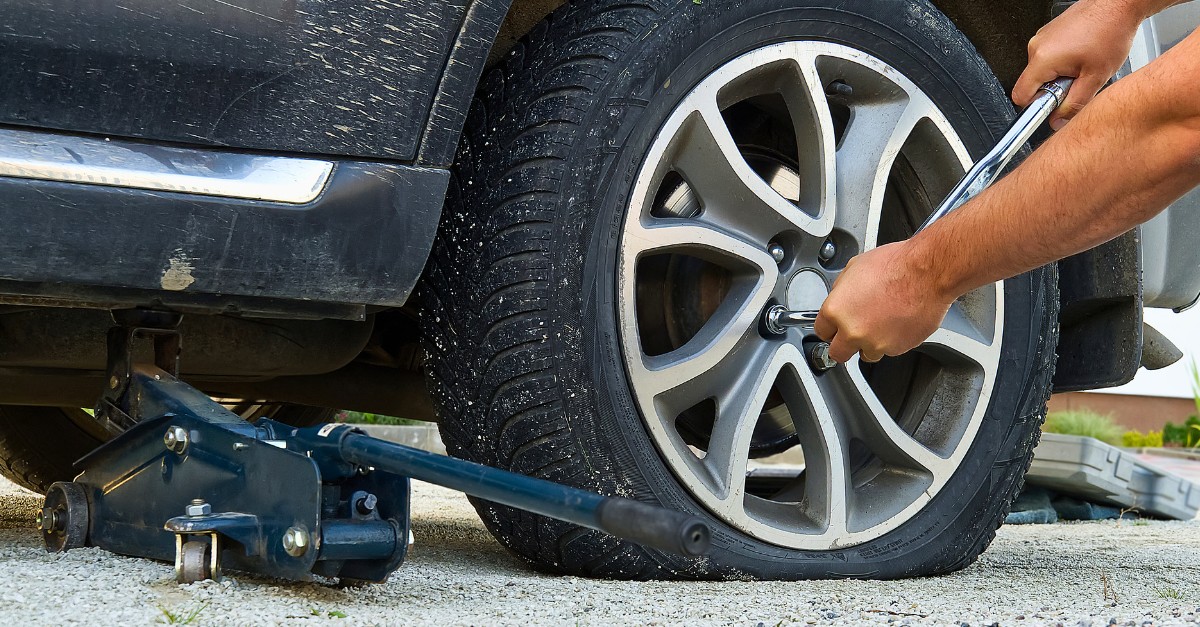
Loosen The Lug Nuts
Loosening the lug nuts is an important step before lifting the car. It helps you remove the tire safely and quickly.
You should loosen the nuts while the car is still on the ground. This stops the wheel from spinning as you turn the wrench.
Use Lug Wrench Correctly
Hold the lug wrench firmly with both hands. Place the wrench on the lug nut fully to avoid slipping.
Turn the wrench counterclockwise to loosen the nuts. Use steady, even pressure to avoid stripping the nut.
- Use a wrench that fits the lug nuts well
- Keep your hands clear of moving parts
- Apply pressure slowly and evenly
- Use your body weight if extra force is needed
Loosen Without Removing
Loosen the lug nuts just enough to break their tight grip. Do not remove them completely yet.
Keeping the nuts on ensures the wheel stays attached when you lift the car. It prevents accidents.
- Turn each nut a few times to loosen
- Stop once you feel the nut move freely
- Leave the nuts in place until the tire is off the ground
Lift The Vehicle
Lifting the vehicle safely is important when changing a flat tire. You need to use the jack correctly. This keeps you and the car safe.
Follow these steps to lift the car without damage or injury. Always work on a flat, stable surface.
Position The Jack
Find the right spot under the car for the jack. Check the owner’s manual for the exact jack point. Usually, it is near the flat tire on the frame.
- Place the jack on solid ground to avoid slipping.
- Ensure the jack is vertical and stable.
- Keep the jack away from soft spots or dirt.
- Do not place the jack under plastic parts or the bumper.
Raise The Car Safely
Slowly pump or turn the jack handle to lift the car. Raise the car until the flat tire is off the ground. Do not go too high.
| Action | Safety Tip |
|---|---|
| Lift the car | Do it slowly and steadily |
| Check stability | Stop if the car wobbles or shifts |
| Use wheel chocks | Place on opposite wheel to prevent rolling |
| Do not get under car | Stay clear until it is secure |
Remove The Flat Tire
Learning how to safely remove a flat tire is important. This process ensures your safety and prepares your car for a new tire.
Follow these steps carefully to avoid accidents and ensure a smooth tire change experience.
Unscrew Lug Nuts
First, you need to loosen the lug nuts. Use a wrench to turn them counterclockwise. Do not remove them completely yet.
It’s easier to loosen the nuts when the tire is still on the ground. Ensure all nuts are loose before proceeding.
- Use the right size wrench for the lug nuts
- Turn nuts counterclockwise to loosen
- Keep nuts on the wheel, but loose
Take Off The Flat Tire
Once the car is safely lifted, remove the lug nuts completely. Keep them in a safe place as you will need them later.
Carefully pull the flat tire towards you. Make sure to lift it straight off the car to avoid damaging the wheel studs.
- Remove all lug nuts completely
- Place nuts in a secure spot
- Gently pull the tire off the car
Install The Spare Tire
After removing the flat tire, you need to install the spare tire correctly. This keeps you safe while driving to a repair shop.
Follow these steps carefully to place the spare tire on your vehicle.
Align The Spare Tire
Lift the spare tire and line up its holes with the wheel bolts. Make sure the tire fits snugly on the hub.
- Hold the tire steady to avoid dropping it.
- Match the holes on the spare to the bolts on the wheel hub.
- Push the tire onto the bolts until it sits flat.
Hand Tighten Lug Nuts
Once the spare tire is in place, hand tighten the lug nuts. Do not use the wrench yet.
| Lug Nut | Action |
| 1 | Turn clockwise by hand until snug |
| 2 | Repeat for each lug nut |
| 3 | Check all are hand tight before using wrench |
Lower The Vehicle
After securing the spare tire, you need to lower the vehicle safely. This step helps the car rest back on the ground evenly.
Lowering the vehicle carefully prevents damage and keeps you safe during the process.
Slowly Lower The Car
Turn the jack handle slowly in the opposite direction to lower the car. Do this until the car tire touches the ground.
Lowering the car slowly avoids sudden drops that can cause injury or damage.
- Turn the jack handle slowly
- Stop lowering when the tire touches the ground
- Check if the car is stable before moving on
Remove The Jack
Once the car rests on the ground, carefully remove the jack. Make sure the vehicle is stable before doing this.
Remove the jack and store it safely for future use. Do not leave it under the car.
- Confirm the car is fully lowered
- Pull the jack out slowly
- Keep the jack in a secure place
Tighten The Lug Nuts
After changing a flat tire, it is important to tighten the lug nuts. This ensures the wheel is secure and safe for driving.
Properly tightening the lug nuts keeps the wheel in place. It helps prevent accidents and ensures a smooth ride.
Use Star Pattern
When tightening the lug nuts, use a star pattern. This means you tighten them in a crisscross manner.
The star pattern helps distribute pressure evenly across the wheel. It prevents the wheel from being off-balance.
- Start with one lug nut, then move to the opposite one.
- Continue in a star pattern until all are tight.
- Ensure each lug nut is equally tightened.
Ensure Secure Fit
After tightening the lug nuts, check for a secure fit. The wheel should not wiggle or move.
A secure fit is crucial for safe driving. It prevents the wheel from coming loose while on the road.
- Double-check each lug nut with a wrench.
- Make sure they are all tight and secure.
- If unsure, consult a professional for safety.
Check Tire Pressure
Checking tire pressure is important for safety and tire life. Proper pressure helps your car handle well and saves fuel.
You should check tire pressure before driving, especially if you have a flat tire or feel the car pulling.
Use A Tire Gauge
A tire gauge shows the air pressure inside the tire. You can buy one at an auto store or gas station.
- Remove the valve cap on the tire
- Press the tire gauge firmly onto the valve
- Read the pressure on the gauge display
- Compare it to the recommended pressure in your car manual or door sticker
Adjust Pressure If Needed
If the tire pressure is too low, add air using an air compressor or pump. If it is too high, release some air slowly.
| Pressure Level | Action |
| Too Low | Add air until it reaches the recommended level |
| Too High | Let air out slowly until pressure is correct |
| Correct | No action needed |
Clean Up And Store Tools
After changing a flat tire, it is important to clean up the area. This helps keep your tools safe and ready for next use.
Properly storing your equipment also prevents loss and damage. It keeps your car organized and safe.
Put Away Equipment
First, check all your tools like the jack, lug wrench, and spare tire. Clean any dirt or grease before storing them.
Place each tool back in its correct spot in your vehicle. This saves time when you need them again.
- Wipe tools with a cloth to remove dirt
- Fold the jack and lock it in place
- Put the lug wrench in its holder
- Secure the spare tire in the trunk
- Close storage compartments tightly
Dispose Of Damaged Tire
Do not keep the flat tire in your car unless it is usable. Dispose of it safely to avoid hazards.
Take the damaged tire to a tire recycling center or a local auto shop. They handle old tires properly.
- Do not throw tires in regular trash
- Check for local tire disposal rules
- Use authorized recycling centers
- Ask auto shops if they accept old tires
Drive Carefully After Repair
After changing a flat tire, your safety depends on how you drive next. Take care to avoid sudden moves. Slow and steady is the best way to keep control.
Driving carefully also helps the spare tire last longer. It gives you time to reach a tire shop for a proper fix.
Avoid High Speeds
Spare tires are not made for fast driving. High speeds can cause damage or loss of control. Keep your speed low until you replace the tire.
- Drive under 50 mph (80 km/h)
- Avoid sudden stops and sharp turns
- Stay alert and watch road conditions
- Use headlights in low visibility
Visit A Tire Shop
After using a spare, visit a tire shop quickly. They can check your tire for damage. A professional repair or replacement keeps you safe.
| Service | What They Do |
| Repair | Fix punctures and leaks |
| Replacement | Install new tires if needed |
| Balance | Ensure smooth driving |
| Alignment | Prevent uneven tire wear |
Credit: www.morisoninsurance.ca
Credit: www.autocareplus.com
Frequently Asked Questions
How Do I Safely Lift My Car To Change A Flat Tire?
Use a stable, flat surface before lifting your car with a jack. Place the jack under the vehicle’s jacking point. Raise the car slowly until the flat tire is off the ground. Always use wheel wedges to prevent rolling.
What Tools Do I Need To Change A Flat Tire?
You need a jack, lug wrench, spare tire, and wheel wedges. A flashlight and gloves can help in low light or dirty conditions. Ensure your spare tire is properly inflated before use.
How Can I Loosen Lug Nuts Effectively?
Use a lug wrench to turn lug nuts counterclockwise. Apply steady, firm pressure. Loosen nuts slightly before lifting the vehicle. Don’t fully remove them until the car is raised.
How Do I Remove And Replace The Flat Tire?
After loosening lug nuts and lifting the car, remove the nuts completely. Pull the flat tire straight off the hub. Align the spare tire with the lug bolts and push it on firmly. Tighten lug nuts by hand.
Conclusion
Changing a flat tire does not have to be hard or scary. Follow the steps carefully and take your time. Always stay safe by parking on flat ground and using your hazard lights. Keep your tools and spare tire ready in your car.
Practice makes it easier to stay calm and confident. Knowing how to change a tire can save you time and money. Stay prepared, and you will handle flat tires with ease. Simple actions keep you safe on the road.







