
Have you ever faced the frustration of a car that just won’t start? It can happen to anyone, anytime, leaving you stuck and unsure what to do next.
But don’t worry—jump starting your car is simpler than you think. This step-by-step guide will walk you through the entire process, helping you get back on the road quickly and safely. By the end, you’ll feel confident handling this common car trouble without calling for help.
Ready to take control and learn a valuable skill? Let’s get started.
Prepare For Jump Start
Jump starting a car can be a lifesaver when you’re stranded with a dead battery. But it requires careful preparation and attention to safety to avoid any potential hazards.
Gather Necessary Tools
To jump start a car, you’ll need a few essential tools and equipment. Make sure you have the following items before proceeding:
- Cables with proper length and thickness for jump starting
- A set of jumper cables with clamps on both ends
- A working car with a good battery and a willing owner
- The car’s owner’s manual (in case you need it)
Ensure Safety Precautions
Jump starting a car can be hazardous if not done correctly. To avoid any potential risks, make sure to take the following safety precautions:
- Wear protective gloves and safety glasses to avoid electrical shock
- Make sure the cars are parked on level ground, with the engines turned off
- Set the parking brakes and engage the transmission in park (automatic) or first gear (manual)
- Never touch the jumper cables to each other or to any metal part of the car
Position Vehicles Correctly
To jump start a car safely, you’ll need to position the vehicles correctly. Follow these steps:
- Position the working car close to the car with the dead battery, but not touching
- Ensure the jumper cables are long enough to reach from one car to the other
- Make sure the cars are in neutral gear and the parking brakes are engaged

Credit: www.justtires.com
Connect Jumper Cables
Connecting jumper cables correctly is important for a safe jump start. Follow these steps carefully to avoid damage or injury.
Make sure both cars are off before attaching any cables. Keep the cables untangled and ready to use.
Attach Red Cable To Dead Battery
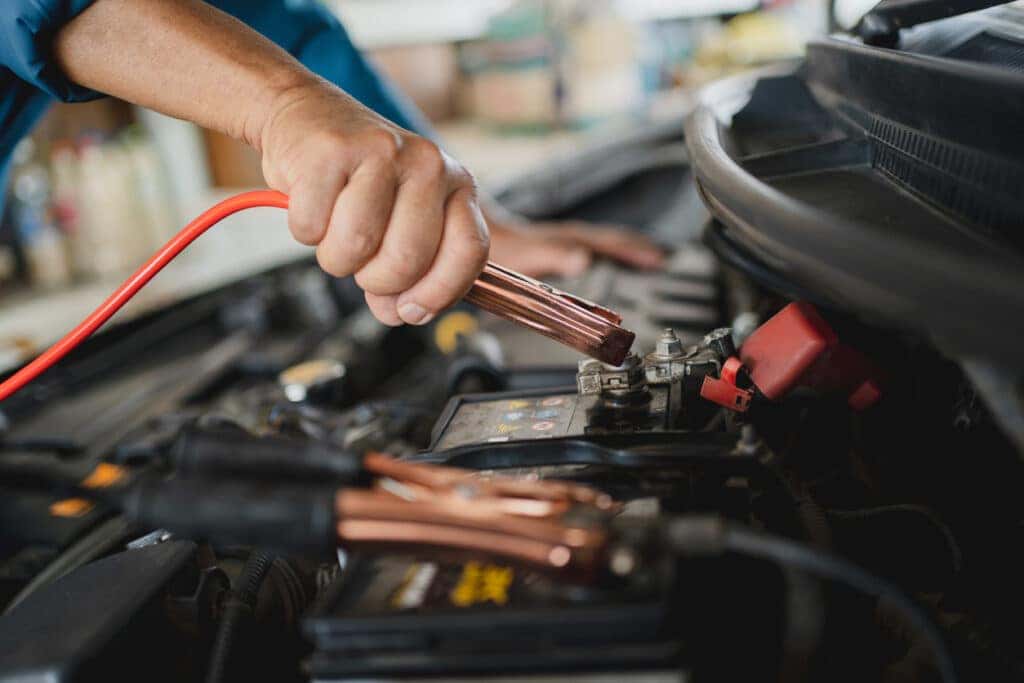
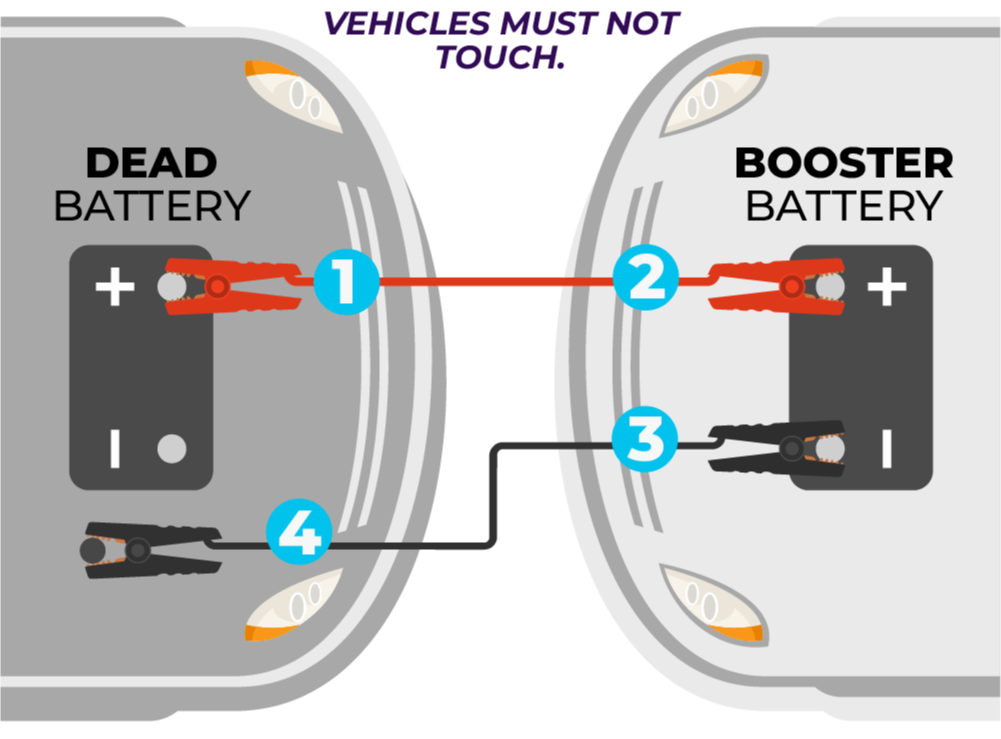
Find the positive terminal on the dead battery. It usually has a plus sign (+) or a red cover. Connect one end of the red cable clamp to this terminal. Make sure it grips firmly and does not touch any metal parts.
Attach Red Cable To Donor Battery
Next, locate the positive terminal on the donor battery. Attach the other end of the red cable clamp here. Check that the connection is tight and secure.
Attach Black Cable To Donor Battery
Now, connect one end of the black cable clamp to the negative terminal of the donor battery. This terminal usually has a minus sign (–) or a black cover. Hold the clamp firmly in place.
Attach Black Cable To Ground Point
Do not connect the black cable to the dead battery’s negative terminal. Instead, attach it to a clean, unpainted metal surface on the dead car’s engine block or frame. This acts as a ground point and reduces the risk of sparks.
- Choose a metal part away from the battery
- Make sure the surface is free of paint and rust
- Attach the black cable clamp securely
- Do not touch the clamps together during this step
Start The Engine
Jump starting a car requires careful steps to start the engine safely. Follow each part carefully to avoid damage or injury.
This guide helps you start the engine by using a donor vehicle and checking the dead vehicle’s response.
Start Donor Vehicle
Turn on the donor vehicle’s engine first. Keep it running during the entire jump start process to supply power to the dead battery.
- Make sure the donor vehicle is in park or neutral.
- Start the engine and let it run at idle speed.
- Check that headlights and accessories are off to avoid power drain.
Attempt To Start Dead Vehicle
After the donor vehicle is running, try to start the dead vehicle. This is the moment to see if the battery has enough charge.
- Turn the key or press the start button in the dead vehicle.
- If it does not start, wait a few more minutes with cables connected.
- Try again to start the engine carefully.
Wait And Check For Success
Give the dead vehicle time to gain charge. Watch for signs of success or failure.
| Indicator | What to Do |
| Engine starts | Let it run for a few minutes to charge battery |
| Engine does not start | Check connections and wait longer |
| Clicking sound only | Battery may be too weak; consider professional help |
Credit: www.gallagherautos.com
Disconnect Cables Safely
After jump starting a car, it is important to disconnect the cables safely. This helps avoid sparks and damage.
Follow the correct order to remove each cable to keep yourself and the vehicles safe.
Remove Black Cable From Ground
Start by removing the black cable from the grounded metal part of the dead car. This is usually the engine block or a metal bolt.
Do not remove the black cable from the battery first. Removing it from the ground reduces the risk of sparks near the battery.
Remove Black Cable From Donor Battery
Next, remove the black cable from the negative terminal of the donor battery. This finishes removing the ground connections safely.
Handle the cable by the insulated grip to avoid any contact with metal parts.
Remove Red Cable From Donor Battery
Then, remove the red cable from the positive terminal of the donor battery. This stops the power flow from the donor car.
Keep the cable away from any metal surface while removing it to prevent short circuits.
Remove Red Cable From Dead Battery
Finally, remove the red cable from the positive terminal of the dead battery. The cables are now fully disconnected.
Make sure to place the cables safely so they do not touch each other or the car parts.
After Jump Starting
Jump starting a car gets your engine running again. After this, you need to take some important steps. These steps help keep your car in good shape.
Follow these tips to avoid problems and make sure your battery charges well.
Keep Engine Running
Once your car starts, keep the engine running. This stops the battery from dying again. Turn off all extra electrical devices like the radio or air conditioner to save power.
Drive To Recharge Battery
Driving your car after jump starting helps recharge the battery. Try to drive for at least 20 to 30 minutes. This gives the alternator time to build up the battery’s power.
- Start your car and let it idle for a few minutes.
- Drive at a steady speed on a highway or open road.
- Avoid stopping the engine during this time.
- Turn off electrical accessories to reduce battery load.
- If possible, use a battery charger for a full recharge later.
Seek Professional Help If Needed
If your car does not start again or the battery drains quickly, see a mechanic. There might be a bigger problem with your battery or electrical system.
| Symptom | Possible Cause | Action |
|---|---|---|
| Car won’t start after jump | Dead battery or faulty alternator | Call a mechanic for battery testing |
| Battery warning light stays on | Charging system problem | Have electrical system checked |
| Battery drains fast | Old or damaged battery | Replace battery if needed |
Troubleshooting Tips
Jump starting a car can be daunting if it’s your first time. Knowing how to troubleshoot will make the process easier.
This guide will walk you through common issues and how to avoid mistakes when jump starting a car.
What To Do If Car Won’t Start
If your car won’t start, several factors could be the cause. Checking each possibility will help you identify the problem.
- Ensure your car is in park or neutral.
- Turn off all electronic devices inside the car.
- Check that the battery connections are secure.
- Inspect for any blown fuses.
- Try using jumper cables with a working battery.
Handling Corroded Battery Terminals
Corroded battery terminals can prevent your car from starting. Cleaning them can restore the connection.
Here’s a simple method to clean corroded terminals:
- Wear safety gloves and goggles.
- Mix baking soda with water to form a paste.
- Apply the paste to the terminals with an old toothbrush.
- Rinse with water and dry with a clean cloth.
Avoiding Common Mistakes
Many make errors when jump starting a car. Avoid these common mistakes to ensure safety and success.
| Mistake | Solution |
| Reversing cable connections | Double-check positive and negative terminals |
| Not using the right cable gauge | Use cables with the correct thickness |
| Leaving electronics on | Turn off all electronic devices before starting |
Credit: www.autobatteries.com
Frequently Asked Questions
How Do I Safely Jump Start A Car Battery?
Connect the red clamp to the dead battery’s positive terminal. Attach the other red clamp to the good battery’s positive terminal. Connect the black clamp to the good battery’s negative terminal and the last black clamp to an unpainted metal surface on the dead car.
What Tools Do I Need To Jump Start A Car?
You need a set of jumper cables and a second car with a fully charged battery. Ensure both cars are turned off before connecting cables. Avoid using damaged cables or batteries to prevent accidents or damage.
Can I Jump Start A Car With A Dead Battery?
Yes, you can jump start a car with a dead battery using jumper cables and a working car. Follow safety steps carefully to avoid sparks or damage. After starting, let the engine run to recharge the battery.
How Long Should I Run My Car After Jump Starting?
Run your car for at least 15 to 30 minutes after jump starting. This allows the alternator to recharge the battery effectively. Avoid turning off the engine immediately to prevent the battery from dying again.
Conclusion
Jump starting a car is simple with clear steps. Always stay safe and follow the guide carefully. Keep jumper cables ready in your car. Knowing this skill helps during emergencies. Practice the steps to feel confident. A dead battery won’t stop you now.
Stay calm and act quickly. This guide makes jump starting easy for anyone.







