
Your car deserves the best care, and detailing it properly can make all the difference. But where do you start?
Without a clear plan, it’s easy to miss important steps that keep your vehicle looking fresh and protected. This checklist for detailing a car is designed just for you—to guide you through every essential task. Follow it, and you’ll not only save time but also achieve professional-looking results that turn heads wherever you go.
Ready to transform your car? Let’s dive in.
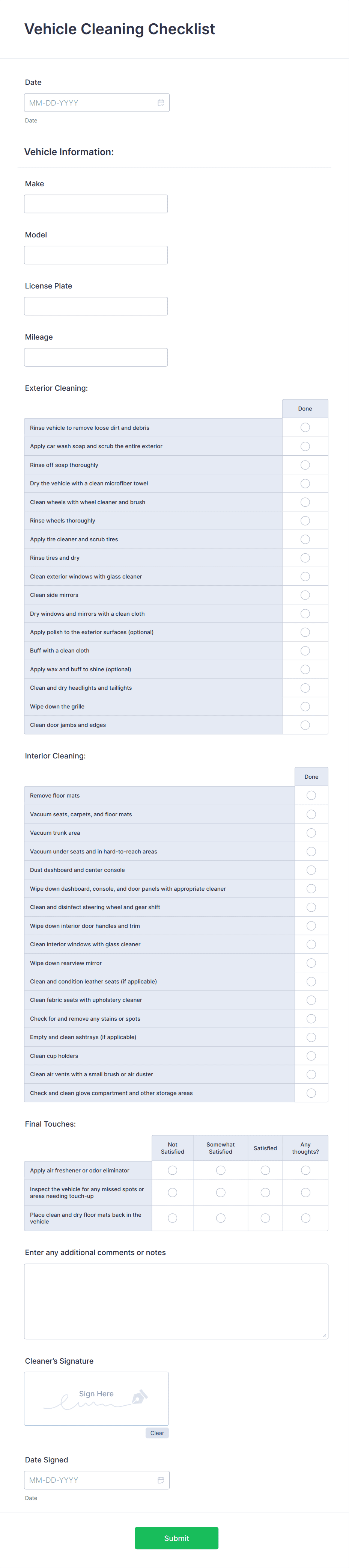
Credit: www.jotform.com
Preparation Steps
Detailing a car starts with good preparation. Getting ready saves time and helps you work better.
Follow these key steps to prepare your car for a thorough cleaning and polishing session.
Gathering Essential Tools
Collecting all necessary tools before you start makes the process smooth. Missing tools can cause delays.
- Microfiber towels in different sizes
- Car wash soap and buckets
- Clay bar kit for surface cleaning
- Polish and wax products
- Vacuum cleaner and brushes
- Spray bottles with water and cleaner
- Protective gloves and mask
Choosing The Right Location
Select a shaded, flat area to detail your car. Avoid direct sunlight and dust.
| Location Feature | Reason |
| Shaded Area | Prevents soap and wax from drying too fast |
| Flat Surface | Keeps water from pooling under the car |
| Near Water Source | Makes rinsing easier and faster |
| Good Lighting | Helps spot dirt and scratches |
Inspecting The Vehicle
Look over the car carefully to find problem areas. This step guides your cleaning focus.
- Check for bird droppings and tree sap spots
- Look for scratches and swirl marks on paint
- Inspect tires and rims for dirt and brake dust
- Examine windows and mirrors for smudges
- Identify areas with heavy stains inside the car
Exterior Cleaning
Cleaning the exterior of a car keeps it looking good and protects the paint. It removes dirt, dust, and grime that can damage the surface.
Follow proper steps to avoid scratches and to maintain a shiny finish. Use the right tools and techniques for each part of the cleaning process.
Washing Techniques
Start by rinsing the car with water to remove loose dirt. Use a soft wash mitt and a bucket with car shampoo. Wash the car in sections from top to bottom.
- Use two buckets: one with soapy water, one with clean water for rinsing the mitt
- Apply soap using a soft sponge or mitt
- Rinse mitt often to avoid dirt scratching the paint
- Clean wheels and tires separately with a brush
- Rinse the whole car thoroughly with water
Decontaminating The Paint
After washing, remove bonded dirt and contaminants that soap can’t clean. Use a clay bar or paint cleaner for this step. It makes the paint smooth and ready for polishing.
| Tool | Purpose | How to Use |
|---|---|---|
| Clay Bar | Remove surface contaminants | Lubricate paint, rub clay gently over surface |
| Iron Remover | Remove brake dust and iron particles | Spray on paint, wait, then rinse off |
| Tar Remover | Remove tar spots and sticky residues | Apply with cloth, wipe off carefully |
Drying Without Scratches
Dry the car quickly to avoid water spots. Use a clean microfiber towel or drying cloth. Pat the surface instead of rubbing to protect the paint.
- Use a large microfiber towel for broad areas
- Blot water from mirrors and windows gently
- Use a drying spray if needed to speed up drying
- Dry in the shade to prevent sun spots
Paint Correction
Paint correction fixes surface flaws on a car’s paint. It makes the paint smooth and shiny again.
This process removes scratches, swirl marks, and oxidation. It requires careful inspection and the right tools.
Assessing Paint Condition
Check the paint under bright light to see all defects. Look for scratches, swirl marks, and dull areas.
- Run your hand over the paint to feel rough spots
- Use a paint thickness gauge if available
- Note areas with water spots or stains
- Identify deep scratches that may need special care
Polishing Methods
Choose polishing methods based on the paint’s condition and defect depth. Use the right tools to avoid damage.
| Method | Best For | Tools Needed |
| Hand Polishing | Light Swirls and Gloss | Microfiber Pads, Polishing Compound |
| Machine Polishing | Moderate Scratches and Swirls | Dual Action Polisher, Various Pads |
| Wet Sanding | Deep Scratches and Heavy Oxidation | Sandpaper, Polisher, Compound |
Using Compound And Polish
Compounds remove heavy defects by cutting the clear coat. Polishes refine the surface for shine.
- Apply compound with a cutting pad for deep scratches
- Use polish with a finishing pad for gloss and smoothness
- Work in small sections to control results
- Wipe off residue with a clean microfiber cloth
Protecting The Surface
Protecting your car’s surface is important for maintaining its value. It also keeps it looking shiny and new.
There are several ways to protect your car’s paintwork. Waxing, sealing, and coatings are some of the options.
Applying Wax Or Sealant
Wax and sealants add a protective layer to your car’s paint. They help to repel dirt and water.
- Choose between natural wax and synthetic sealant
- Apply in a cool, shaded area
- Use a clean microfiber cloth for best results
Benefits Of Ceramic Coatings
Ceramic coatings offer a strong shield against elements. They are more durable than traditional wax.
- Long-lasting protection
- High resistance to scratches and UV rays
- Enhanced gloss and depth
Maintaining The Protection Layer
Regular maintenance is crucial for keeping the protection effective. It extends the life of wax, sealants, or coatings.
| Task | Frequency |
| Reapply wax or sealant | Every 3 months |
| Wash with pH-neutral soap | Weekly |
| Inspect for damage | Monthly |
Interior Detailing
Interior detailing makes your car feel fresh and clean. It focuses on areas like carpets, upholstery, and dashboards.
Proper detailing helps maintain the value and comfort of your vehicle.
Vacuuming And Cleaning Carpets
Vacuuming removes dirt and debris from the carpets. Use a vacuum with a brush attachment for best results.
After vacuuming, clean the carpets with a carpet cleaner. This helps remove stains and odors.
- Start from the top and move to the bottom
- Use short, back-and-forth strokes
- Focus on corners and edges
Treating Upholstery And Leather
Upholstery and leather need special care. Use a cleaner designed for fabric or leather.
After cleaning, apply a conditioner to leather. This keeps it soft and prevents cracking.
- Test products on a small area first
- Use a soft cloth for application
- Let the conditioner soak in
Cleaning Dashboard And Panels
The dashboard and panels collect dust and grime. Use a microfiber cloth to wipe them down.
A cleaner specific for plastics can make panels shine. Avoid harsh chemicals that can damage surfaces.
- Dust with a soft brush first
- Apply cleaner in small sections
- Buff dry with a clean cloth
Glass And Wheels
Cleaning your car’s glass and wheels is essential for a sharp look. Clear windows improve visibility and safety. Clean wheels and tires add to the vehicle’s overall appeal.
This checklist will help you detail the glass and wheels step-by-step. Follow each section carefully for the best results.
Cleaning Windows And Mirrors
Use a glass cleaner made for cars to avoid streaks. Clean both inside and outside surfaces for full clarity. Don’t forget the rearview and side mirrors.
- Spray glass cleaner evenly on the surface.
- Wipe with a microfiber cloth in a circular motion.
- Use a separate cloth to dry and polish the glass.
- Check for smudges and clean again if needed.
Detailing Wheels And Tires
Remove dirt and brake dust from wheels. Use a wheel cleaner safe for your wheel type. Clean tires to remove grime and prepare for dressing.
| Tool | Purpose | Tip |
| Wheel Brush | Clean wheel spokes and tight spots | Use soft bristles to avoid scratches |
| Tire Brush | Scrub dirt off tire walls | Use firm bristles for tough grime |
| Microfiber Cloth | Dry and polish wheels | Use clean cloth to avoid streaks |
Applying Tire Dressing
Tire dressing protects and shines tires. It prevents cracking and fading caused by sun exposure. Apply evenly for a fresh look without slick residue.
Follow these simple steps to apply tire dressing:
- Make sure tires are clean and dry.
- Use a foam applicator or brush.
- Apply a thin, even layer on tire sidewalls.
- Let it dry for 10 to 15 minutes.
- Wipe off excess to avoid sling on the road.
Final Touches
After cleaning your car inside and out, the final touches make it look perfect. These small steps ensure your car shines and feels fresh.
Pay attention to details like missed spots, trim, and interior scent. These improve your car’s overall appearance and comfort.
Checking For Missed Spots
Look closely at the whole car to find areas you might have missed. Check under mirrors, door edges, and wheel wells.
Use a soft cloth and a flashlight to spot any dirt or smudges. Clean these areas carefully to keep the car flawless.
- Inspect windows and mirrors for streaks
- Check tire sidewalls and rims
- Look under door handles and badges
- Review roof and hood for spots
Polishing Trim And Chrome
Trim and chrome parts add style to your car. Polishing them brings back their shine and removes dullness or water spots.
Use a polish made for trim or chrome. Apply with a soft cloth and buff in small circles for the best result.
- Use a separate cloth for trim and chrome
- Apply polish sparingly to avoid buildup
- Buff until you see a clear shine
- Wipe off excess polish to prevent streaks
Freshening The Interior Scent
A clean smell makes the car more inviting. Remove any old odors by airing out the car and cleaning surfaces.
Use a mild air freshener or odor eliminator. Avoid strong scents that can be overwhelming or cause allergies.
- Open windows to air out the car before applying scents
- Use fabric sprays on seats and carpets
- Place a small air freshener under the seats
- Change cabin air filters regularly for better air quality
Credit: www.amazon.com
Maintenance Tips
Keeping your car clean helps protect its paint and parts. Regular care keeps your vehicle looking good and lasting longer.
Use simple steps to maintain your car’s shine and avoid damage. Follow this checklist for easy car detailing.
Regular Washing Schedule
Wash your car every two weeks to remove dirt and grime. This stops buildup that can harm the paint.
Wash more often if you drive in harsh weather or dusty areas. Use mild soap and soft cloths to avoid scratches.
- Rinse the car before washing
- Use car-specific soap, not dish detergent
- Dry with a clean microfiber towel
- Wash in shade to prevent water spots
Quick Detail Sprays
Quick detail sprays help keep your car shiny between washes. They remove light dust and fingerprints easily.
Spray on a small section and wipe with a soft cloth. This keeps the surface smooth and clean without water.
- Choose sprays made for cars
- Use on dry or slightly damp surfaces
- Wipe gently to avoid scratches
- Use regularly for best results
Avoiding Common Mistakes
Some mistakes can damage your car’s finish. Avoid using household cleaners and rough cloths.
Do not wash under direct sunlight or on a hot surface. Rinse thoroughly to remove all soap and avoid streaks.
- Never use dish soap or household cleaners
- Do not dry with old towels or paper
- Avoid circular wiping to prevent swirl marks
- Rinse off all soap before drying

Credit: www.amazon.com
Frequently Asked Questions
What Are The Essential Steps In A Car Detailing Checklist?
A car detailing checklist includes washing, claying, polishing, waxing, and interior cleaning. These steps remove dirt, protect paint, and enhance shine. Detailing also involves vacuuming, wiping surfaces, and treating leather or fabric seats for a complete clean and fresh look.
How Often Should I Detail My Car For Best Results?
Detail your car every 3 to 6 months for optimal maintenance. Frequent detailing preserves paint, prevents rust, and keeps interiors fresh. Regular care also helps maintain your vehicle’s value and appearance over time.
What Tools Do I Need For Effective Car Detailing?
Basic tools include microfiber cloths, car shampoo, clay bar, polish, wax, vacuum, and brushes. These help clean, protect, and restore your car’s exterior and interior efficiently. Quality tools ensure better results and prevent damage.
Can I Detail My Car Myself Or Hire A Professional?
You can detail your car yourself with the right tools and time. However, professionals offer expertise and advanced equipment for deeper cleaning. Choose based on your budget, skills, and desired level of detail.
Conclusion
Detailing a car takes time and care. Follow the checklist to cover every part. Clean inside and outside for the best look. Use the right tools to avoid damage. Regular detailing keeps your car fresh and new. It also protects the paint and materials.
Small steps make a big difference in shine. Keep your car clean to enjoy driving more. A detailed car feels nice and lasts longer. Stick to the list for great results every time.







