
Have you ever struggled to pinpoint strange noises coming from your car or machine? A mechanic’s stethoscope can be your best tool to find the exact source of those hidden problems quickly and easily.
Imagine saving time, avoiding costly repairs, and fixing issues before they get worse—all by simply listening carefully. In this guide, you’ll learn how to use a mechanic’s stethoscope step-by-step, so you can trust your ears to diagnose problems like a pro.
Ready to unlock this powerful skill and take control of your repairs? Keep reading, and you’ll be surprised how simple and effective it can be.
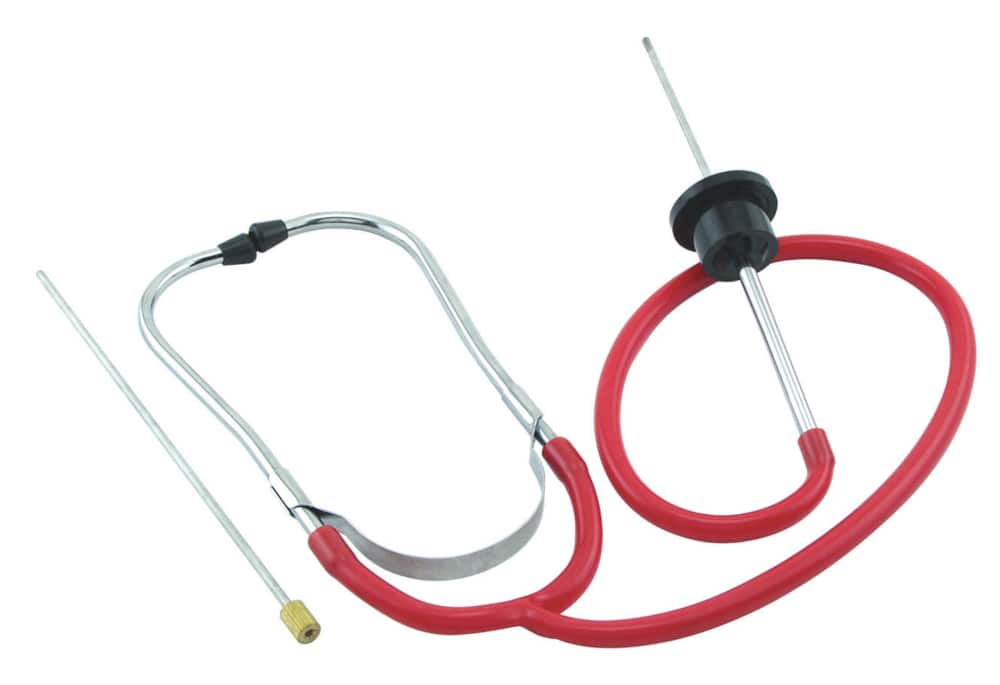
Credit: www.canadiantire.ca
Choosing The Right Stethoscope
Choosing a mechanic’s stethoscope helps find car engine noises. It lets you hear small sounds clearly. Picking the right one saves time and effort.
Different stethoscopes fit different needs. You must know types and features before buying. This guide helps you decide well.
Types Of Mechanic’s Stethoscopes
There are several types of mechanic’s stethoscopes. Each works best for certain jobs. Here are common types you can choose from.
- Traditional Stethoscope:Looks like a doctor’s stethoscope. It has a chest piece and ear tips. Good for general engine checks.
- Electronic Stethoscope:Uses a microphone and amplifier. Makes sounds louder and clearer. Best for quiet or complex noises.
- Flexible Probe Stethoscope:Has a long, bendable probe. Helps reach tight places in engines. Useful for hard-to-access parts.
- Magnetic Stethoscope:Uses magnets to attach to metal parts. Keeps hands free while listening. Ideal for steady sound detection.
Key Features To Consider
| Feature | Why It Matters | What to Look For |
| Sound Quality | Clear sound helps find exact issues | Good noise filtering and amplification |
| Probe Length | Long probes reach difficult spots | Flexible and long enough for engine parts |
| Comfort | Comfortable ear tips reduce fatigue | Soft tips and adjustable headband |
| Durability | Must last in tough workshop conditions | Strong materials and water resistance |
| Magnetic Base | Keeps stethoscope steady on metal parts | Strong magnets for hands-free use |
Check these features carefully. The right combination makes your work easier. Pick a stethoscope that fits your tasks and comfort.
Preparing For Inspection
Using a mechanic’s stethoscope correctly needs good preparation. It helps find engine problems by listening carefully.
Before starting, make sure you are ready and safe. A clear workspace helps you work better and faster.
Safety Precautions
Safety is very important when inspecting machines. Protect yourself and others around you.
- Wear safety glasses to protect your eyes from debris.
- Use gloves to avoid burns or cuts.
- Keep hair and loose clothes away from moving parts.
- Work in a well-ventilated area to avoid harmful fumes.
- Turn off the engine before attaching the stethoscope to avoid accidents.
Setting Up Your Workspace
Organize your workspace to make the inspection smooth and efficient.
| Item | Purpose |
| Clean surface | Prevents dirt from entering engine parts |
| Good lighting | Helps spot issues and read gauges |
| Tools ready | Keeps everything close for quick use |
| Quiet environment | Reduces background noise for clear listening |
| Stethoscope checked | Ensures device works properly before use |
Basic Handling Techniques
A mechanic’s stethoscope helps find engine noises and problems. It picks up sounds from hard-to-reach places.
Using it correctly improves your ability to detect issues early. Learn the basic ways to handle it safely and effectively.
Proper Positioning
Hold the stethoscope’s probe firmly. Place it gently on the part you want to check.
Keep your hands steady to avoid extra noise. Move the probe slowly to different spots for better results.
- Hold the probe like a pen for control
- Touch parts lightly but firmly
- Try different points to find the noise source
- Avoid touching other surfaces while probing
Adjusting For Comfort And Clarity
Adjust the earpieces to fit your ears well. This helps block outside noise and improves sound quality.
Check the headset tension to keep it snug but comfortable. If sounds are unclear, try changing the probe’s position.
- Rotate earpieces for a better fit
- Adjust headset pressure on your head
- Use soft tips for comfort
- Move probe slowly to find clear sounds

Credit: www.amazon.com
Locating Problem Areas
A mechanic’s stethoscope helps find engine problems by listening closely. It picks up sounds that show where issues may exist.
Using the stethoscope correctly lets you detect noises from different engine parts. This makes fixing the problem easier and faster.
Listening To Engine Components
Place the stethoscope tip on parts like the alternator, fuel pump, or water pump. Listen for any unusual sounds such as clicking, squealing, or grinding.
- Check for steady humming sounds that show normal operation
- Listen for irregular knocking that may signal loose parts
- Detect high-pitched squeals indicating worn belts
- Identify grinding noises that suggest bearing wear
Detecting Bearing And Valve Noises
Move the stethoscope along the engine block near bearings and valves. Noises here can reveal wear or damage.
| Noise Type | Possible Cause |
| Rattling | Loose valve components |
| Grinding | Worn bearings |
| Ticking | Valve lifter issues |
| Clicking | Valve clearance problems |
Interpreting Sounds
A mechanic’s stethoscope helps find problems by listening to sounds. Understanding these sounds is key to diagnosing issues in machines.
Different noises tell different stories about the machine’s condition. Learn to recognize what each sound means to fix problems faster.
Common Mechanical Noises
Machines make many noises during operation. Some sounds are normal, while others signal problems. Knowing these can save time and money.
- Clicking:Often means a loose part or a failing bearing.
- Grinding:Usually shows worn gears or bad lubrication.
- Hissing:Can signal air or fluid leaks.
- Knocking:May point to misaligned or damaged parts.
- Whining:Common with belt or pulley issues.
What Different Sounds Indicate
| Sound | Possible Cause | Action Needed |
|---|---|---|
| Clicking | Loose parts or failing bearings | Check and tighten parts; replace bearings |
| Grinding | Worn gears or poor lubrication | Inspect gears; add or change lubricant |
| Hissing | Air or fluid leak | Locate leak; repair or replace seals |
| Knocking | Misalignment or damaged components | Align parts; replace damaged items |
| Whining | Belt or pulley wear | Check belts; tighten or replace |
Advanced Diagnostic Tips
A mechanic’s stethoscope is a tool used to listen to engine sounds. It helps detect issues by amplifying noises. Here are some advanced tips for using this tool effectively.
Understanding how to pair it with other tools can improve diagnostics. Troubleshooting challenging issues becomes easier with practice and technique.
Using The Stethoscope With Other Tools
Combine the stethoscope with a multimeter for better results. Check electrical components while listening for unusual sounds. This dual approach helps identify the source of problems.
Using a thermal camera can also be beneficial. It shows temperature differences that might indicate overheating. Listen with the stethoscope to confirm if a component is malfunctioning.
- Multimeter checks electrical flow
- Thermal camera detects heat issues
- Stethoscope confirms sound anomalies
Troubleshooting Challenging Issues
Some issues can be hard to diagnose. Use the stethoscope to pinpoint abnormal sounds. Move the probe slowly around the engine to find where the noise is strongest.
Listen for sounds like hissing, tapping, or grinding. Each sound suggests a different problem. Knowing what each sound means is key to solving tough issues.
| Sound | Possible Issue |
| Hissing | Vacuum leak |
| Tapping | Valve problems |
| Grinding | Worn bearings |
Maintenance And Care
Proper maintenance of a mechanic’s stethoscope ensures accurate results. Regular care extends its lifespan.
Follow these simple steps to keep your stethoscope in top condition. Clean it regularly and store it properly.
Cleaning Your Stethoscope
Cleaning is crucial for performance. Dirt and grime affect sound quality. Regular cleaning prevents buildup.
- Use a soft cloth with mild soap
- Avoid submerging in water
- Dry thoroughly before use
Storage Tips To Extend Lifespan
Proper storage prevents damage. It keeps your stethoscope functioning well. Follow these tips for best results.
| Storage Tip | Benefit |
| Keep in a dry place | Prevents moisture damage |
| Avoid direct sunlight | Prevents material degradation |
| Use a protective case | Prevents physical damage |

Credit: www.amazon.ca
Frequently Asked Questions
How Do You Properly Hold A Mechanic’s Stethoscope?
Hold the stethoscope by its handle firmly. Place the probe tip on the engine part you want to test. Keep the earpieces in your ears to listen clearly for sounds or irregularities.
What Parts Can A Mechanic’s Stethoscope Check?
It can check engines, transmissions, pumps, and motors. The stethoscope helps detect abnormal noises like knocking, ticking, or grinding. This aids in diagnosing mechanical issues early.
How To Identify Engine Problems Using A Stethoscope?
Listen for unusual sounds such as knocking or tapping. Consistent noises often indicate worn or damaged components. Use the stethoscope to pinpoint the exact location of the problem.
Can A Mechanic’s Stethoscope Detect Electrical Issues?
Yes, it can detect buzzing or humming noises in electrical components. These sounds may indicate loose connections or failing parts. It helps in early electrical system diagnosis.
Conclusion
A mechanic’s stethoscope helps find engine problems fast. It lets you hear noises inside machines clearly. Use it carefully to check different parts. Regular use can save time and money on repairs. Practice often to get better at spotting issues.
This tool makes diagnosing easier for everyone. Keep it clean and store it well after use. Simple steps lead to better vehicle care and safety. Give your machine the attention it deserves with this tool.







