
Are you ready to transform your car’s interior into a stylish, modern space? Installing LED lights inside your car is one of the easiest and most effective ways to upgrade its look.
Imagine cruising at night with a cool glow that sets the perfect mood every time you drive. In this guide, you’ll learn simple, step-by-step instructions to install LED lights yourself—no special skills needed. Keep reading, and by the end, your car will stand out with a fresh, eye-catching vibe that turns heads wherever you go.

Credit: www.amazon.com
Choosing The Right Led Lights
Installing LED lights in your car’s interior can change the look and feel inside. Picking the right LED lights is important for safety and style.
There are different types, colors, and brightness levels. This guide helps you choose the best LED lights for your car interior.
Types Of Led Lights For Cars
You can find many LED types for car interiors. The most common are strip lights, bulbs, and panel lights. Each type fits different places inside your car.
- Strip Lights: Flexible and easy to install under seats or along doors.
- Bulb Lights: Replace old bulbs in the dashboard or dome light.
- Panel Lights: Provide wide and even light for larger areas.
Color Options And Effects
LED lights come in many colors. You can pick a single color or lights that change colors. Some have effects like fading or flashing.
| Color | Effect | Best Use |
| White | Steady | Reading lights or dashboard |
| Red | Steady or flashing | Night driving, less glare |
| Blue | Fading or steady | Cool look for footwells |
| Multi-color | Changing, fading | Customize mood and style |
Brightness And Power Consumption
Brightness affects visibility and comfort. Power use matters to avoid draining your car’s battery.
- Choose brightness that is not too harsh but clear enough.
- Look for LED lights with low power consumption.
- Check the lumen rating to compare brightness.
- Use dimmable LEDs for better control.
Preparing Your Car Interior
Installing LED lights in your car’s interior starts with proper preparation. You need a clean and organized workspace inside your vehicle.
Taking time to prepare will make the installation easier and safer. Follow the steps below to get your car ready.
Cleaning And Clearing The Area
Clean the areas where you want to place the LED lights. Dirt and dust can stop lights from sticking well.
- Remove any trash or loose items from the car interior.
- Vacuum seats, floors, and door panels to clear dust.
- Use a damp cloth to wipe surfaces where you will place the lights.
- Make sure the surfaces are dry before starting the installation.
Tools And Materials Needed
| Item | Purpose |
| LED light strips | Main lighting source |
| Cleaning cloth | Prepare surfaces |
| Screwdriver | Open panels if needed |
| Wire cutters | Trim wires to length |
| Electrical tape | Secure wire connections |
| Zip ties | Organize wires |
| Power source adapter | Connect lights to power |
Safety Precautions
Safety is important when working with your car’s electrical system. Follow these tips to avoid accidents.
- Disconnect the car battery before starting the installation.
- Wear gloves to protect your hands from sharp edges.
- Do not install lights while the car is running.
- Use insulated tools to prevent electrical shocks.
- Check all connections twice before turning on the power.
Wiring Basics For Led Installation
Installing LED lights inside your car needs some basic wiring knowledge. Knowing the car’s electrical system helps you connect the lights safely.
This guide covers key points about wiring. You will learn about the car’s electrical system, power sources, and the right connectors and fuses to use.
Understanding Car Electrical Systems
Your car has a 12-volt electrical system that powers lights and other devices. The battery stores energy, and the alternator charges it while the engine runs.
Wiring runs from the battery to various parts of the car. Wires carry electric current and must be connected properly to avoid shorts or damage.
Identifying Power Sources
Choose the correct power source for your LED lights. Some common sources include the fuse box, accessory power, or the battery directly.
- Fuse box:Safe and easy to tap power from.
- Accessory power:Works only when the car is on.
- Battery:Provides constant power but needs a fuse.
Using Connectors And Fuses
Connectors join wires securely, and fuses protect your wiring and LEDs from power surges. Use the right size fuse for your LED setup.
| Component | Purpose | Tip |
| Connectors | Join wires without loose ends | Use crimp connectors for firm hold |
| Fuses | Prevent electrical damage | Match fuse rating to LED current |
| Wire Gauge | Carry current safely | Choose wire size by LED power |
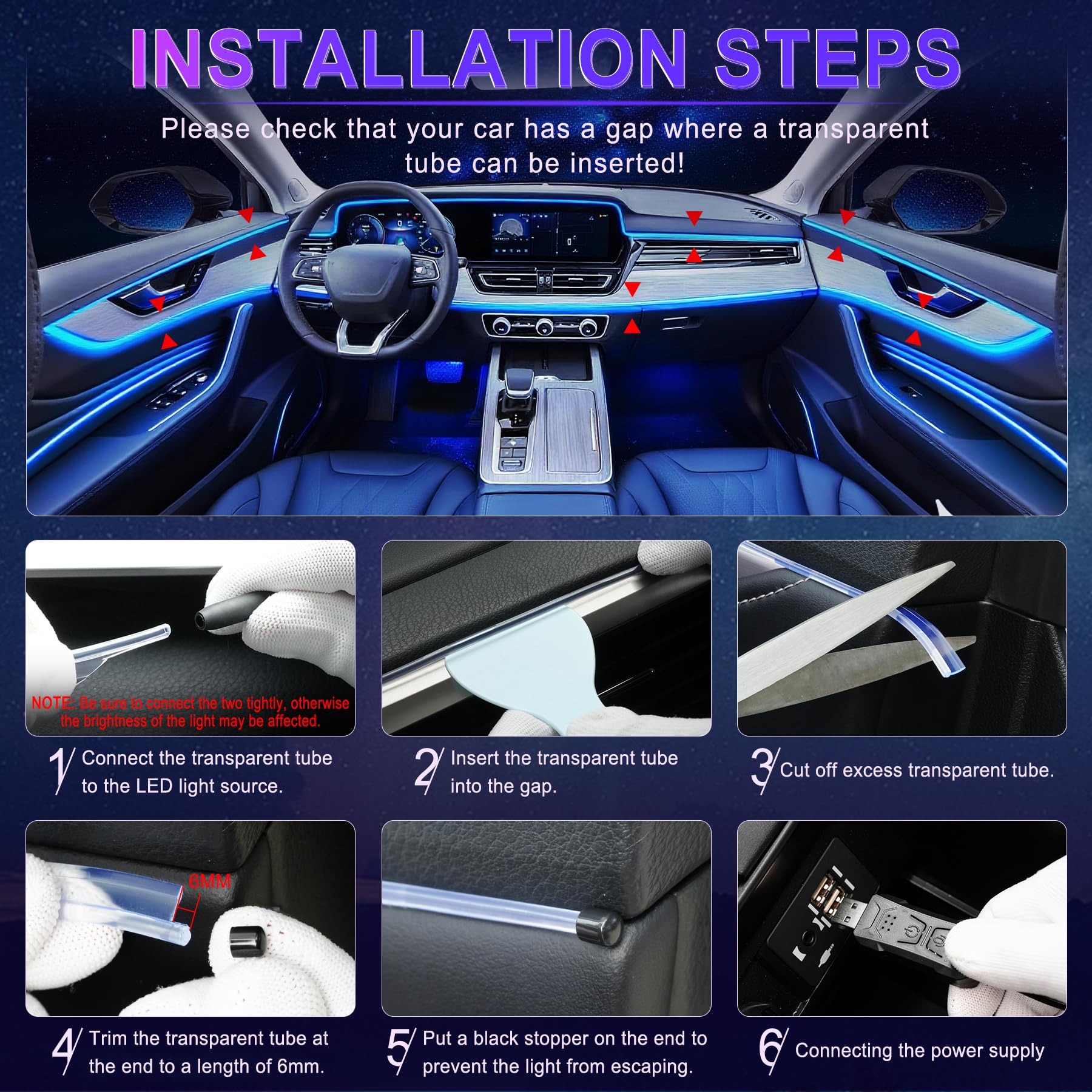
Credit: www.amazon.sa
Installing Led Strips Step-by-step
Installing LED strips in your car interior can brighten up your driving experience. This guide will help you do it safely and correctly.
Follow each section carefully to measure, place, and power your LED strips for the best results.
Measuring And Cutting Led Strips
First, measure the areas where you want to place the LED strips. Use a tape measure to get exact lengths.
- Measure the length of each car interior section.
- Mark the LED strip at the closest cutting point.
- Use sharp scissors to cut the strip only at the marked spots.
- Check the strip’s instructions for cutting guidelines.
- Keep the cut pieces for later use if possible.
Positioning And Mounting
Clean the surface where you want to mount the LED strips. Dust and grease can stop the adhesive from sticking.
- Wipe the area with rubbing alcohol and a soft cloth.
- Test the LED strip position without removing the backing.
- Peel the adhesive backing carefully.
- Press the strip firmly onto the surface.
- Use additional clips or brackets for extra support if needed.
Connecting To Power
Connect the LED strip wires to your car’s power source. Use connectors or soldering for a secure connection.
| Connection Type | Description | Tips |
| Direct to Battery | Connect positive and negative wires to the car battery terminals. | Use a fuse to protect the circuit. |
| Fuse Box | Tap into the fuse box for switched power. | Use a fuse tap adapter for safety. |
| Cigarette Lighter | Plug into the 12V socket with an adapter. | Easy but may switch off with ignition. |
Testing And Adjusting The Lights
After installing LED lights in your car interior, it is important to test them. Testing ensures the lights work well and are safe to use.
Adjusting the lights helps you get the right brightness and color. This makes your car look better and feels more comfortable.
Powering On And Checking Functionality
Turn on the car’s power to check if the LED lights light up. Make sure all the strips or bulbs glow evenly.
Look for any flickering or parts that do not turn on. If all parts work, your installation is correct.
- Switch on the car ignition or accessory mode
- Activate the LED light controller or remote
- Inspect all light strips for brightness and color
- Note any lights that stay dark or flicker
Troubleshooting Common Issues
If some lights do not work, check the wiring connections first. Loose wires often cause problems.
Look for blown fuses or faulty controllers if the lights stay off. Replace parts if needed to fix the issue.
- Check all wire connections for tightness
- Inspect fuses in your car’s fuse box
- Test the LED controller or remote batteries
- Replace any damaged wires or components
Customizing Light Settings
Adjust the brightness to avoid glare while driving at night. Use dimmer controls if your LED kit has them.
Change colors to fit your mood or style. Many LED kits let you pick from many colors and effects.
- Use remote or app to change light colors
- Set brightness to a comfortable level
- Choose effects like flashing or fading
- Save your favorite settings for easy use

Credit: www.chevymalibuforum.com
Maintaining Your Car Led Lights
Maintaining your car’s LED lights is essential for optimal performance. Proper care ensures they last longer and function correctly.
Regular maintenance helps prevent issues and keeps your car looking great. Follow these tips to keep your LED lights in top condition.
Cleaning And Care Tips
Cleaning your LED lights regularly prevents dirt buildup. Use a soft cloth and gentle cleaner for best results.
Avoid harsh chemicals that can damage the lights. Check for dust and debris weekly.
- Use microfiber cloths for cleaning
- Avoid water on electrical parts
- Inspect lights for scratches
Replacing Faulty Components
If an LED light stops working, replace it quickly. Ignoring faulty lights can lead to more problems.
Check connections and wiring before replacing parts. A loose wire may be the issue.
- Identify the faulty light
- Check connections first
- Replace with compatible LED
Upgrading Your Setup
Upgrading your LED lights can enhance your car’s interior. Choose lights that match your style and needs.
Consider energy-efficient options for better performance. Ensure new lights are compatible with your car’s system.
- Research latest LED technology
- Pick energy-efficient models
- Ensure compatibility with car system
Frequently Asked Questions
How Do I Choose The Best Led Lights For Car Interior?
Choose LED lights based on brightness, color, size, and power consumption. Opt for flexible strips or pods for easy installation inside your car. Check compatibility with your car’s voltage and ensure they come with adhesive backing for secure placement.
What Tools Are Needed To Install Led Lights In Car?
You need LED light strips or pods, a power source, wire connectors, a fuse tap, electrical tape, and basic tools like screwdrivers. A multimeter helps check connections. These tools ensure a safe and efficient LED light installation inside your car.
Can Led Lights Drain My Car Battery?
LED lights consume very little power, so they rarely drain car batteries if wired correctly. Use a fuse tap and connect to switched power sources to prevent battery drain when the car is off. Proper installation avoids unnecessary power usage.
Where Is The Best Place To Install Led Lights Inside Car?
Install LED lights under the dashboard, seats, or door panels for ambient lighting. These locations offer subtle illumination without glare. Avoid areas exposed to water or heat to prolong LED lifespan and maintain safety.
Conclusion
Installing LED lights in your car interior can change its look and feel. It adds style and makes night driving easier. Follow each step carefully for a safe setup. Choose the right lights that match your car’s design. Test the lights before finalizing the installation.
Enjoy the new glow and improved comfort inside your car. Small effort, big difference. Ready to brighten your ride?







