
Are you looking to get the most out of your tires without spending extra at the shop? Knowing how to rotate your tires yourself can save you money and extend the life of your ride.
In this guide, you’ll discover simple steps and the essential tools you need to do a tire rotation at home. Whether you’re a beginner or just want to sharpen your car care skills, this easy-to-follow guide will help you keep your tires in top shape.
Ready to take control of your vehicle’s maintenance? Let’s dive in and get those tires rolling smoothly!
Benefits Of Tire Rotation
Tire rotation means moving your tires from one position to another. It helps your tires wear out evenly. This keeps your car safe and running well.
Using the right tools makes tire rotation easier. You can do it yourself with some basic equipment. This guide explains the benefits of rotating tires.
Extends Tire Life
Tires wear out faster in certain spots. Rotating tires spreads out the wear. This helps tires last longer before you need new ones.
- Front tires wear faster on front-wheel drive cars
- Rear tires wear faster on rear-wheel drive cars
- Rotation balances the wear on all tires
Improves Vehicle Performance
Even tire wear keeps the car stable on the road. It helps the car handle better during turns and braking. This makes driving safer and smoother.
Rotated tires also reduce road noise. This makes your ride quieter and more comfortable.
Saves Money
Rotating tires regularly avoids early tire replacement. It also helps prevent damage to the car’s suspension. This means fewer repair costs over time.
- Extends tire lifespan
- Prevents uneven wear damage
- Reduces the need for frequent repairs
Maintains Tire Warranty
Many tire warranties require regular rotation. Doing it yourself keeps your warranty valid. It ensures you can claim repairs if needed.
Always check the tire manufacturer’s guidelines for rotation intervals. Following these rules protects your investment.
Prevents Tire Damage
Rotating tires helps spot problems early. You can find issues like uneven wear or damage. Fixing these problems early avoids bigger trouble.
- Detects alignment problems
- Prevents tire balancer issues
- Reduces risk of tire blowouts
Tools Needed For Tire Rotation
Tire rotation helps your tires wear evenly. You can do it yourself with the right tools. Using the right tools makes the job safer and easier.
This guide lists the tools you need for a DIY tire rotation. Some tools are essential, while others are optional for convenience.
Essential Tools List
These tools are needed to lift your car and remove the tires safely. You must have them to complete the tire rotation.
- Car jack to lift the vehicle
- Jack stands to support the car
- Lug wrench to remove and tighten lug nuts
- Torque wrench to tighten lug nuts to the right pressure
- Wheel chocks to block wheels and prevent rolling
Optional Tools For Convenience
These tools help make the process smoother and faster. They are not necessary but can improve your experience.
- Impact wrench for quicker lug nut removal
- Gloves to protect your hands
- Flashlight to see under the car
- Marker or chalk to mark tire positions
- Tire pressure gauge to check air pressure after rotation
Preparing Your Vehicle
Before you start rotating your tires, get your vehicle ready. This helps you work safely and efficiently.
Proper preparation protects you and your car during the tire rotation process.
Choosing A Safe Location
Select a flat, stable surface to park your vehicle. Avoid slopes and soft ground that can cause the car to move or sink.
- Use a driveway, garage, or level parking lot
- Make sure there is enough space around the vehicle
- Avoid busy or crowded places to reduce distractions
- Ensure good lighting if working at night or indoors
Gathering Materials
Collect all the tools and equipment you will need before starting. This saves time and helps keep the process smooth.
| Item | Purpose |
|---|---|
| Car jack | Lift the vehicle safely |
| Lug wrench | Remove and tighten lug nuts |
| Wheel chocks | Prevent the vehicle from rolling |
| Gloves | Protect your hands |
| Torque wrench | Ensure lug nuts are tightened to the correct torque |
| Owner’s manual | Check tire rotation pattern and torque specs |
Setting The Parking Brake
Apply the parking brake firmly to keep your car from rolling. This is essential for safety during tire rotation.
Check that the parking brake holds the vehicle in place by gently trying to move it. If it slides, adjust the brake or use wheel chocks.
Step-by-step Tire Rotation Process
Rotating your tires helps them wear evenly and last longer. It is a simple task you can do at home with the right tools.
This guide will walk you through the tire rotation process safely and clearly.
Loosening Lug Nuts
Before lifting the vehicle, loosen the lug nuts on each wheel. This is easier when the car is still on the ground.
- Use a lug wrench or tire iron.
- Turn the lug nuts counterclockwise.
- Do not remove them completely yet.
- Loosen each nut just enough to break it free.
Lifting The Vehicle
Use a jack to raise the vehicle off the ground. Make sure to place it under the correct jacking points.
- Park on a flat, stable surface.
- Engage the parking brake.
- Place the jack under the frame near the tire to lift.
- Lift the vehicle until the tire is off the ground.
Removing Tires
After loosening the lug nuts and lifting the vehicle, remove the tires carefully.
- Fully unscrew the lug nuts.
- Keep them in a safe place.
- Pull the tire straight off the hub.
- Place the tire flat on the ground.
Rotating Tires Correctly
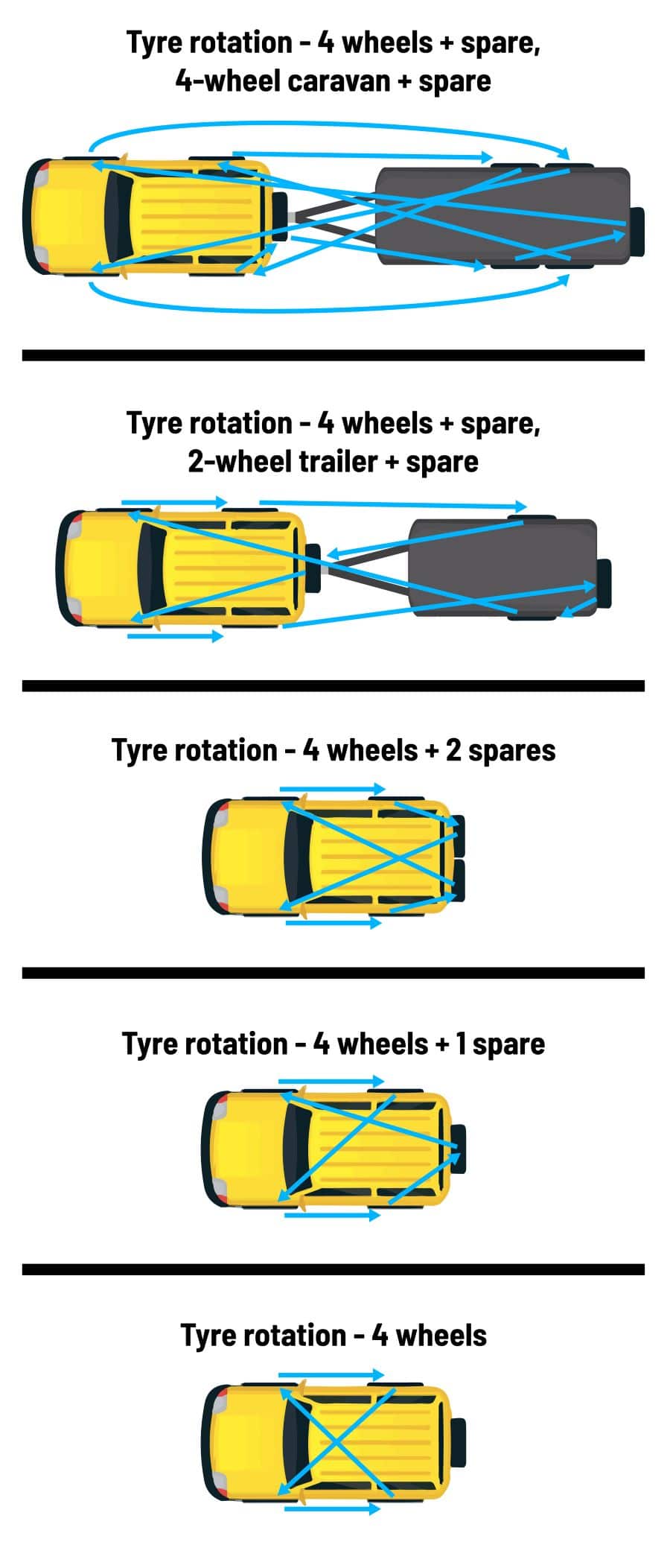
Rotate tires based on the type of vehicle and tire pattern. This helps even out tire wear.
| Vehicle Type | Rotation Pattern |
| Front-Wheel Drive | Front tires to back, back tires cross to front |
| Rear-Wheel Drive | Back tires to front, front tires cross to back |
| All-Wheel Drive | Cross rotation all around |
Reinstalling Tires
Place the tires in their new positions and hand-tighten the lug nuts to hold them.
- Align the tire with the wheel studs.
- Push the tire onto the hub firmly.
- Put the lug nuts back on by hand.
- Make sure the tire sits flush against the hub.
Tightening Lug Nuts
Lower the vehicle slightly so tires touch the ground. Then tighten lug nuts fully in a crisscross pattern.
- Tighten one lug nut, then the opposite one.
- Continue with the remaining nuts in a star pattern.
- Use a torque wrench if possible for correct tightness.
- Lower the vehicle completely and recheck lug nuts.
Tips For Perfect Results
Rotating your tires is important for even wear and longer life. With the right tools, you can do this at home. Follow these tips for the best results.
Learn how to check tire pressure, inspect for wear, follow torque specifications, and balance tires. These steps ensure your tires last longer and your ride is smooth.
Checking Tire Pressure
Proper tire pressure keeps your car safe and fuel-efficient. Use a reliable gauge to check the pressure. Look at the car manual for the right pressure levels.
Check tire pressure when tires are cool. Hot tires can give false readings. Adjust the pressure as needed to match the recommended levels.
Inspecting Tires For Wear
Check your tires for any signs of wear. Look for uneven wear, bald spots, or any cuts. These can affect safety and performance.
Use a penny to check tread depth. Insert it into the tread groove. If you can see all of Lincoln’s head, it’s time to replace the tire.
Torque Specifications
When you put the tires back, use a torque wrench. This tool helps you tighten the lug nuts correctly. Look at the manual for the right torque specs.
Do not over-tighten the lug nuts. It can damage the wheel or brake rotor. Correct torque keeps the wheel secure and prevents problems.
Balancing Tires
Balancing tires is crucial for a smooth ride. Unbalanced tires can cause vibrations and wear out faster. You can use balancing weights to fix this.
Check the balance every time you rotate the tires. It ensures even wear and a comfortable driving experience. If unsure, seek professional help.
Credit: unsealed4x4.com.au
Common Mistakes To Avoid
Rotating your tires at home saves money and keeps your car safe. Many people make simple mistakes that can cause problems.
Knowing what not to do helps you do the job right the first time. Avoid these common errors when rotating tires.
Using The Wrong Tools
Using improper tools can damage your car or make the job unsafe. Always use a proper jack and lug wrench designed for your vehicle.
Cheap or wrong tools may slip or break, causing injury or damage to tires and wheels.
Not Loosening Lug Nuts Before Jacking Up
Loosening lug nuts while the car is lifted can cause the wheel to spin. This makes it harder to remove the nuts.
Always loosen lug nuts slightly before raising the vehicle with a jack for better control and safety.
Failing To Secure The Vehicle Properly
Not using wheel chocks or parking brakes can let the car roll during the job. This is very dangerous.
- Use wheel chocks on wheels that stay on the ground.
- Engage the parking brake before jacking up the car.
- Place the jack on a solid, flat surface.
Ignoring Tire Rotation Patterns
Using the wrong rotation pattern can cause uneven tire wear. Different cars need different patterns.
Check your owner’s manual or a reliable source for the correct rotation pattern for your vehicle.
Not Tightening Lug Nuts Correctly
Loose lug nuts can cause wheels to wobble or fall off. Over-tightening can damage the bolts or threads.
- Tighten lug nuts by hand first.
- Use a torque wrench to tighten to the correct specification.
- Tighten nuts in a star or crisscross pattern.
Skipping Tire Pressure Checks
Rotating tires without checking tire pressure misses a chance to improve safety and fuel efficiency.
Check and adjust tire pressure after rotation to the recommended levels in your owner’s manual.
Neglecting To Inspect Tires For Damage
Rotating tires is a good time to look for cracks, bulges, or uneven wear. Ignoring these can lead to blowouts.
Replace or repair damaged tires before continuing to drive for safety.
When To Rotate Tires
Rotating tires is important for car safety. It helps tires wear evenly.
Most car makers suggest rotating tires every 5,000 to 8,000 miles. This keeps your ride smooth and safe.
Check Your Car Manual
Your car manual tells you when to rotate tires. Follow the guide for the best results.
Some cars need tire rotation more often. It depends on your car type and how you drive.
Watch For Uneven Tire Wear
Look at your tires for uneven wear. This is a sign to rotate them soon.
If one tire wears faster, it can cause problems. Rotating tires fixes this.
Rotate Tires With Oil Change
Many people rotate tires during an oil change. This is easy to remember.
Combining these tasks saves time and keeps your car running well.
Use The Right Tools
Having the right tools makes tire rotation easier. A car jack and wrench are needed.
Make sure tools are in good shape. This ensures a safe tire rotation.
- Car jack: lifts the car safely
- Lug wrench: removes and tightens lug nuts
- Torque wrench: ensures lug nuts are tight enough

Credit: blog.machanon.net

Credit: www.youtube.com
Frequently Asked Questions
What Tools Are Needed For Diy Tire Rotation?
Essential tools include a car jack, jack stands, a lug wrench, and a torque wrench. These ensure safety and proper tire handling during rotation.
How Often Should I Rotate My Tires Myself?
Rotate tires every 5,000 to 7,500 miles. Regular rotation promotes even tire wear and extends tire life.
Can Diy Tire Rotation Improve Vehicle Performance?
Yes, rotating tires evenly balances wear. It enhances traction, fuel efficiency, and overall driving safety.
What Is The Best Tire Rotation Pattern For My Car?
Most front-wheel-drive cars use a forward cross pattern. Check your owner’s manual for the recommended pattern.
Conclusion
Rotating your tires helps them last longer and keeps your car safe. Using the right tools makes the job easier and faster. Regular tire rotation improves fuel efficiency and ride comfort. Follow the steps carefully for best results. Checking your tires often can prevent costly repairs.
Taking time for this simple task saves money in the long run. Keep your vehicle running smoothly with regular tire care. Simple actions can make a big difference on the road.







