
Have you ever faced the frustration of a dead car battery at the worst possible moment? Knowing how to use jumper cables can save you from that stressful situation quickly and safely.
In this guide, you’ll learn exactly what to do, step by step, so you can get your car running again without waiting for help. By following these simple instructions, you’ll feel confident and ready to handle a dead battery anytime it happens.
Keep reading to discover how easy it is to jump-start your car like a pro.

Credit: www.familyhandyman.com
Preparing Your Vehicle
Using jumper cables safely starts with preparing your vehicle properly. Taking the right steps helps avoid damage or injury.
Before jumping a battery, check your surroundings and your vehicle’s condition. This ensures a smooth process.
Safety Precautions
Safety is very important when using jumper cables. Always protect yourself and others around you.
Wear safety glasses and gloves if possible. Avoid sparks and open flames near the battery.
- Turn off both vehicles before connecting cables
- Do not touch metal parts of clamps together
- Keep cables clear of engine moving parts
- Make sure vehicles are in park or neutral with brakes on
Gathering Necessary Tools
Before starting, gather all tools needed to jump-start your vehicle. This prevents delays and confusion.
- Jumper cables with good insulation and clamps
- Another vehicle with a fully charged battery
- Safety gloves and eye protection
- Flashlight if working in low light
Positioning The Vehicles
Place both vehicles close enough so the jumper cables reach both batteries. Keep them from touching each other.
Turn off the engines and set the parking brakes. This keeps the cars safe and stable during the process.
- Park vehicles facing each other or side by side
- Maintain a distance of about 18 inches between cars
- Ensure cables can reach both batteries without stretching
- Keep vehicles in park or neutral with parking brakes on

Credit: www.carsales.com.au
Identifying Battery Terminals
Knowing the battery terminals is important before using jumper cables. You must find the positive and negative terminals to connect cables safely.
Incorrect connections can cause sparks or damage. Follow simple steps to identify each terminal clearly.
Recognizing Positive And Negative
The battery has two terminals: positive and negative. The positive terminal is usually marked with a plus sign (+) and often has a red cover or cable.
The negative terminal shows a minus sign (−) and is usually black or has a black cable. Look closely to spot these signs on the battery.
- Positive terminal: marked with +, red color
- Negative terminal: marked with −, black color
- Terminals can be metal posts or flat connectors
Checking Battery Condition
Check the battery condition before using jumper cables. Look for cracks, leaks, or corrosion on the terminals and battery case.
Dirty or corroded terminals can stop the car from starting. Clean the terminals gently with a cloth if needed. Avoid using cables if the battery is damaged.
- Look for cracks or leaks on battery case
- Check for white or green corrosion on terminals
- Clean terminals carefully if dirty
- Do not jump-start if battery is cracked or leaking
Connecting Jumper Cables
Connecting jumper cables properly is important for safety and success. Follow clear steps to avoid damage.
Each clamp has a specific place to attach. This guide shows how to connect each one correctly.
Attaching Red Clamp To Dead Battery
First, find the positive terminal on the dead battery. It is usually marked with a plus sign (+) or red cover. Attach the red clamp firmly to this terminal.
Attaching Red Clamp To Donor Battery
Next, locate the positive terminal on the donor battery. Connect the other red clamp to this terminal. Make sure the clamp holds tight and does not slip.
Attaching Black Clamp To Donor Battery
Find the negative terminal on the donor battery. This terminal is usually marked with a minus sign (−) or black cover. Attach the black clamp to it firmly.
Attaching Black Clamp To Ground Point
Do not connect the last black clamp to the dead battery’s negative terminal. Instead, attach it to a metal ground point on the dead car.
- Look for an unpainted metal surface.
- Choose a bolt or bracket away from the battery.
- Ensure the clamp makes good contact.
- This reduces spark risk near the battery.
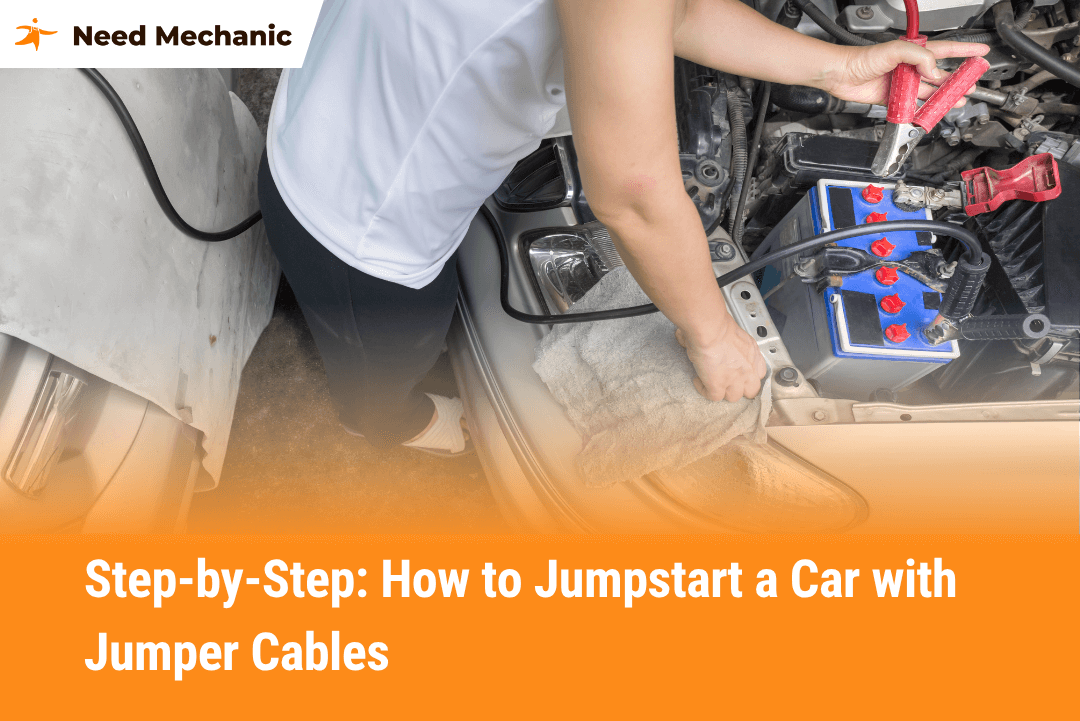
Credit: needmechanic.com
Starting The Engine
Jump-starting a car needs care and the right steps. You use jumper cables to start a dead battery with help from another car.
Follow these steps to start the engine safely and correctly. This guide covers what to do with both cars and how to charge the battery.
Starting Donor Vehicle
First, start the car with the good battery. This car is called the donor vehicle. Make sure it runs well before connecting cables.
Keep the engine running on the donor car. This keeps power flowing to the dead battery and helps the jump start work.
Starting Dead Vehicle
After connecting jumper cables, try to start the car with the dead battery. Turn the key or press the start button carefully.
If the engine does not start right away, wait a few minutes. This gives the dead battery time to gain power from the donor vehicle.
- Turn the key to start the dead vehicle
- If no start, wait 3-5 minutes
- Try starting again
Allowing Battery To Charge
Once the dead vehicle starts, keep both cars running. Let the battery charge for at least 10 minutes before disconnecting cables.
Driving the car for a while helps the battery charge more. This reduces chances of needing another jump start soon.
- Keep engines running for 10 minutes
- Drive the jumped car to charge battery
- Disconnect jumper cables carefully after charging
Disconnecting Jumper Cables
Disconnecting jumper cables safely is very important. It helps avoid sparks and damage to your car’s battery.
Follow each step carefully to remove the cables in the right order. This keeps you and your vehicle safe.
Removing Black Clamps
Start by removing the black clamps from both cars. These are the negative clamps and must be taken off first.
- Grip the black clamp firmly but do not touch the metal parts with your hands.
- Pull the clamp off the battery terminal carefully.
- Place the clamp away from the battery to avoid accidental contact.
Removing Red Clamps
After removing the black clamps, you can remove the red clamps. These are the positive clamps.
- Hold the red clamp by the insulated handle only.
- Remove the clamp from the battery terminal carefully.
- Keep the clamp away from metal parts and the battery.
Ensuring Safe Cable Storage
After removing the clamps, store the jumper cables properly. This keeps them ready for next use and prevents damage.
| Storage Tip | Reason |
|---|---|
| Coil cables loosely | Prevents kinks and wire damage |
| Keep cables dry | Avoids corrosion and rust |
| Store in a clean bag or box | Keeps cables protected from dirt |
| Place in an easy-to-reach spot | Quick access during emergencies |
Post-jump Tips
Once your car starts, there are important steps to follow. These steps ensure your battery stays healthy and your car runs smoothly.
Taking care of your car after a jump start can prevent future problems. Here are some simple tips to help you out.
Running The Engine
Let the engine run for at least 20 minutes. This helps the battery recharge. Make sure the car is in a safe place while idling.
Driving the car instead of idling is better. It charges the battery faster. Use this time to run errands or take a drive.
Checking Battery Health
After jumping the car, check the battery’s condition. Look for any corrosion on the terminals. Clean them if needed.
If the battery is old, consider a replacement. A weak battery may fail again. Keep track of any warning signs like slow starts.
- Check for leaks around the battery
- Ensure cables are tightly connected
- Test the battery voltage if possible
When To Seek Professional Help
If the car does not start again, get help. A mechanic can check the battery and other parts. They can find issues you might miss.
Strange noises or warning lights mean you need expert advice. Don’t ignore these signs. Early intervention can save money and trouble.
- Contact a mechanic if problems persist
- Schedule regular maintenance checks
- Consider a professional battery test
Frequently Asked Questions
What Are The Essential Safety Tips Using Jumper Cables?
Always wear gloves and eye protection. Avoid touching cable clamps together. Connect cables in the correct order to prevent sparks or damage. Keep vehicles off during connections. Ensure both cars are in park or neutral with parking brakes engaged.
How To Identify Positive And Negative Jumper Cable Clamps?
Positive clamps are usually red and marked with a plus (+) sign. Negative clamps are black and marked with a minus (-) sign. Proper identification prevents incorrect connections that may cause short circuits or damage.
Can Jumper Cables Damage My Vehicle’s Electrical System?
Improper use can cause electrical damage or battery explosions. Following correct steps and cable order minimizes risks. Use cables compatible with your vehicle’s voltage to protect the electrical system.
How Long Should Jumper Cables Stay Connected For A Jump Start?
Keep cables connected for about 3 to 5 minutes after starting the donor car. This allows the dead battery to charge enough to start. Remove cables carefully in reverse order once the dead car starts.
Conclusion
Using jumper cables can quickly help start a dead car battery. Follow each step carefully for safety and success. Always connect cables in the right order. Keep metal parts away to avoid sparks. After starting, let the car run to charge the battery.
Practice this skill to feel confident during emergencies. Jump-starting a car is simple with the right knowledge. Stay calm, work slowly, and you will get your car going again.







