
Want to give your car a cool, modern look that turns heads everywhere you go? Installing LED lights in your car is one of the easiest and most affordable ways to do just that.
Whether you want to brighten up your interior or add some stylish glow under your vehicle, this guide will walk you through every step. By the end, you’ll have the skills to install LED lights yourself, saving money and adding a personal touch to your ride.
Ready to make your car stand out? Let’s get started!

Credit: www.youtube.com
Choosing The Right Led Lights
Installing LED lights in your car can improve visibility and style. Choosing the right LED lights is important for safety and performance.
Consider the type, brightness, color, and fit to get the best results. These factors help you pick lights that work well with your vehicle.
Types Of Led Lights For Cars
There are many LED light types for cars. Each type fits different needs and parts of the vehicle.
- LED Headlights: Bright and energy-saving for night driving
- LED Fog Lights: Help see in foggy or rainy conditions
- LED Interior Lights: Add style and brightness inside the car
- LED Strip Lights: Used for decoration or accent lighting
- LED Brake Lights: Improve visibility to other drivers
Brightness And Color Options
LED lights come in different brightness levels and colors. Brightness is measured in lumens, showing how much light the bulb gives off.
Colors can change the look and function of your lights. White is common for headlights. Red is used for brake lights. Some LED lights offer blue or amber colors for style or signals.
- High lumens mean brighter lights
- White light gives clear visibility
- Amber or yellow helps in fog
- Red is for brake and tail lights
- Choose colors that follow traffic laws
Compatibility With Your Vehicle
Not all LED lights fit every car. Check your vehicle’s make, model, and year before buying LED lights.
Look at the light socket type and size. Also, check the power needs and if extra parts are needed for installation.
- Match bulb size with your car’s socket
- Check voltage and wattage requirements
- Some cars need adapters for LED lights
- Verify if your vehicle supports LED signals
- Consult your car manual or a professional
Credit: www.amazon.sa
Gathering Necessary Tools
Installing LED lights in your car needs some basic tools. Having the right tools helps the job go smoothly. It also keeps you safe while working.
In this guide, you will learn about the tools and safety gear you need before starting the installation.
Basic Tools Required
These tools help you install LED lights properly. Make sure you have them ready before you begin.
- Screwdrivers (flathead and Phillips)
- Wire strippers and cutters
- Electrical tape
- Multimeter for testing circuits
- Crimping tool for connectors
- Zip ties to secure wires
- Socket wrench set
- Heat shrink tubing
Safety Gear To Use
Safety is important when working with car electronics. Use the right gear to protect yourself from injury.
| Safety Gear | Purpose |
| Safety glasses | Protect your eyes from sparks and debris |
| Gloves | Keep your hands safe from cuts and electric shock |
| Long sleeves | Protect your skin from burns and scratches |
| Closed-toe shoes | Protect your feet from heavy or sharp objects |
Preparing Your Car
Before installing LED lights in your car, you need to get your vehicle ready. This helps the lights work well and last longer.
Two important steps are cleaning where you will install the lights and disconnecting the battery for safety.
Cleaning The Installation Area
Clean the area where you will attach the LED lights. Dirt or dust can stop the lights from sticking properly.
- Use a soft cloth to wipe the surface
- Apply rubbing alcohol to remove grease and grime
- Wait for the surface to dry completely
- Check for any loose parts or damage
Disconnecting The Battery
Disconnect the car battery before working on the electrical system. This keeps you safe and protects the car’s electronics.
| Step | Action |
| 1 | Turn off the car and remove the keys |
| 2 | Locate the negative battery terminal |
| 3 | Use a wrench to loosen the nut on the negative terminal |
| 4 | Remove the negative cable from the battery |
| 5 | Secure the cable away from the battery to avoid contact |
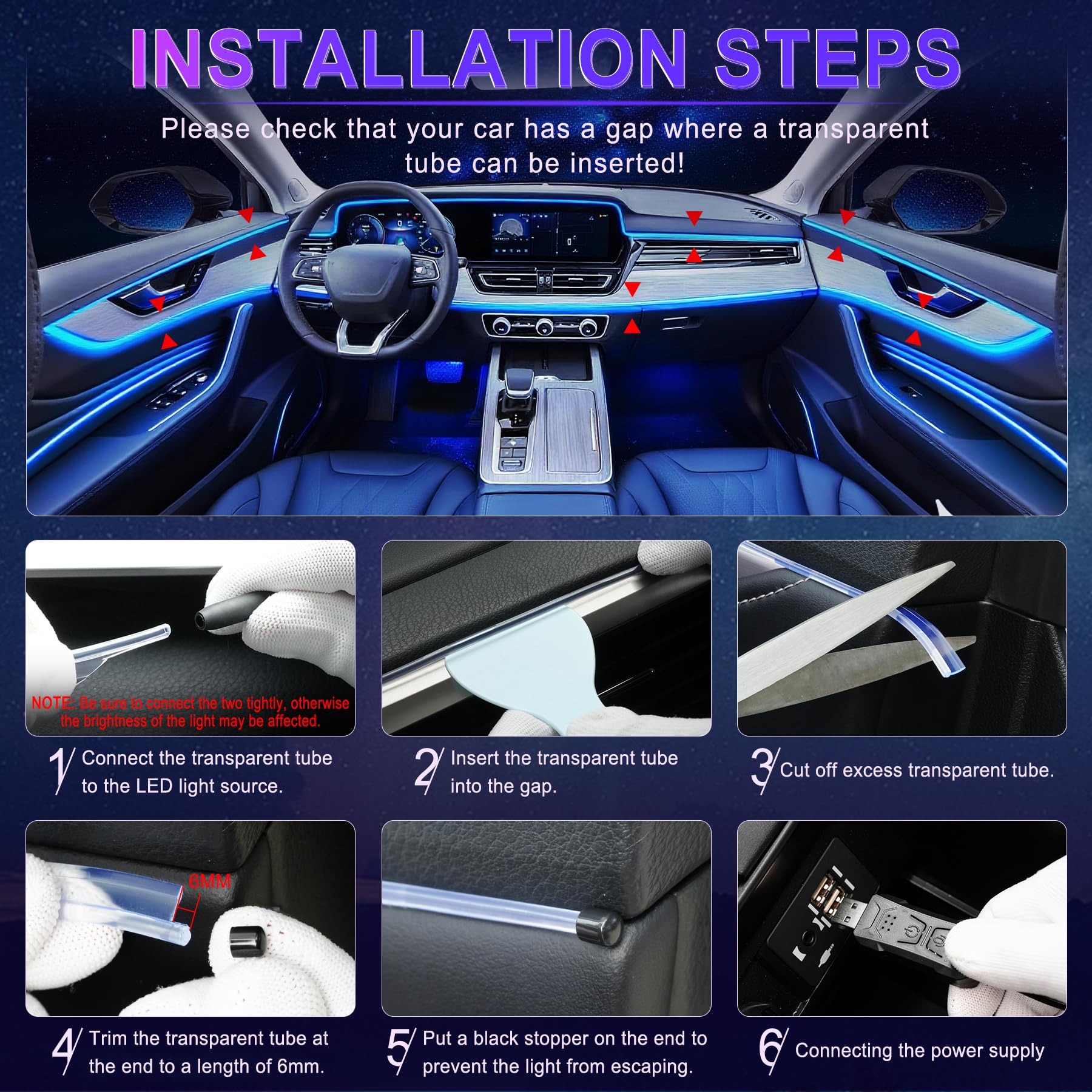
Installing The Led Lights
Installing LED lights in your car can improve visibility and style. This guide will help you place, wire, and secure the lights safely.
Follow the instructions carefully to ensure your LED lights work well and last long.
Positioning The Lights
Choose the best spots for your LED lights before installation. Common places include under the dashboard, near the footwells, or along the door panels.
- Clean the surface where you will place the lights.
- Avoid locations exposed to water or heat.
- Make sure the lights do not block air vents or controls.
- Test the light placement with temporary tape first.
Wiring And Connections
Wiring is an important step to power your LED lights safely. Use the correct wires and connectors to avoid shorts or damage.
| Wire Color | Function | Note |
| Red | Positive (+) power supply | Connect to fuse or battery |
| Black | Ground (-) | Attach to metal car frame |
| Blue | Switch or control wire | Connect to switch or light control |
Use electrical tape or connectors to secure each connection and prevent shorts. Check all connections before turning on the lights.
Securing The Lights In Place
Once positioned and wired, fix the LED lights firmly to avoid movement while driving. This helps prevent damage and keeps the lights working well.
- Use mounting clips or brackets included with the lights.
- Apply double-sided automotive tape on clean surfaces.
- Secure wires with zip ties to avoid loose hanging cables.
- Check that lights do not interfere with pedals or controls.
Testing The Installation
Testing your car’s LED lights is important after installation. This step ensures the lights work well and are safe.
Proper testing helps avoid future problems and keeps your car lighting effective on the road.
Checking Light Functionality
Turn on your car’s LED lights and watch carefully. Make sure all lights glow brightly and steadily.
Check for any flickering, dim spots, or parts that do not light up. These may mean loose wires or bad connections.
- Switch on headlights, brake lights, and turn signals.
- Look for steady, bright light without flickers.
- Test each light separately to find issues.
- Listen for any unusual sounds from the wiring.
Adjusting The Angle And Brightness
Adjust the LED lights to aim correctly. Proper angle improves road visibility and avoids blinding other drivers.
Use the car’s adjustment screws to change the light angle. Check how bright the lights appear and adjust if needed.
- Park your car on a flat surface facing a wall.
- Mark the current light beam position on the wall.
- Turn the adjustment screws to raise or lower the beam.
- Ensure brightness is strong but not too harsh.
- Test brightness in dark and daylight conditions.

Credit: www.youtube.com
Maintaining Led Lights
Keeping LED lights in your car in good condition is important. They can last longer with proper care.
Regular maintenance helps prevent problems and ensures safety while driving.
Cleaning Tips
Clean your LED lights regularly to keep them shining bright. Dirt can block the light and reduce effectiveness.
- Use a soft cloth to wipe the lights gently.
- Apply mild soap and water for tougher stains.
- Avoid abrasive cleaners that can scratch the surface.
Troubleshooting Common Issues
Sometimes LED lights may not work correctly. This section helps you solve common problems.
Check connections if the lights flicker or don’t turn on:
- Ensure the power source is connected properly.
- Inspect wires for any damage.
- Test with a multimeter for electrical issues.
Replacing a faulty bulb is simple. Make sure to follow the car manual for guidance.
| Problem | Solution |
| Flickering lights | Check wire connections |
| No light | Inspect the fuse and replace if needed |
| Dim light | Clean the light cover |
Frequently Asked Questions
How Do I Choose The Right Led Lights For My Car?
Choose LED lights based on brightness, color, and compatibility. Check your car’s model and the light’s voltage to ensure a proper fit. Opt for energy-efficient, durable LEDs with good heat dissipation for long-lasting performance.
What Tools Are Needed To Install Car Led Lights?
You need basic tools like screwdrivers, wire strippers, electrical tape, and connectors. A multimeter helps check voltage. Also, have zip ties and a drill if mounting is required. Proper tools ensure a safe, clean installation.
Can I Install Led Lights Myself Or Need A Professional?
You can install LED lights yourself if comfortable with basic wiring. Follow instructions carefully and disconnect the battery before starting. For complex setups or unsure wiring, seek professional help to avoid damage or safety risks.
How Long Does It Take To Install Led Lights In A Car?
Installation time varies from 30 minutes to 2 hours. Simple plug-and-play kits are faster, while custom wiring takes longer. Preparation and following instructions closely speed up the process.
Conclusion
Installing LED lights in your car is simple and fun. Follow the steps carefully for the best results. Choose the right lights and tools before you start. Connect wires securely to avoid any problems later. Test the lights to make sure they work well.
Enjoy the new look and brighter lighting in your vehicle. Small changes can make a big difference. Now, you can drive with style and safety. Keep your car’s wiring neat for easy maintenance. Try this project yourself and see how great it feels.







