
Have you ever sat in your car and wondered what all those buttons, knobs, and parts around you are called? Knowing the interior parts name of your car can make a big difference.
It helps you understand your vehicle better, making driving safer and more comfortable. Plus, it gives you confidence when talking to mechanics or reading your car manual. You’ll discover the key interior parts of your car explained in simple terms.
By the end, you’ll feel more in control every time you get behind the wheel. Ready to learn what’s inside your car? Let’s dive in!

Credit: broodiefuneral.co.za
Dashboard Components
The dashboard of a car holds many important parts. These parts help the driver control and understand the car better. They also make driving safer and more comfortable.
This guide covers the main dashboard components inside a car. Learn about the instrument cluster, control buttons, air vents, and the infotainment system.
Instrument Cluster
The instrument cluster shows key information about the car. It usually includes the speedometer, fuel gauge, and warning lights. Drivers watch this cluster to stay informed while driving.
Some common parts in the instrument cluster are:
- Speedometer to show the car’s speed
- Tachometer to show engine RPM
- Fuel gauge to indicate fuel level
- Temperature gauge for engine heat
- Warning lights for alerts and problems
Control Buttons And Switches
Control buttons and switches let the driver operate different car functions. They are easy to reach and use. These controls improve the driving experience and safety.
| Control | Function |
| Headlight switch | Turn headlights on or off |
| Window controls | Open or close windows |
| Climate control buttons | Adjust temperature and airflow |
| Hazard light button | Activate emergency flashers |
| Steering wheel buttons | Control audio and phone calls |
Air Vents
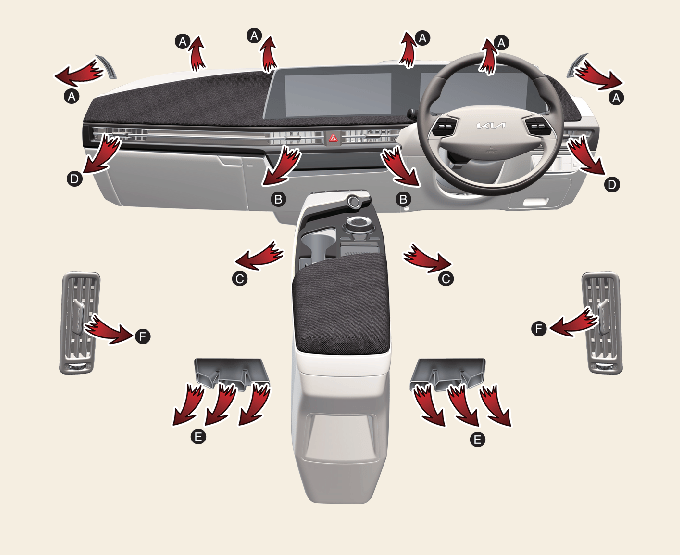
Air vents control the flow of air inside the car. They help keep the cabin cool or warm. Drivers and passengers can adjust vents for comfort.
Vents can be directed to different angles. Most cars have vents in the center and on the sides of the dashboard.
Infotainment System
The infotainment system provides entertainment and information. It usually has a touchscreen for easy use. Drivers can listen to music, use navigation, and connect phones.
Features of the infotainment system include:
- Radio and music player
- GPS navigation
- Bluetooth phone connection
- Touchscreen controls
- Voice commands
Credit: www.kia.com
Seating Elements
The seating elements inside a car are important for comfort and safety. They include parts that support passengers and the driver.
These parts help keep people safe and make the ride more comfortable. Each element has a specific role.
Driver And Passenger Seats
Driver and passenger seats hold people while the car moves. They come in different shapes and materials.
Seats can be adjusted to fit different body sizes. This helps drivers control the car better and passengers sit comfortably.
Headrests
Headrests support the head and neck. They reduce injury in case of sudden stops or crashes.
Most headrests can be raised or lowered. Proper position helps protect the neck during impacts.
Seat Belts
Seat belts keep passengers secure in their seats. They prevent people from moving too much in accidents.
Most cars have three-point seat belts. These belts go over the shoulder and lap for better safety.
- Secure the lap and chest
- Reduce risk of injury
- Help keep passengers inside the car
Center Console Armrest
The center console armrest sits between the front seats. It offers a place to rest the arm during driving.
Some armrests include storage space. They help keep small items organized and easy to reach.
Steering And Control
The steering and control parts inside a car help the driver operate the vehicle safely. They allow the driver to steer, change gears, and manage speed.
These parts work together to make driving smooth and easy. Knowing their names helps you understand your car better.
Steering Wheel
The steering wheel is the round device the driver turns to control the car’s direction. It connects to the wheels through the steering system.
Modern steering wheels often have buttons for the horn, audio, and cruise control. They help the driver keep hands on the wheel.
Gear Shift Lever
The gear shift lever changes the car’s gears. It helps control speed and power while driving.
Manual cars have a gear stick that the driver moves to select gears. Automatic cars use a lever to switch between park, drive, and reverse.
Pedals
Pedals are foot controls that help the driver stop, go, and change speed. Most cars have two or three pedals.
- Accelerator pedal controls the car’s speed.
- Brake pedal slows or stops the car.
- Clutch pedal (in manual cars) helps change gears.
Turn Signal And Wiper Stalks
Turn signal and wiper stalks are levers near the steering wheel. They control the car’s indicators and windshield wipers.
Drivers use the turn signal stalk to show their turning direction. The wiper stalk controls the speed and operation of the windshield wipers.

Credit: www.youtube.com
Storage And Convenience
Cars have many interior parts to help store items. These parts keep things organized and easy to reach.
Good storage means less clutter and more comfort during drives.
Glove Compartment
The glove compartment is a small storage space in front of the passenger seat. It holds important papers, manuals, and small items. Some models have locks for extra security.
Cup Holders
Cup holders keep drinks steady and prevent spills while driving. They fit different cup sizes and are easy to clean. Many cars have cup holders in the front and back seats.
Door Pockets
Door pockets provide extra space for storing small items. Drivers and passengers use them for bottles, maps, and snacks. They help keep the car tidy and items within reach.
- Bottle holders for water or soda
- Slots for maps or documents
- Space for small tools or accessories
Trunk Access
The trunk offers large storage for bags, groceries, or sports gear. Some cars have easy-access features like fold-down seats or remote opening. This adds convenience when loading or unloading items.
| Feature | Benefit |
| Fold-down rear seats | More space for long items |
| Remote trunk release | Open trunk without keys |
| Trunk organizer | Keeps items from moving |
Climate Control Parts
Climate control parts keep the car’s interior comfortable. They help manage temperature and air quality inside the cabin.
These parts work together to cool, heat, and clean the air you breathe while driving.
Air Conditioning Controls
Air conditioning controls let you set the temperature inside the car. They include buttons, knobs, and touchscreens.
You can adjust the fan speed, air direction, and cooling level with these controls.
- Temperature settings
- Fan speed control
- Airflow direction options
- AC on/off switch
Heater Core
The heater core warms the air inside the car. It works like a small radiator inside the dashboard.
Hot coolant from the engine flows through the heater core. Air passes over it and heats up before entering the cabin.
- Uses engine heat to warm air
- Located inside the dashboard
- Helps defrost windows
- Important for cold weather comfort
Cabin Air Filter
The cabin air filter cleans the air coming into the car. It traps dust, pollen, and other particles.
A clean filter improves air quality and helps the climate control system work better.
- Removes dust and pollen
- Improves air quality inside
- Protects air conditioning system
- Needs regular replacement
Safety Features
Safety features in cars protect passengers during travel. They are crucial for reducing injuries in accidents.
These features include airbags, ABS, and child safety locks. Each plays a vital role in keeping everyone safe.
Airbags
Airbags inflate during a collision to cushion passengers. They reduce the risk of head and chest injuries.
Located in the steering wheel and dashboard, airbags deploy instantly. They work with seat belts to provide protection.
Abs And Traction Control Indicators
ABS stands for Anti-lock Braking System. It prevents wheels from locking up during braking.
Traction control helps maintain grip on slippery roads. Both systems use sensors to improve vehicle stability.
- ABS enhances control during emergency stops
- Traction control reduces wheel spin
- Indicators alert drivers to system status
Child Safety Locks
Child safety locks keep rear doors secure. They prevent children from opening doors accidentally.
Parents can activate these locks with a simple switch. It ensures children remain safe inside the car.
Interior Lighting
Car interior lighting makes driving at night easier. These lights also add style and comfort.
Understanding different light types helps you choose what fits your needs best.
Dome Lights
Dome lights are usually in the center of the car ceiling. They light up the whole interior.
- Located at the center of the car
- Provides general lighting
- Easy to use switch
Ambient Lighting
Ambient lighting creates a relaxing atmosphere. It enhances the car’s style.
Customizable colors and brightness levels allow you to set the mood.
Reading Lights
Reading lights offer focused lighting. They are perfect for reading maps or books.
| Feature | Benefit |
| Adjustable angle | Targets light where needed |
| Individual controls | Personalized use for passengers |
| Energy efficient | Conserves battery life |
Audio And Connectivity
The car’s interior audio and connectivity parts keep you connected and entertained. They help you play music and connect devices easily. These features make driving more enjoyable and safe.
Below are some important parts related to audio and connectivity in a car’s interior.
Speakers
Speakers spread sound inside the car. They come in different sizes and places like doors and dashboard. Quality speakers give clear and loud music for all passengers.
- Front door speakers
- Rear door speakers
- Dashboard tweeters
- Subwoofers for deep bass
Usb And Aux Ports
USB and Aux ports let you connect phones and music players. USB ports can charge devices and transfer data. Aux ports allow direct audio connection with a cable.
| Port Type | Function | Common Location |
| USB | Charge device, play music | Center console or dashboard |
| Aux | Connect audio cable | Center console or glove box |
Bluetooth Controls
Bluetooth controls let you use wireless devices. They connect phones to the car system for calls and music. This helps keep your hands free and eyes on the road.
Key Bluetooth features include:
- Hands-free phone calls
- Wireless music streaming
- Voice command support
- Easy pairing with devices
Frequently Asked Questions
What Are The Main Interior Parts Of A Car?
The main interior parts include the dashboard, steering wheel, seats, gear shift, pedals, and center console. These parts ensure comfort, control, and safety while driving.
How Does The Dashboard Function Inside A Car?
The dashboard displays vital information like speed, fuel level, and engine warnings. It also houses controls for air conditioning and entertainment systems.
What Role Does The Steering Wheel Play In A Car?
The steering wheel allows the driver to control the car’s direction. It often includes buttons for audio, cruise control, and phone functions.
Why Are Car Seats Important For Interior Comfort?
Car seats provide support and comfort during travel. They come in various materials and designs to enhance the driving experience and safety.
Conclusion
Knowing the names of car interior parts helps you understand your vehicle better. It makes repairs and upgrades easier to handle. You can talk clearly with mechanics or friends about car issues. This knowledge also helps keep your car clean and safe.
Every part has a role in comfort and function. Keep learning about your car to feel more confident driving. Simple terms and clear names make car care less confusing. Stay curious and enjoy your time inside the car.







