
Are you thinking about getting your car windows tinted but wondering how much it will actually cost? You’re not alone.
Many car owners want to improve their ride’s look and comfort but hesitate because the price isn’t clear. You’ll discover the real factors that affect car window tinting costs and how to get the best value for your money. Keep reading to find out what you should expect to pay and how to avoid common pitfalls that can drain your budget.
Your perfect tint might be more affordable than you think!
Factors Affecting Tinting Cost
Car window tinting cost depends on many factors. These factors affect the price you pay for the service.
Understanding these factors helps you choose the right tinting option for your budget and needs.
Type Of Tint Film
Different types of tint films vary in price. Basic dyed films cost less but block less heat. Metallic films are more expensive but offer better heat and glare reduction. Ceramic films provide the best performance but come at a higher price.
Vehicle Size And Number Of Windows
Larger vehicles have more windows to tint. More windows mean more material and time, raising the cost. Compact cars cost less to tint compared to SUVs or vans.
- Small cars usually have 6-8 windows.
- SUVs and trucks have more and larger windows.
- Extra windows like sunroofs add to the cost.
Quality And Brand
| Quality Level | Description | Price Range |
| Standard | Basic protection and tint | Low |
| Premium | Better heat rejection and durability | Medium |
| Top Brand | High performance with warranties | High |
Choosing a well-known brand often means higher cost. These brands offer better materials and longer-lasting tint films.
Labor And Installation Fees
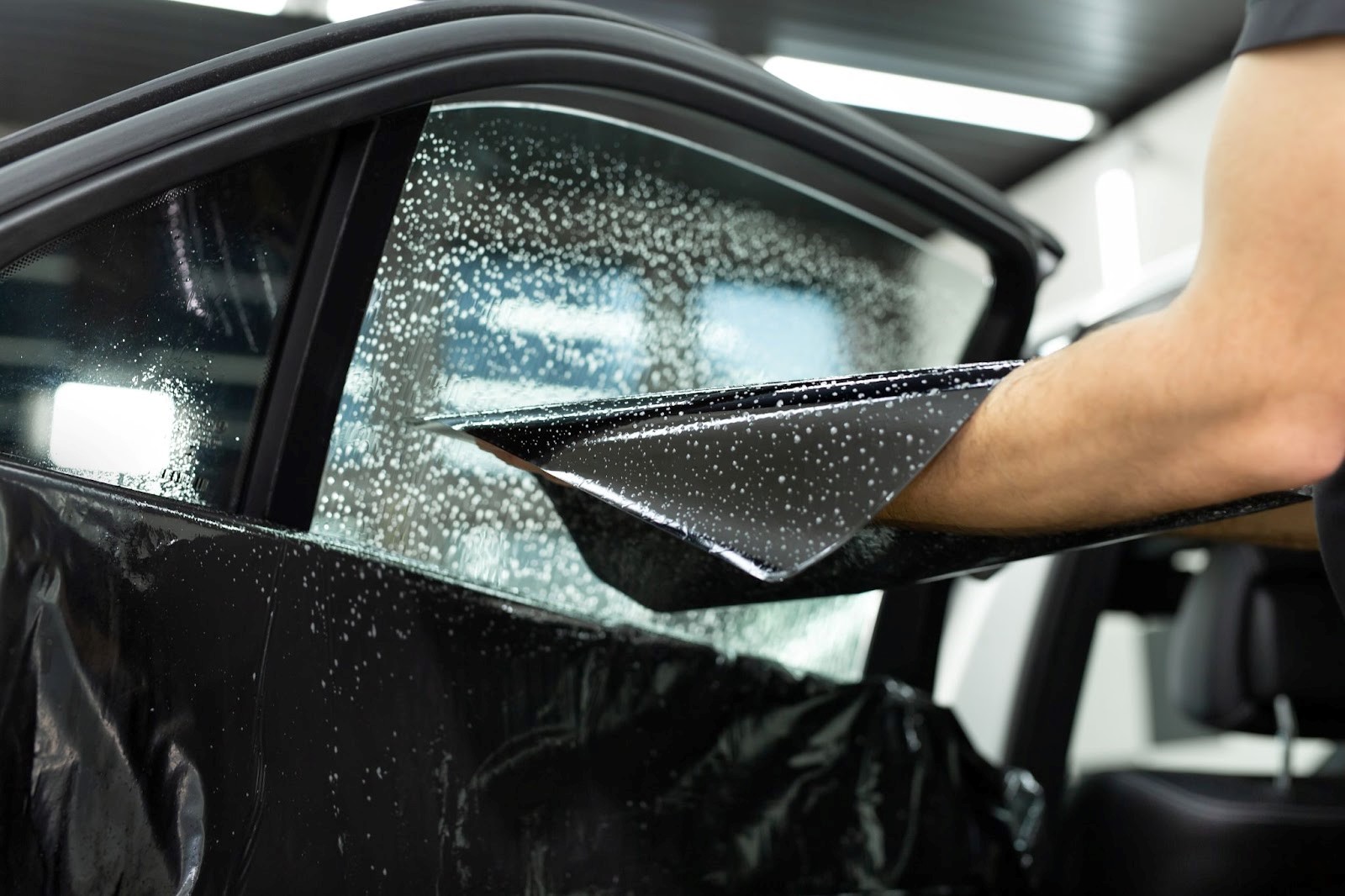
Skilled labor affects the total cost. Experienced installers charge more for quality work. Complex window shapes require more time, increasing labor fees.
Location And Shop Reputation
Prices vary by location. Urban areas often have higher rates than rural ones. Shops with strong reputations may charge more for trusted service and warranties.
Credit: protexcanada.com
Common Tinting Options
Car window tinting offers several types of films. Each type has unique features and costs.
Choosing the right tint depends on your needs like privacy, heat reduction, and budget.
Dyed Film
Dyed film is one of the most affordable tinting options. It uses a dye layer to block sunlight. This film reduces glare and adds privacy but does not block heat well. Over time, it may fade or bubble due to sun exposure.
Metalized Film
Metalized film contains tiny metal particles that reflect heat and UV rays. It is more durable than dyed film and improves window strength. This type may cause interference with electronic signals like GPS or cell phones.
Ceramic Film
Ceramic film uses ceramic particles to block heat and UV light without metal. It offers excellent heat rejection and clarity. This film does not fade or interfere with signals. It is usually more expensive than other types.
Hybrid Film
Hybrid film combines dyed and metalized layers. It balances cost and performance. This film reduces heat and glare better than dyed film alone. It is less likely to block signals compared to fully metalized films.
Carbon Film
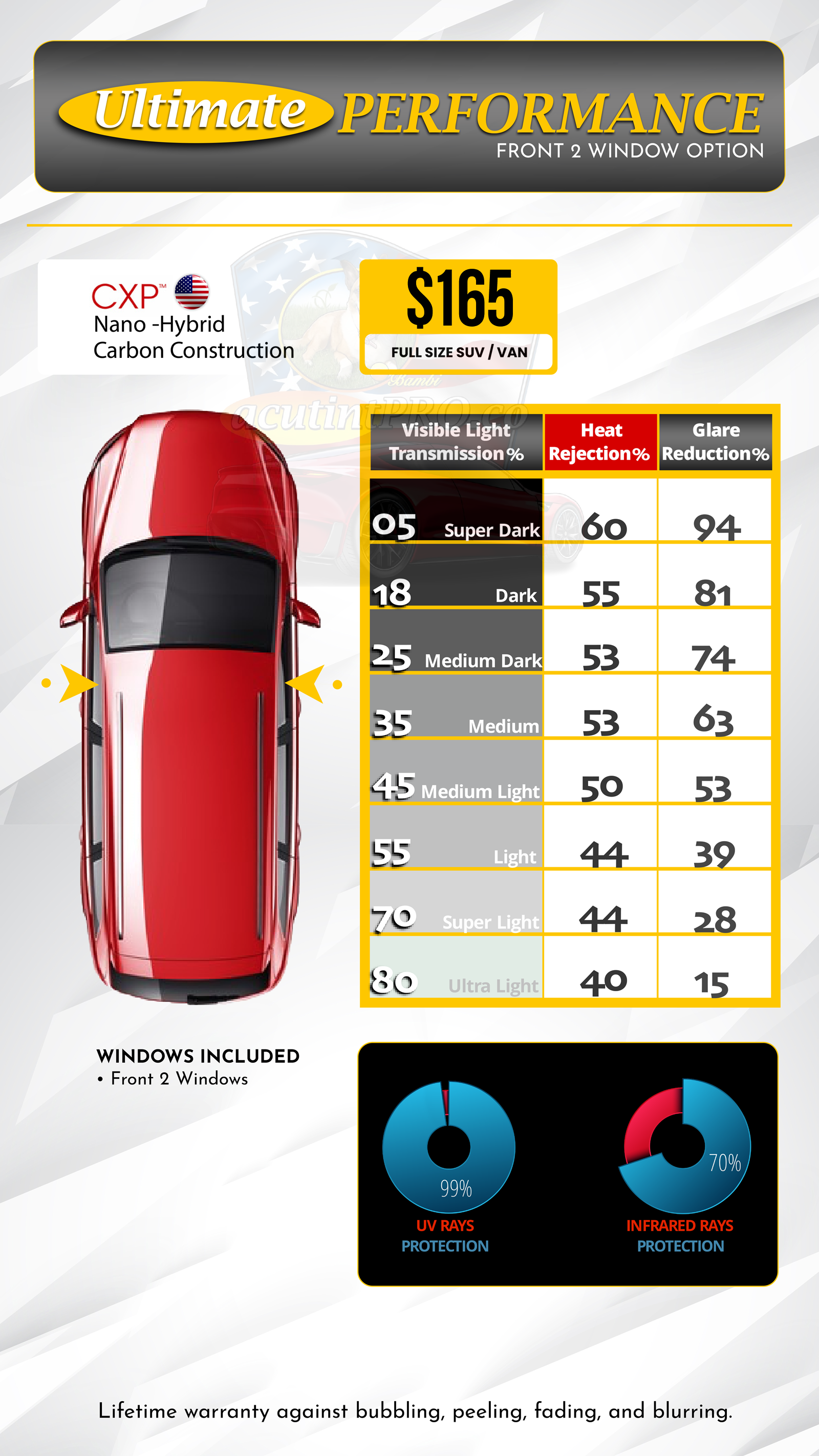
Carbon film contains carbon particles that block infrared light. It offers good heat rejection and a matte black appearance. This film will not fade or interfere with electronics. It is priced between metalized and ceramic films.
| Type | Heat Rejection | Signal Interference | Durability | Cost Level |
|---|---|---|---|---|
| Dyed Film | Low | None | Low | Low |
| Metalized Film | Medium | High | High | Medium |
| Ceramic Film | High | None | High | High |
| Hybrid Film | Medium | Low | Medium | Medium |
| Carbon Film | High | None | High | Medium |
Average Price Ranges
Car window tinting prices vary by quality and features. Knowing price ranges helps you plan your budget.
This guide shows typical costs for budget, mid-range, and premium tinting options.
Budget Tinting
Budget tinting uses basic films and simple installation. It protects from some sunlight and glare.
- Price range: $50 to $150
- Film quality: Basic dyed or metalized
- Warranty: Usually short or none
- Installation time: About 1 to 2 hours
Mid-range Tinting
Mid-range tinting offers better heat rejection and durability. It uses higher quality films.
| Feature | Details |
|---|---|
| Price range | $150 to $300 |
| Film type | Hybrid or ceramic blends |
| Warranty | 3 to 5 years |
| Installation time | 2 to 3 hours |
Premium Tinting
Premium tinting uses advanced ceramic films. It blocks most heat and UV rays.
Benefits include:
- Superior heat reduction
- Clear view without fading
- Long-term warranty (up to 10 years)
- Professional installation (3 to 4 hours)

Credit: visionglasstoronto.com
Diy Vs Professional Tinting
Car window tinting can change your vehicle’s look and feel. You can do it yourself or hire a professional. Each choice has its own costs and benefits.
Understanding the differences in price, quality, and risks helps you pick the best option for your car and budget.
Cost Comparison
DIY tint kits cost less upfront. You pay for the film and tools only. Professional tinting has a higher price because it includes labor and skill.
Prices vary depending on car size and film quality. Here is a simple cost comparison:
| Type | Average Cost |
|---|---|
| DIY Tint Kit | $20 – $100 |
| Professional Tinting | $100 – $400 |
Quality And Durability
Professional tinting uses high-quality films and precise installation. This leads to better looks and longer life. DIY kits may not fit perfectly and can bubble or peel.
Professionals also remove dust and moisture before applying tint. This helps the film stick well and last longer.
- Professional films often come with warranties
- DIY films may fade or crack faster
- Proper tools improve DIY results but need practice
Risks And Challenges
DIY tinting can be tricky. Mistakes like bubbles, wrinkles, or dust can ruin the look. Removing old tint before applying new film is also hard.
Professional tinting reduces risks. Experts handle complex windows and know local laws on tint darkness. They use special tools for a smooth finish.
- DIY risks include poor fit and legal issues
- Professionals help ensure legal tint levels
- Improper DIY removal can damage windows
Legal Restrictions And Regulations
Car window tinting can improve comfort and privacy. Rules about tinting vary across places. You should know the laws before tinting your windows.
Following the legal rules helps avoid fines and keeps you safe on the road. Learn about state laws, tint darkness limits, and penalties for illegal tint.
State And Local Laws
Each state sets its own rules for window tinting. Local governments may add extra rules. Some states allow darker tint on rear windows than on front ones.
- Check your state’s Department of Motor Vehicles website for details.
- Know if your city or county has stricter tint laws.
- Some states require a medical exemption to use darker tint.
- Rules can differ for passenger cars, trucks, and SUVs.
Tint Darkness Limits
Tint darkness is measured by Visible Light Transmission (VLT) percentage. Lower VLT means darker tint. Laws set minimum VLT levels for different windows.
| Window Location | Typical VLT Limit (%) |
| Front Side Windows | 35-50 |
| Rear Side Windows | 20-50 |
| Back Window | 20-50 |
| Windshield | Top 4-6 inches only |
Consequences Of Illegal Tinting
Illegal tint can bring fines and force removal. Police may stop your car if tint is too dark. Insurance claims might be affected after accidents.
- Receive a ticket or citation for illegal tint.
- Pay fines that vary by state or locality.
- Get a court order to remove illegal tint.
- Failing to comply may lead to more penalties.
Additional Services And Costs
Car window tinting has extra costs beyond the basic installation. These costs depend on several factors and services you might need.
Understanding these additional services will help you plan your budget effectively. Below are some common services that might incur extra costs.
Removal Of Old Tint
Removing old tint can be necessary before applying new film. The condition of the old tint and the type of adhesive used affect the cost.
- Standard removal costs around $50 to $100 per window.
- Difficult removals, like very old tints, may cost more.
- Professional removal ensures no damage to your window glass.
Window Repairs
Damaged windows need repair before tinting. Common repairs include fixing cracks or replacing broken glass. This step is crucial to ensure tint adherence.
| Repair Type | Estimated Cost |
| Crack Repair | $20 – $60 |
| Glass Replacement | $200 – $500 |
| Seal Repair | $50 – $150 |
Warranty And Maintenance
Many tinting services offer warranties. These warranties cover defects and some damages. Maintenance services can extend the life of your tint.
Warranty options often include:
- 1-year warranty for basic tints
- 5-year warranty for premium tints
- Lifetime warranty for high-end tints
Tips To Save On Tinting
Car window tinting can enhance your vehicle’s look and comfort. But, it can be costly. Here are some tips to help you save on tinting.
By planning and choosing wisely, you can enjoy the benefits of tinted windows without breaking the bank.
Seasonal Discounts
Many shops offer discounts during certain seasons. Timing your purchase can lead to big savings.
- Check for deals around holiday seasons
- Look for spring or fall sales
- Sign up for newsletters to get notified of discounts
Package Deals
Shops often provide package deals that include multiple services. These can be more cost-effective than buying each service separately.
| Service | Included in Package |
| Window Tinting | Yes |
| Car Wash | Yes |
| Interior Cleaning | No |
Choosing The Right Shop
Choosing the right shop is crucial for quality and price. Research well to find a reliable place that fits your budget.
Credit: www.acutintpro.com
Frequently Asked Questions
How Much Does Car Window Tinting Typically Cost?
Car window tinting costs range from $100 to $400. Prices depend on car size, tint quality, and labor. Higher-end films or full car tinting can cost more. Always get multiple quotes for the best price and quality balance.
What Factors Influence Car Window Tinting Prices?
Prices vary based on film type, car size, and installation complexity. Premium films cost more but last longer. Larger vehicles require more material, increasing costs. Professional installation also affects the final price.
Is Diy Car Window Tinting Cheaper Than Professional?
DIY tint kits are cheaper, around $20 to $70, but quality and durability vary. Professional tinting ensures a flawless finish and warranty, costing more. DIY might save money but risks bubbles or peeling.
How Long Does Car Window Tinting Installation Take?
Installation usually takes 1 to 3 hours depending on vehicle size and tint complexity. Professional installers work efficiently to avoid delays. Time may increase for custom or high-end tint films.
Conclusion
Car window tinting costs depend on many factors like film type and car size. Prices can vary from budget options to premium tints. Choosing the right tint helps protect you from sun glare and heat. It also keeps your car’s interior looking new longer.
Remember, a quality tint offers good value for the price. Think about your needs and budget before deciding. Getting a clear idea will help you avoid surprises. Tinting your car can be a smart choice for comfort and safety.







