
Have you noticed those annoying scratches on your car’s paint and wondered if you could fix them yourself? Scratches don’t just ruin your car’s look—they can lower its value and leave you feeling frustrated every time you see them.
But here’s the good news: removing scratches from your car paint is easier than you think. Whether it’s a tiny mark or a deeper scratch, you can learn simple steps to restore your car’s shine and protect your investment. Keep reading, and you’ll discover effective ways to make your car look fresh and flawless again.
Identify Scratch Types
Scratches on car paint vary by depth and damage. Knowing the type helps in choosing the right fix. This guide explains common scratch types on cars.
Look closely at the scratch before trying to remove it. Some scratches are easy to fix, while others need professional care.
Surface Scratches
Surface scratches are light marks that only affect the clear coat layer. They often look like small lines or swirls. These scratches do not reach the paint color below.
- Feel smooth when you run your finger over them
- Do not reveal a different color beneath
- Can often be removed with polishing or rubbing compounds
Deep Scratches
Deep scratches go through the clear coat and paint layers. They may reach the metal or plastic under the paint. These scratches are visible as white or dark lines.
| Scratch Depth | Damage Description | Fix Needed |
|---|---|---|
| Clear Coat Only | Light marks, no paint damage | Polishing and waxing |
| Paint Layer | Color exposed, scratch visible | Touch-up paint or professional repair |
| Primer or Metal | Base layer or metal shows through | Body filler and repainting |
Clear Coat Damage
Clear coat damage happens when the protective layer peels or cracks. It can look dull, cloudy, or flaky. This damage weakens paint protection.
Signs of clear coat damage include:
- Peeling or flaking clear coat
- Dull or faded paint surface
- Cracks or spider web patterns on paint

Credit: www.amazon.com
Gather Necessary Tools
Removing scratches from car paint needs the right tools. Gathering these tools first saves time and effort.
Each tool has a special role. Knowing what to use helps the job go smoothly and protects your car’s finish.
Scratch Removal Kits
Scratch removal kits include all you need to fix minor scratches. They come with compounds and instructions for use.
- Usually contain scratch remover polish
- Include applicator pads or sponges
- May have touch-up paint for deep scratches
- Simple instructions to guide the process
Polishing Compounds
Polishing compounds smooth the paint surface by removing a thin layer. They help blend the scratch with the surrounding paint.
| Type | Use | Texture |
| Rubbing Compound | Removes deep scratches | Coarse |
| Polishing Compound | Fixes light scratches and swirl marks | Fine |
| Finishing Polish | Gives shine and smooth finish | Very fine |
Microfiber Cloths
Microfiber cloths are soft and safe on paint. They help apply products and wipe off residue without causing new scratches.
Choose microfiber cloths that are:
- Clean and free of dirt
- Non-abrasive and soft
- Large enough to hold comfortably
- Easy to wash and reuse
Prepare The Car Surface
Preparing the car surface is important before removing scratches. A clean surface helps you see the damage clearly.
This step also prevents dirt from causing more scratches while you work on the paint.
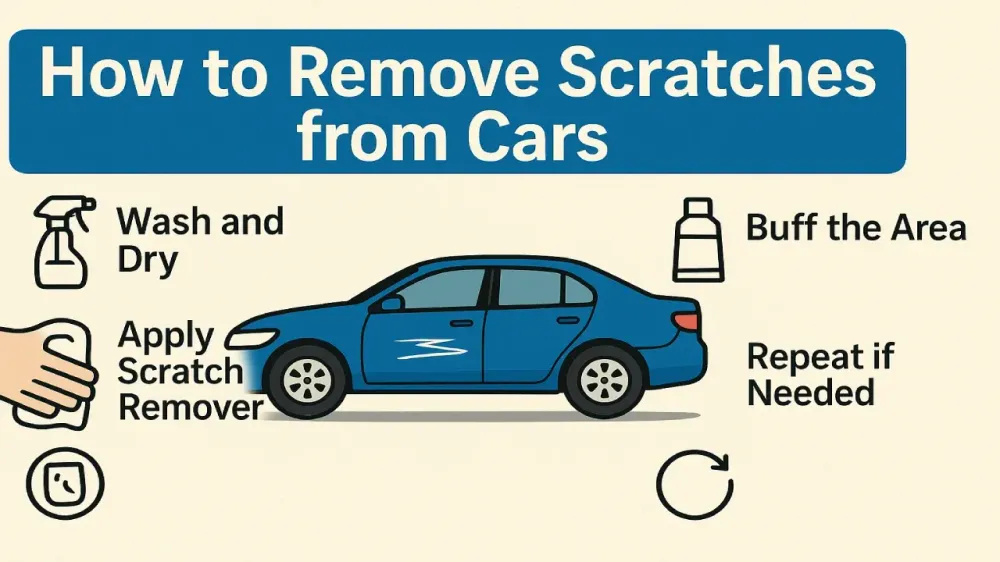
Wash And Dry
Start by washing your car with water and car soap. Use a soft sponge to avoid new scratches.
Rinse all soap off and dry the car with a clean microfiber cloth. Drying stops water spots from forming.
Remove Dirt And Debris
Check the surface for any remaining dirt or small debris. These can scratch the paint during repair.
Use a clay bar or detailing mitt to gently remove stuck particles. This makes the paint smooth and ready.
- Work in small sections
- Use lubricant with the clay bar
- Wipe off residue with a clean cloth
Apply Scratch Remover
Using a scratch remover can help restore your car’s paint. It fills in and hides light scratches.
Follow these methods carefully to get the best results with your scratch remover.
Using Polishing Compound
Polishing compound is a mild abrasive that smooths out scratches. It removes a thin layer of clear coat to blend the scratch.
- Clean the scratched area with water and soap.
- Apply a small amount of polishing compound on a soft cloth.
- Rub the compound gently over the scratch in a circular motion.
- Continue for 2 to 3 minutes or until the scratch fades.
- Wipe off excess compound with a clean cloth.
Buffing Techniques
Buffing helps to even out the polishing compound and restore shine. Use a proper buffing method to avoid damage.
| Buffing Method | Details | Tips |
|---|---|---|
| Hand Buffing | Use a microfiber cloth to rub the area gently. | Use light pressure and move in circles. |
| Machine Buffing | Use a dual-action polisher for even results. | Keep the machine moving to avoid burning paint. |
| Final Cleaning | Wipe the area with a clean, damp cloth. | Inspect the scratch under good light. |
Fix Deeper Scratches
Deeper scratches on your car need careful repair to avoid rust and damage. You must fix these scratches properly to protect your car’s paint and metal underneath.
This guide covers two ways to fix deep scratches: using touch-up paint and sanding with refinishing.
Using Touch-up Paint
Touch-up paint helps fill in deep scratches that reach the metal or primer. It matches your car’s color and covers bare spots.
- Clean the scratched area with soap and water, then dry it well.
- Use a fine brush or pen to carefully apply the touch-up paint.
- Apply thin layers and let each dry before adding more paint.
- Once dry, gently polish the area to blend the paint with the surrounding surface.
Sanding And Refinishing
Sanding and refinishing is for scratches that are rough or uneven after paint repair. It smooths the surface for a clean finish.
| Material | Purpose | How to Use |
| Fine-grit sandpaper (1500-2000 grit) | Smooth the painted surface | Wet sand the area lightly with water |
| Polishing compound | Remove sanding marks | Apply with a soft cloth and rub gently |
| Car wax | Protect the new finish | Apply evenly after polishing |
Credit: parkplus.io
Protect The Finish
Scratches on car paint can be frustrating. Protecting your car’s finish is important. It helps maintain its shine and value.
Regular care and protection can prevent further damage. Here are some steps to keep your car’s finish looking great.
Apply Wax Or Sealant
Waxing your car adds a protective layer. It shields the paint from scratches and weather.
Sealants offer longer-lasting protection. They create a strong barrier against harmful elements.
- Apply wax every three months
- Use a sealant twice a year
- Follow product instructions carefully
Regular Maintenance Tips
Consistent maintenance keeps your car’s paint in top shape. Simple habits can make a big difference.
Wash your car often to remove dirt and debris. This prevents scratches from forming.
- Wash your car weekly
- Use a soft cloth or sponge
- Park in shaded areas when possible
Credit: www.cardekho.com
Frequently Asked Questions
How Can I Remove Minor Scratches From Car Paint?
Use a scratch remover or rubbing compound with a microfiber cloth. Apply gently in circular motions. Finish by polishing the area to restore shine and protect the paint.
What Household Items Remove Car Paint Scratches?
Toothpaste or baking soda paste can remove light scratches. Apply with a soft cloth, rub gently, then rinse and dry. This method works best for superficial scratches only.
Can Scratches Be Fixed Without Repainting The Car?
Yes, minor scratches can be fixed with polishing and touch-up paint. Deep scratches may require professional repainting for the best result.
How Long Does Scratch Removal Take On Car Paint?
Removing minor scratches usually takes 10 to 30 minutes. More severe scratches or multiple areas may require longer, depending on repair complexity.
Conclusion
Removing scratches from car paint takes care and patience. Use the right tools and gentle methods to avoid damage. Small scratches can often be fixed at home with basic products. Deep scratches may need professional help to restore the paint properly.
Regular cleaning and waxing help protect your car’s surface. Keep your car looking fresh and shiny by addressing scratches early. A little effort goes a long way in maintaining your vehicle’s appearance. Remember, simple steps can keep your car paint smooth and bright.







