
Have you ever glanced at your radar detector and noticed a mysterious “K” flashing on the screen? If you’re wondering what that little letter means and why it matters for your driving, you’re not alone.
Understanding the “K” signal can help you stay alert, avoid speeding tickets, and make smarter decisions on the road. You’ll discover exactly what the “K” on your radar detector stands for and how it affects your driving experience. Keep reading—you don’t want to miss this crucial info!
Credit: www.vortexradar.com
Radar Detector Basics
A radar detector helps drivers know when police radar is nearby. It alerts you to slow down before getting a ticket. These devices detect radar signals used by law enforcement to measure speed.
One common question is about the letter “K” on radar detectors. This letter shows a specific radar band. Understanding the basics helps you use your radar detector better.
How Radar Detectors Work
Radar detectors scan the air for radio waves from police radar guns. These waves bounce off your car and return to the radar gun. When your detector finds these waves, it alerts you with sound or light.
They work by tuning into certain radar frequencies. When a signal in these frequencies appears, the detector warns you. The device filters out other signals to avoid false alarms.
Types Of Radar Signals
Radar signals come in different bands. The “K” band is one of the most common bands used by police radar. Other bands include X and Ka. Each band uses different frequencies for speed detection.
- X Band:Oldest radar band, less used today.
- K Band:Common band for many police radars.
- Ka Band:Newer band, higher frequency, harder to detect.
- Laser:Uses light instead of radio waves.
| Radar Band | Frequency Range | Description |
| X Band | 8.0 to 12.0 GHz | Older, less common radar signals |
| K Band | 24.0 to 26.5 GHz | Widely used by police radar |
| Ka Band | 33.4 to 36.0 GHz | Newer, higher frequency signals |
| Laser | Light pulses | Very precise but short range |
The K Band Explained
The K band is a frequency range used in radar technology. It plays a key role in radar detectors found in many vehicles.
Understanding what the K means on a radar detector helps drivers know how law enforcement monitors speed.
Frequency Range Of The K Band
The K band covers frequencies from 24.0 GHz to 24.25 GHz. This range is part of the microwave spectrum.
| Frequency Range | Wavelength |
| 24.0 to 24.25 GHz | About 12.5 mm |
Common Uses By Law Enforcement
Police use the K band mainly for speed detection. It helps officers catch drivers who exceed speed limits.
- Speed radar guns often operate on the K band.
- It provides accurate speed readings at medium distances.
- Police use it in both stationary and moving radar setups.
- The K band is common in urban and highway patrol.
Identifying The K Signal
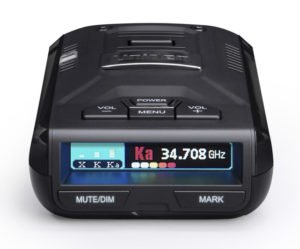
The “K” signal on a radar detector shows a specific radar band used by police. It helps drivers know when the device detects radar waves in the K band. This signal is important for spotting speed checks.
Understanding the K signal lets you react early and adjust your speed if needed. Different radar detectors show this signal in various ways.
Visual Indicators On Detectors
Most radar detectors use lights or screens to show the K signal. The “K” letter often appears on the display when the detector picks up a K band radar.
- Red or orange light next to the letter “K”
- Flashing “K” symbol on digital screens
- Separate section labeled “K” on multi-band displays
- Brightness changes to warn about signal strength
Audio Alerts And Their Meaning
Radar detectors also use sounds to alert drivers about the K signal. The tones differ from other radar bands to avoid confusion.
| Alert Type | Meaning |
| Short Beep | Weak K band signal detected |
| Continuous Tone | Strong K band signal nearby |
| Repeating Beeps | Multiple radar sources detected |
| Voice Alert | “K band radar detected” message |
Limitations Of K Band Detection
The K band is a common radar frequency used by police. Radar detectors can pick up this band. Still, K band detection has some limits to know.
These limits affect how well your radar detector works. It is important to understand them to avoid surprises on the road.
False Alarms And Interference
Radar detectors often give false alarms on the K band. Many devices use the same frequency as police radar. This creates confusion for the detector.
Common sources of false alarms include automatic doors and motion sensors. These can trigger alerts even when no police radar is present.
- Automatic door openers
- Traffic flow sensors
- Security alarm systems
- Some vehicle collision warnings
Detection Range Challenges
The K band has a shorter detection range compared to other bands. This means your radar detector may warn you later. You get less time to react.
Weather and obstacles can reduce the detection range further. Hills, trees, and buildings block radar signals. Rain and fog can also weaken signals.
- Shorter detection distance
- Blocked by physical objects
- Reduced range in bad weather
- Late warnings possible
Advanced Features For K Band
The K band is a key frequency range used by many radar detectors. It detects signals from police radar guns. Advanced features in this band help drivers avoid false alerts and adjust detection strength.
These features improve how well the radar detector works. They reduce distractions and allow drivers to set preferences for their driving conditions.
Filtering False Signals
False signals happen when the radar detector picks up non-police radar waves. These come from automatic doors, motion sensors, or other devices. Filtering helps block these unwanted alerts.
- Signal discrimination to ignore weak or short signals
- Smart filtering that learns common false sources on the road
- Adjustable filters for urban or rural driving environments
- Alerts only for strong, consistent K band signals
Adjusting Sensitivity Settings
Sensitivity controls decide how far the detector picks up radar waves. You can lower or raise sensitivity on the K band to match your needs. Lower sensitivity means fewer alerts but shorter warning time.
| Sensitivity Level | Use Case | Effect |
|---|---|---|
| High | Open highways | Longer detection range, more alerts |
| Medium | Suburban areas | Balanced alerts and fewer false alarms |
| Low | City driving | Less alerts, avoids false signals |
Credit: www.rdforum.org
Legal Considerations
Radar detectors are useful devices for many drivers. They help avoid speeding tickets. But, using them involves legal concerns.
Laws about radar detectors vary. It is important to know the rules in your area. Understanding these laws can keep you out of trouble.
Radar Detector Laws By Region
Different regions have different rules about radar detectors. Some places allow them, others do not. Knowing your region’s laws is crucial.
- United States: Legal in most states, illegal in Virginia and Washington D.C.
- Canada: Illegal in most provinces, legal in British Columbia, Alberta, and Saskatchewan.
- Europe: Mostly illegal, but some countries allow usage.
Ethical Use Of Radar Detectors
Using radar detectors ethically is important. They should not encourage reckless driving. Responsible use is key.
Drivers should prioritize safety. Speed limits exist to protect everyone. Radar detectors are tools, not excuses for speeding.

Credit: www.amazon.com
Frequently Asked Questions
What Does The K Mean On A Radar Detector?
The K on a radar detector indicates the K-band frequency. This band is commonly used by police radar guns for speed detection. Recognizing the K-band helps drivers identify radar signals and adjust their speed accordingly to avoid tickets.
Why Is The K-band Important For Radar Detectors?
The K-band is important because it’s one of the most frequently used radar frequencies. Detecting this band ensures early warnings of speed monitoring. It helps drivers stay alert and comply with speed limits, enhancing road safety and preventing speeding fines.
How Can I Identify The K Signal On My Radar Detector?
Your radar detector displays a “K” when it detects radar waves in the K-band frequency range. This visual alert lets you know that a police radar gun is nearby, giving you time to slow down and avoid speeding violations.
Is The K-band Radar Signal Reliable For Speed Detection?
Yes, the K-band is reliable and widely used by law enforcement. It offers accurate speed detection over a moderate distance. Radar detectors that pick up the K-band help drivers avoid speeding tickets effectively.
Conclusion
The “K” on a radar detector shows the K-band frequency. This band is common for police radar guns. Knowing this helps drivers stay alert on the road. Radar detectors warn you about speed checks ahead. Understanding different radar signals keeps you safer.
Always pay attention to your surroundings while driving. Stay informed, drive smart, and avoid speeding tickets. Simple knowledge makes a big difference in driving.







