
Have you ever noticed the term “K Band” on your radar detector and wondered what it really means? Understanding this can make a big difference in how you stay aware on the road and avoid unexpected speeding tickets.
You’ll discover exactly what K Band is, why it matters for your radar detector, and how it affects your driving experience. Keep reading to learn the key facts that can help you stay one step ahead every time you hit the road.
K Band Basics
The K band is a part of the radar frequency spectrum. It is important for radar detectors used by drivers.
This band helps radar detectors find speed monitoring devices. Knowing about the K band helps you understand radar detection better.
Frequency Range
The K band covers frequencies between 18 and 27 GHz. Most radar detectors focus on a smaller range inside this band.
Common radar signals are usually found around 24.0 to 24.25 GHz in the K band.
Common Uses
The K band is used in police radar guns to check vehicle speed. It is also used in some automatic door openers and other devices.
Because many devices use the K band, radar detectors may sometimes give false alerts.
- Police speed radar
- Automatic door openers
- Traffic sensors
- Some weather radar systems
Why It Matters For Radar Detectors
The K band is a key signal type that radar detectors watch for. Detecting this band helps drivers know about nearby speed checks.
Understanding the K band helps drivers reduce speeding fines. It also helps users adjust their detectors to avoid false alarms.

Credit: www.reddit.com
How K Band Works
K Band is a frequency used by many radar detectors. It helps detect radar signals from police speed guns.
This band works by picking up specific radio waves sent by radar guns. Understanding this helps drivers stay aware.
Radar Signal Transmission
Radar guns send out radio waves in the K Band frequency range. These waves bounce off moving objects like cars.
The radar gun measures how fast the waves return. This speed tells the gun how fast the car is moving.
Detection Process
Radar detectors scan the air for K Band signals. When they find these signals, they alert the driver.
The detector uses special sensors to spot the radar waves quickly. This helps drivers get early warnings.
Typical Detection Range
K Band radar signals can be detected from a few hundred feet away. The range changes with weather and obstacles.
Good detectors can sense signals up to 1,200 feet. This gives drivers enough time to slow down.
- Clear line of sight improves range
- Bad weather can reduce detection distance
- Buildings and hills block radar signals
K Band In Traffic Enforcement
The K band is a common radar frequency used by police for speed detection. It helps officers catch drivers who go over speed limits. Many radar detectors pick up signals in this range.
This article explains what the K band means and how it is used in traffic enforcement. We will look at types of radar guns, law enforcement use, and regional differences.
Types Of Radar Guns
Radar guns use radio waves to measure speed. The K band is one of several bands used. It operates at about 24.0 to 24.25 GHz.
- Fixed Radar Guns: Mounted on poles or vehicles, scanning K band signals continuously.
- Handheld Radar Guns: Portable devices used by officers to target specific vehicles.
- Laser Radar (LIDAR): Uses light instead of radio waves, different from K band radar.
Usage By Law Enforcement
Police use K band radar guns to enforce speed limits on roads and highways. These devices send out radio waves that bounce off moving cars. The gun calculates speed by the change in frequency of the returned signal.
| Feature | Description |
| Frequency Range | 24.0 to 24.25 GHz |
| Common Use | Speed measurement by police |
| Detection Range | Up to 1,000 feet |
| Advantages | Reliable, easy to use |
Regional Variations
Different countries and states use radar bands differently. The K band is popular in the United States but less common in some other places.
- United States: Widely used by local and state police.
- Europe: More use of the Ka band, K band less frequent.
- Asia: Varies by country, some use K band, others prefer different frequencies.
- Australia: Mix of K and Ka bands depending on region.
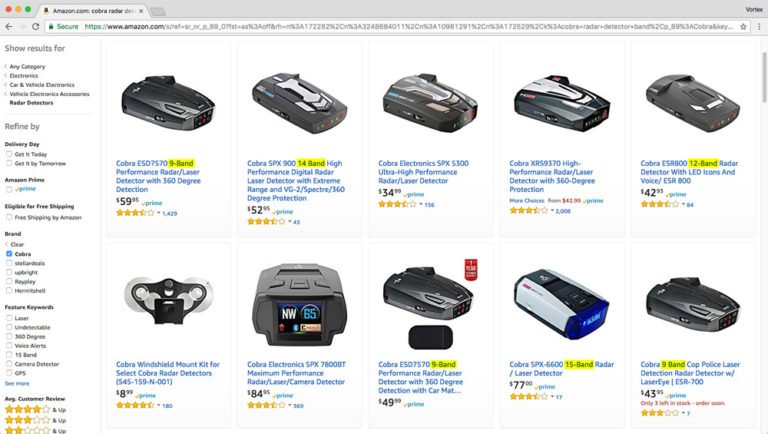
Credit: www.vortexradar.com
Radar Detectors And K Band
Radar detectors help drivers spot police radar signals. These signals warn about speed monitoring ahead. K Band is one type of radar frequency used by police.
Understanding K Band helps drivers know how radar detectors work. It also shows what to expect from these devices.
Detection Capabilities
K Band radar signals use frequencies around 24.0 to 24.25 GHz. Radar detectors pick up these signals to alert drivers. Most police radar guns use K Band for speed checks.
Good radar detectors can sense K Band signals from far away. This gives drivers more time to slow down safely.
- Detects K Band radar signals at long range
- Alerts drivers with sound or visual signals
- Works in urban and rural areas
Common Features
Radar detectors that detect K Band often include features to reduce false alarms. They can filter out signals from automatic doors and other devices.
Many detectors also show the signal strength and type. This helps drivers understand the alert and react properly.
- False alert filtering to avoid common signal triggers
- Signal strength indicator for better awareness
- Voice alerts or screen display for notifications
- Adjustable sensitivity for different driving conditions
Limitations To Expect
K Band radar signals can be blocked by buildings or hills. This can reduce detection range. Some radar detectors may miss weak K Band signals.
Drivers may also get false alerts from non-police K Band sources. This can be annoying and cause distraction.
- Limited detection range in some environments
- False alarms from automatic doors and other devices
- Some police use newer radar types not detected by K Band sensors
- Detector performance varies by model and brand
False Alarms And K Band
The K Band is a common frequency used by police radar guns. Radar detectors scan this band to warn drivers about speed traps. Many detectors often alert drivers even when no police radar is present. These alerts are called false alarms.
False alarms can be annoying and make drivers ignore real warnings. It is important to understand what causes these false alerts and how to reduce them.
Sources Of False Alerts
False alerts happen because other devices use signals similar to the K Band radar. These devices confuse the radar detector.
- Automatic door openers at stores and banks
- Traffic flow sensors on highways
- Some car safety systems and blind spot detectors
- Radar-based motion sensors in buildings
- Other vehicles with radar cruise control
How To Reduce False Alarms
To avoid false alarms, adjust the settings on your radar detector. Many detectors let you filter out signals from common non-police devices.
Use these tips to lower false alerts:
- Set your detector to city mode for busy areas
- Use filters that block known false alarm sources
- Update your detector’s software regularly
- Aim the detector properly to avoid signals from stationary objects
- Turn off K Band alerts if false alarms are too frequent
Impact On Driving Experience
False alarms can distract drivers and cause stress on the road. Frequent alerts may lead drivers to ignore their radar detector.
Reducing false alarms helps drivers trust their radar detector. This leads to better focus and safer driving habits.
Advanced K Band Radar Detectors
K Band radar detectors help drivers spot speed traps. They alert users to radar signals used by law enforcement.
New models offer better detection and fewer false alarms. Here is how technology has improved these devices.
Technology Improvements
Modern radar detectors use advanced technology. This boosts their range and accuracy.
- Improved signal processing
- Longer detection range
- Enhanced sensitivity
Smart Filtering Systems
Smart filtering systems reduce false alerts. They recognize and ignore non-police radar signals.
Integration With Other Sensors
Some radar detectors now integrate with other car sensors. This improves overall safety and efficiency.
| Sensor Type | Function |
| GPS | Maps speed trap locations |
| Bluetooth | Connects to smartphones |
| Laser | Detects laser-based speed guns |
Legal Aspects Of Using Radar Detectors
Radar detectors are devices used by drivers to detect if their speed is being monitored by police. These devices can pick up signals, such as the K band, used by radar guns. Understanding the legal aspects of using radar detectors is important for drivers.
In some regions, using radar detectors is legal, while in others, it is not. Knowing the laws in your area can help you avoid penalties.
Laws By Region
Different regions have different laws about radar detectors. Some allow them, while others ban them completely. Drivers should be aware of these laws to avoid problems.
- United States: Legal in most states, but banned in Virginia and Washington D.C.
- Canada: Illegal in most provinces, but legal in British Columbia and Alberta.
- Europe: Many countries ban radar detectors, including France and Switzerland.
Penalties For Use
If caught using a radar detector where it is illegal, you may face fines or other penalties. These penalties can vary based on the region and the severity of the offense.
- Fines: These can range from small amounts to significant sums.
- Confiscation: The police may take away your radar detector.
- Points on License: Some areas add points to your driving record.
Tips For Compliance
Staying compliant with radar detector laws is crucial. Here are some tips to help you avoid penalties and use your radar detector legally.
- Research local laws before using a radar detector.
- Turn off your radar detector in areas where it is banned.
- Consider using a GPS with speed limit alerts as an alternative.
Credit: www.rdforum.org
Choosing A Radar Detector For K Band
The K band is a common radar frequency used by police for speed detection. Many radar detectors include K band detection to alert drivers. Choosing the right radar detector helps you stay aware of radar signals on this band.
Not all radar detectors perform equally on K band. Some models offer better range, filtering, and false alert reduction. Here are important points to consider when selecting a radar detector for K band.
Key Features To Look For
- Strong sensitivity to detect K band signals early
- Advanced filtering to reduce false alarms from automatic doors or sensors
- Clear audio and visual alerts for quick recognition
- GPS integration to block false signals based on location
- Compact design for easy installation and use
Top Models Available
| Model | K Band Sensitivity | False Alert Filtering | GPS Features |
| RadarX Pro | High | Yes | Yes |
| SpeedGuard 3000 | Medium | Basic | No |
| SafeDrive Elite | High | Advanced | Yes |
Budget Vs Performance
Radar detectors vary in price. Higher-priced models usually offer better K band range and fewer false alerts. Budget options may work but lack some features.
- Decide how much you want to spend.
- Check if the model has good reviews for K band detection.
- Consider if GPS and filtering features are necessary.
- Balance your budget with the performance you need.
Frequently Asked Questions
What Is K Band On A Radar Detector?
K Band is a frequency range (24. 0-24. 25 GHz) used by police radar guns. Radar detectors scan this band to alert drivers of speed monitoring.
How Does K Band Affect Radar Detector Performance?
K Band signals are common and can cause false alerts. Advanced detectors filter out false alarms for more accurate warnings.
Why Do Police Use K Band Radar Guns?
Police use K Band because it offers high accuracy and better detection range for speed enforcement.
Can Radar Detectors Detect All K Band Signals?
Most radar detectors can detect K Band, but sensitivity varies. Quality detectors provide faster, more reliable alerts on this band.
Conclusion
K Band on a radar detector helps spot certain police radar signals. It works by detecting radar waves in a specific frequency range. Knowing about K Band helps drivers stay alert and drive safely. Many police use K Band, so understanding it is useful.
Radar detectors with K Band alerts give you extra time to slow down. This simple feature can reduce speeding tickets and improve road safety. Remember, staying informed about radar bands keeps you prepared on the road. It’s a small step that makes driving smarter and safer.







