
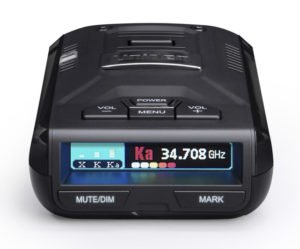
Have you ever glanced at your radar detector and noticed a mysterious “X” flashing across the screen? You might have wondered what it means and whether you should be worried.
Understanding this symbol can make a big difference in how you react on the road. You’ll discover exactly what the “X” on your radar detector stands for, why it appears, and how it can help you stay one step ahead.
Keep reading to unlock the secret behind that little letter and take control of your driving experience.
Radar Detector Basics
Radar detectors help drivers notice police radar signals. They warn you about speed monitoring devices ahead.
Understanding how radar detectors work and the common radar bands helps you use them better.
How Radar Detectors Work
Radar detectors scan the air for radio waves used by police radar guns. They detect these signals and alert the driver.
- The device picks up radar waves from police speed guns.
- It analyzes the frequency to confirm it is a radar signal.
- The detector signals the driver with a light or sound alert.
- This gives the driver time to slow down before reaching the radar.
Common Radar Bands
Radar detectors recognize several radar bands used by police. Each band has its own frequency range.
| Radar Band | Frequency Range (GHz) | Use |
| X Band | 8.0 – 12.0 | Older police radar, less common now |
| K Band | 24.05 – 24.25 | Widely used for speed detection |
| Ka Band | 33.4 – 36.0 | Most common modern police radar band |
| Laser (LIDAR) | Not radio frequency | Uses light pulses for speed measurement |

Credit: www.amazon.com
Meaning Of The X Signal
Radar detectors are tools used by drivers to alert them about nearby speed monitoring devices. The “X” signal on a radar detector is one of the oldest signals detected.
Understanding this signal helps drivers know what kind of radar is being used. It is important to identify the X signal because it can affect driving decisions.
Identifying The X Band
The X band is a type of radar signal that was first used for speed detection. It is not as common today but is still found in some areas.
Drivers should know when they are in an area where the X band is in use. This helps them respond appropriately to alerts from their radar detector.
Frequency Range And Usage
The X band operates at a frequency range between 8.0 and 12.0 GHz. This is lower than other radar bands, making it easier to detect from a distance.
While not as widely used as before, the X band is still important in some regions. Knowing its frequency range helps in understanding its detection and usage.
- X band frequency range: 8.0 to 12.0 GHz
- Less common today but still relevant
- Useful for detecting older radar systems
Interpreting X Band Alerts
X band is a radar frequency used by some police radar guns. When your radar detector shows an X band alert, it means it has detected signals in this frequency range.
Understanding what the X band alert means helps you decide how to respond. Not all X band signals come from speed enforcement devices.
Types Of X Band Signals
X band signals can come from several sources. Some are related to police radar guns, while others come from everyday devices.
- Police radar guns:Older radar guns use the X band to measure speed.
- Automatic door openers:Some doors use X band radar for motion detection.
- Security systems:Certain alarm sensors emit X band signals.
- Traffic sensors:Some road sensors use X band radar for vehicle counting.
Knowing these sources helps you tell if the alert is a real threat or not.
False Alarms And Causes
False alarms happen when your radar detector picks up non-police signals. This can be annoying and distracting.
Common causes of false alarms include:
- Automatic doors at stores or parking garages
- Security systems in buildings or homes
- Nearby traffic sensors or road monitoring devices
- Other radar detectors or electronic devices nearby
Adjusting your detector’s sensitivity or location can reduce false alerts.

Credit: escortradar.ca
Quick Response Tips
Understanding what “X” means on a radar detector helps you react fast. It shows an alert for a specific radar signal. Quick action can keep you safe and avoid tickets.
Knowing how to adjust your driving after seeing the “X” symbol is key. Use these tips to stay alert and drive smart.
Adjusting Speed And Awareness
When the “X” appears, it means a radar source is nearby. Slow down smoothly to the speed limit. Avoid sudden moves that can confuse other drivers.
- Check your speedometer immediately.
- Scan the road for speed limit signs.
- Look for police or speed traps ahead.
- Keep a safe distance from other cars.
- Stay calm and avoid harsh braking.
Avoiding Common Mistakes
Some drivers ignore the “X” alert or brake too hard. Both can cause danger. Here is a table showing common errors and better actions to take.
| Mistake | Why It Is Wrong | Better Response |
|---|---|---|
| Ignoring the “X” alert | May lead to speeding fines or accidents | Slow down and stay alert for radar sources |
| Sudden braking | Can cause rear-end collisions | Reduce speed gradually and signal if needed |
| Panic or distraction | Reduces focus on the road | Stay calm and keep eyes on traffic |
Radar Detector Settings
Radar detectors help drivers avoid speeding tickets by alerting them to radar signals. Adjusting settings improves their accuracy. Proper settings reduce false alarms and increase useful alerts.
Understanding how to customize your radar detector helps you get better alerts. This guide covers settings for X Band signals and filtering out false alerts.
Customizing Alerts For X Band
X Band is one type of radar signal used by some police radar guns. Many radar detectors allow you to adjust how you receive alerts for X Band.
- Turn X Band alerts on or off depending on your area.
- Set alert volume to a level you can hear clearly.
- Choose alert types, such as beep or voice warnings.
- Adjust alert sensitivity to reduce warnings from weak signals.
- Use mute or auto-mute functions for repeated alerts.
Filtering False Signals
False signals come from automatic doors, traffic sensors, or other devices. These false alarms can distract or annoy drivers.
| False Signal Source | Common Cause | Filtering Method |
| Automatic doors | Microwave sensors | Signal rejection filters |
| Traffic flow sensors | Vehicle detectors | Adjust sensitivity |
| Other radar detectors | Nearby drivers | Signal strength limits |
| Weather radar | Storm tracking | Frequency filtering |
Legal And Regional Factors
The “X” on a radar detector shows signals from the X band radar frequency. This band has been used by police for speed checks. Understanding where it is used and legal rules helps drivers use radar detectors safely.
Radar detectors are legal in some places but banned in others. Laws change based on region and device type. Knowing these rules can prevent fines and problems.
Where X Band Is Still Used
The X band radar is an older technology. Some police forces still use it in certain areas. These places often have less traffic or older equipment.
In many regions, X band use is rare. Police may prefer newer radar bands like K or Ka bands. Still, some rural areas keep using X band for speed checks.
- Rural parts of the United States
- Certain regions in Europe
- Some parts of Asia and South America
Regulations On Radar Detectors
Laws about radar detectors vary a lot. Some countries allow them everywhere. Others ban them in certain vehicles or places. Some states in the US have their own rules.
Many places ban radar detectors in commercial vehicles or near military bases. Police may also ban devices that jam radar signals. Knowing local laws is important before using a detector.
- Radar detectors are illegal in Virginia and Washington D.C.
- Commercial vehicles often face stricter rules
- Some states require detectors to have certain features
- Use is banned on military property in many countries
Credit: www.vortexradar.com
Frequently Asked Questions
What Does “x” Indicate On A Radar Detector?
“X” usually signals an X-band radar frequency detected. This band is used by some police radar guns. It alerts drivers to potential speed monitoring nearby.
Is “x” A Common Alert On Radar Detectors?
Yes, “X” is a frequent alert. It represents the X-band radar, which is still in use by various law enforcement agencies. Recognizing it helps drivers stay aware.
How Should I React When “x” Appears On My Detector?
When “X” shows up, be cautious and check your speed. It means an X-band radar signal is detected nearby. Slow down to avoid tickets.
Can “x” Alerts Be False Alarms?
Yes, “X” alerts can sometimes be false. Many automatic doors and traffic sensors emit similar signals. Understanding this helps avoid unnecessary anxiety.
Conclusion
The “X” on a radar detector signals a specific alert or feature. It helps drivers stay aware of certain radar types nearby. Knowing this symbol can improve your driving safety. Always pay attention to your detector’s alerts. Staying informed means fewer surprises on the road.
Use your radar detector wisely and drive carefully. Understanding these signs keeps you prepared and cautious. Safe driving starts with good information and alertness.







