
Are you thinking about using a radar detector to avoid speeding tickets? Before you buy one, it’s crucial to understand the laws that apply to radar detectors in your area.
Knowing what’s legal and what’s not can save you from costly fines or even having your device confiscated. You’ll discover the key radar detector laws you need to know, how they vary by location, and what you should watch out for.
Keep reading to protect yourself and make smart choices on the road.
Credit: www.vortexradar.com
Radar Detector Basics
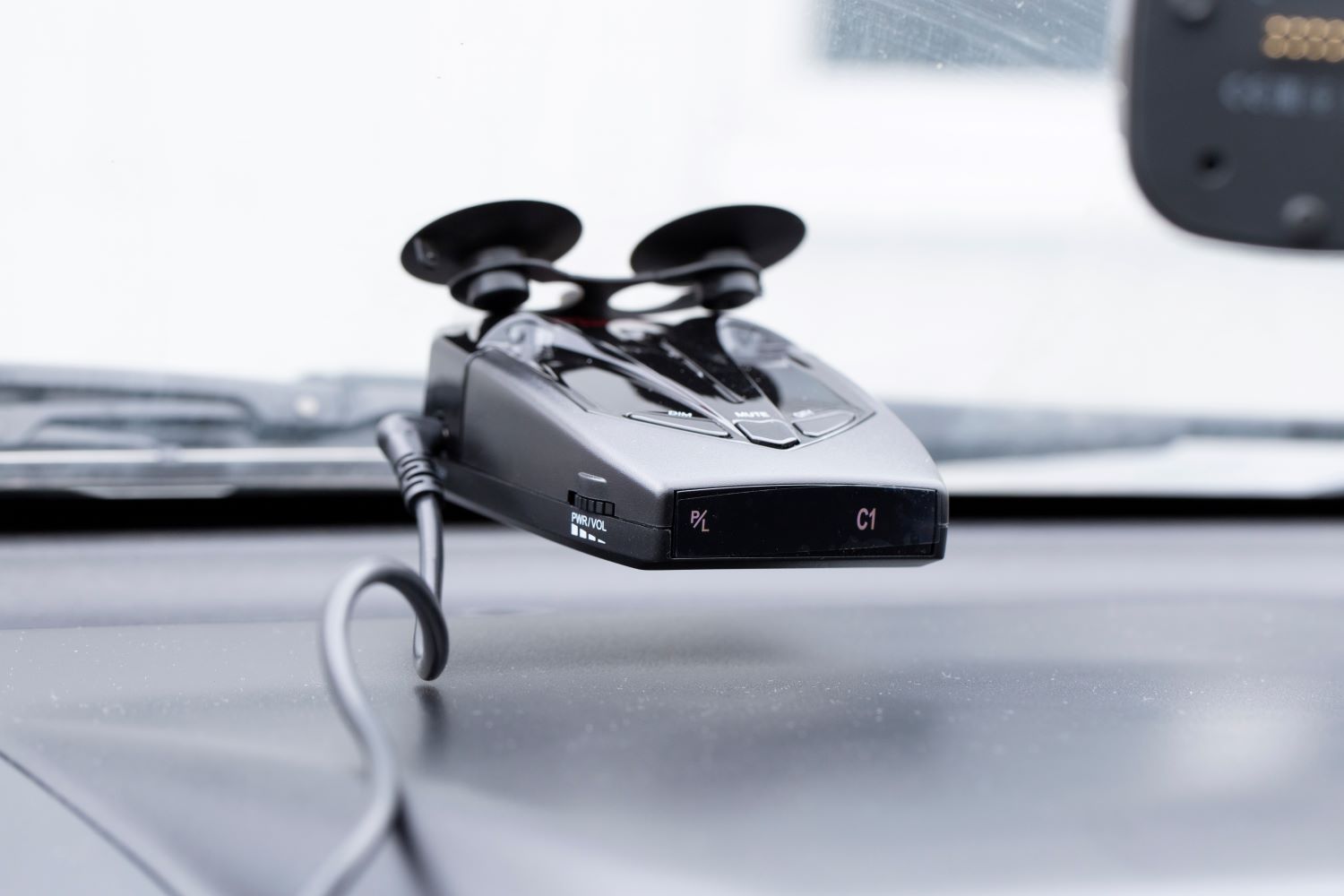
Radar detectors help drivers detect police radar signals. They warn about speed monitoring devices ahead.
These devices can give drivers time to slow down and avoid speeding tickets. Understanding how they work is important.
How Radar Detectors Work
Radar detectors scan for radio waves used by police radar guns. When the detector senses these waves, it alerts the driver.
- The device picks up radar signals in different frequency bands.
- It filters out false signals from automatic doors or other devices.
- Alerts come in sounds or lights to notify the driver.
- Some detectors show signal strength or direction.
Common Types Of Radar Detectors
| Type | Description | Features |
| Basic Radar Detectors | Simple models that detect common radar bands. | Alerts with lights or sounds. |
| Advanced Radar Detectors | Detects multiple radar and laser signals. | False alert filtering, signal strength display. |
| GPS Radar Detectors | Includes GPS to warn about fixed speed cameras. | Database updates, location alerts. |
Credit: www.carparts.com
Legal Status By Region
Radar detector laws vary widely across the world. Different countries and regions have their own rules. Knowing these laws helps avoid fines and legal trouble.
This guide covers radar detector laws in the United States, Canada, Europe, and other countries. Each section explains what is allowed and what is not.
Radar Detector Laws In The United States
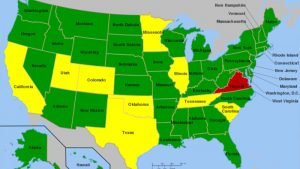
In the U.S., radar detector use is legal in most states. Some states and vehicle types have restrictions. Knowing local laws is important for drivers.
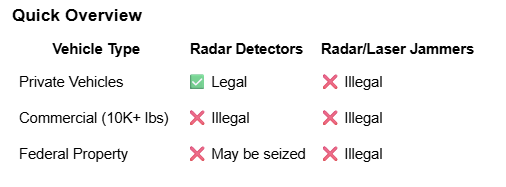
- Radar detectors are illegal in Virginia and Washington, D.C.
- Use is banned in commercial vehicles over 10,000 pounds nationwide.
- Some states have no specific laws banning detectors.
- Windshield mounting restrictions apply in states like California.
Regulations In Canada
Canada has strict rules on radar detectors. Their legality depends on the province. Some provinces allow detectors, others ban them.
| Province | Radar Detector Status |
| Ontario | Illegal |
| Quebec | Illegal |
| British Columbia | Illegal |
| Alberta | Legal |
| Manitoba | Legal |
Laws In Europe And Other Countries
Many European countries ban radar detectors. Some allow them with limits. Rules differ in other countries worldwide.
| Country | Status | Notes |
|---|---|---|
| Germany | Illegal | Strict fines and confiscation |
| France | Illegal | Includes GPS devices with radar alerts |
| United Kingdom | Legal | No restrictions on radar detectors |
| Australia | Varies by state | Some states ban, others allow |
Restrictions On Usage
Radar detectors are devices used to warn drivers about speed monitoring. Different places have rules about where and how you can use them. Knowing these rules helps avoid fines and legal trouble.
This guide covers key restrictions on radar detector use. It explains which areas ban them and rules for different vehicle types.
Prohibited Areas And Zones
Radar detectors are not allowed in many specific areas. These restrictions protect privacy and ensure fair traffic enforcement.
- School zones often ban radar detectors to keep children safe.
- Government property may prohibit these devices to secure official activities.
- Military bases usually forbid radar detectors for security reasons.
- Some states ban radar detectors on highways or specific road types.
- Inside certain tunnels, radar detector use is restricted.
Vehicle Types And Radar Detector Rules
Rules for radar detectors vary by vehicle type. Some vehicles face stricter laws than others.
| Vehicle Type | Radar Detector Allowed | Notes |
| Private passenger cars | Usually allowed | Depends on state laws |
| Commercial trucks | Often prohibited | Federal rules often apply |
| Emergency vehicles | Not allowed | Interferes with official communication |
| Taxis and public transport | Varies by region | Check local regulations |
| Rental vehicles | Depends on rental agreement | May be banned by company policy |
Penalties For Violations
Radar detector laws vary by state and country. Some places allow them, while others ban their use.
Breaking these laws can lead to serious penalties. Drivers should know the risks before using radar detectors.
Fines And Legal Consequences
Drivers caught with radar detectors in banned areas face fines. These fines can be costly and increase with repeated offenses.
Besides fines, some places may confiscate the radar detector device. In serious cases, drivers may face court appearances.
- First offense fines range from $100 to $500
- Repeat offenders may pay higher fines or face jail time
- Radar detectors can be seized by law enforcement
- Court appearances may be required for severe violations
Impact On Driving Records
Violations related to radar detectors may add points to a driver’s record. Points can lead to higher insurance rates.
Accumulating points may cause license suspension. This makes it harder to drive legally until the issue is resolved.
- Points vary by state but usually affect insurance costs
- Too many points can lead to license suspension or revocation
- Some violations stay on the record for years
- Maintaining a clean record helps avoid penalties
Tips For Safe And Legal Use
Radar detectors help drivers know when speed checks are nearby. Laws about these devices vary in different places.
Using a radar detector safely and legally is important. Follow the rules to avoid fines and keep the roads safe.
How To Stay Compliant With Laws
Check local laws before using a radar detector. Some states or countries ban or restrict these devices.
Place the detector where it does not block your view. Make sure it does not distract you while driving.
- Turn off the detector in areas where it is illegal
- Use the device only in private vehicles, if laws allow
- Keep updated on new laws about radar detectors
- Follow all speed limits and traffic rules
Alternatives To Radar Detectors
Some drivers use other tools to avoid speeding tickets. These tools may be legal in places where radar detectors are banned.
Alternatives include apps and devices that warn about speed cameras or traffic conditions.
- GPS apps with speed camera alerts
- Speed limit reminder apps
- Dashcams with speed warnings
- Driving safely and watching speed limits
Credit: www.roadspy.com
Frequently Asked Questions
Are Radar Detectors Legal In All Us States?
Radar detector legality varies by state. Some states allow them, others ban or restrict their use. Check local laws before using one to avoid fines or confiscation.
Can Police Officers Detect Radar Detectors?
Yes, police can use radar detector detectors (RDDs). These devices sense radar detectors in vehicles, especially in states where radar detectors are illegal.
What Are Penalties For Using Radar Detectors Illegally?
Penalties vary by state but may include fines, points on your license, or equipment confiscation. Repeat offenses often lead to higher penalties.
Are Radar Detectors Allowed In Commercial Vehicles?
Most states prohibit radar detectors in commercial vehicles over 10,000 pounds. Always verify specific regulations for commercial drivers to stay compliant.
Conclusion
Knowing radar detector laws helps you avoid fines and legal trouble. Each state and country has different rules about their use. Some places allow detectors, while others ban them completely. Always check local laws before using a radar detector. Stay informed and drive safely to protect yourself and others.
Understanding these laws keeps you confident on the road. Stay smart, follow the rules, and enjoy a worry-free drive.







